Overview
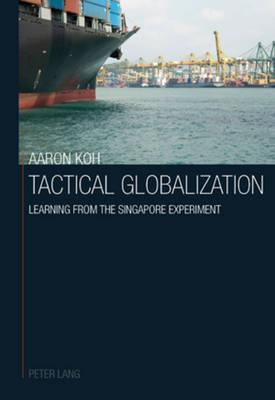
This book is about a small city state’s social experiment with globalization. It examines how Singapore conducts its globalization experiment through the state apparatus of schooling and education policy. The author argues that Singapore engages with globalization by anticipating the «problem space» of globalization with calculated actions and experimentation, termed «tactics» and «tactical globalization» in the book. Central to the book is an examination and analysis of the «Thinking Schools, Learning Nation» education policy and reform. While Tactical Globalization contributes to the sociology of globalization by foregrounding new narratives on globalization that are emerging, it also takes a contextual and innovative approach to education policy analysis, which includes a speech-turned-policy document and a nationally televised segment of a documentary called Learning Journeys.
Full Product Details
Author: Aaron Koh ,
Aaron Koh
Publisher: Verlag Peter Lang
Imprint: Verlag Peter Lang
Edition: New edition
Weight: 0.340kg
ISBN: 9783039105915
ISBN 10: 3039105914
Pages: 222
Publication Date: 16 July 2010
Audience:
Professional and scholarly
,
Professional & Vocational
Format: Paperback
Publisher's Status: Active
Availability: Awaiting stock

The supplier is currently out of stock of this item. It will be ordered for you and placed on backorder. Once it does come back in stock, we will ship it out for you.
Reviews
Singapore continues to fascinate, and Koh's analysis is a valuable contribution to the literature on why this is so. Koh argues this powerful city state productively uses narratives around globalisation and crisis to advance agendas for change, and that education is central to this process . (Professor Susan L. Robertson, Centre for Globalisation, Education and Societies, University of Bristol) In 'Tactical Globalization', Aaron Koh provides an instructive analysis of the role of education policy in Singapore in relation to globalization conceived as a 'problem space'. Koh also provides broader methodological, theoretical and empirical insights through focusing on how one small, strong city-state has taken an effective tactical role to produce productive citizens who 'go global' but 'stay local'. As such, this book is must-read for sociologists of education, policy analysts and comparative educators . (Professor Bob Lingard, The University of Queensland) This is a fascinating case study of how the tiny city-state of Singapore has become a global economic hub while also maintaining a strong national identity. Koh argues that Singapore sees globalisation as a 'problem space' and responds to it in shrewd, strategic and enabling ways. He shows that the education of Singapore's 'only natural resource', its people, is pivotal. In this elegantly argued book, Koh develops a theory of 'tactical globalisation' thus contributing significantly to understandings of the shifting and variable phenomenon called globalization . (Professor Jane Kenway, Faculty of Education, Monash University)
Singapore continues to fascinate, and Koh's analysis is a valuable contribution to the literature on why this is so. Koh argues this powerful city state productively uses narratives around globalisation and crisis to advance agendas for change, and that education is central to this process. (Professor Susan L. Robertson, Centre for Globalisation, Education and Societies, University of Bristol) In 'Tactical Globalization', Aaron Koh provides an instructive analysis of the role of education policy in Singapore in relation to globalization conceived as a 'problem space'. Koh also provides broader methodological, theoretical and empirical insights through focusing on how one small, strong city-state has taken an effective tactical role to produce productive citizens who 'go global' but 'stay local'. As such, this book is must-read for sociologists of education, policy analysts and comparative educators. (Professor Bob Lingard, The University of Queensland) This is a fascinating case study of how the tiny city-state of Singapore has become a global economic hub while also maintaining a strong national identity. Koh argues that Singapore sees globalisation as a 'problem space' and responds to it in shrewd, strategic and enabling ways. He shows that the education of Singapore's 'only natural resource', its people, is pivotal. In this elegantly argued book, Koh develops a theory of 'tactical globalisation' thus contributing significantly to understandings of the shifting and variable phenomenon called globalization. (Professor Jane Kenway, Faculty of Education, Monash University)
Singapore continues to fascinate, and Koh's analysis is a valuable contribution to the literature on why this is so. Koh argues this powerful city state productively uses narratives around globalisation and crisis to advance agendas for change, and that education is central to this process . (Professor Susan L. Robertson, Centre for Globalisation, Education and Societies, University of Bristol) In `Tactical Globalization', Aaron Koh provides an instructive analysis of the role of education policy in Singapore in relation to globalization conceived as a `problem space'. Koh also provides broader methodological, theoretical and empirical insights through focusing on how one small, strong city-state has taken an effective tactical role to produce productive citizens who `go global' but `stay local'. As such, this book is must-read for sociologists of education, policy analysts and comparative educators . (Professor Bob Lingard, The University of Queensland) This is a fascinating case study of how the tiny city-state of Singapore has become a global economic hub while also maintaining a strong national identity. Koh argues that Singapore sees globalisation as a `problem space' and responds to it in shrewd, strategic and enabling ways. He shows that the education of Singapore's `only natural resource', its people, is pivotal. In this elegantly argued book, Koh develops a theory of `tactical globalisation' thus contributing significantly to understandings of the shifting and variable phenomenon called globalization . (Professor Jane Kenway, Faculty of Education, Monash University)
Singapore continues to fascinate, and Koh's analysis is a valuable contribution to the literature on why this is so. Koh argues this powerful city state productively uses narratives around globalisation and crisis to advance agendas for change, and that education is central to this process . (Professor Susan L. Robertson, Centre for Globalisation, Education and Societies, University of Bristol) In 'Tactical Globalization', Aaron Koh provides an instructive analysis of the role of education policy in Singapore in relation to globalization conceived as a 'problem space'. Koh also provides broader methodological, theoretical and empirical insights through focusing on how one small, strong city-state has taken an effective tactical role to produce productive citizens who 'go global' but 'stay local'. As such, this book is must-read for sociologists of education, policy analysts and comparative educators . (Professor Bob Lingard, The University of Queensland) This is a fascinating case study of how the tiny city-state of Singapore has become a global economic hub while also maintaining a strong national identity. Koh argues that Singapore sees globalisation as a 'problem space' and responds to it in shrewd, strategic and enabling ways. He shows that the education of Singapore's 'only natural resource', its people, is pivotal. In this elegantly argued book, Koh develops a theory of 'tactical globalisation' thus contributing significantly to understandings of the shifting and variable phenomenon called globalization . (Professor Jane Kenway, Faculty of Education, Monash University)
Author Information
Aaron Koh is Assistant Professor in the Department of English, The Hong Kong Institute of Education. He previously taught at Monash University, Melbourne, Australia, and had also been a school teacher at Anderson Junior College and Anglo-Chinese School (Independent), Singapore. His research and teaching interests are Globalization and Education, Cultural Politics of Education, Literacy and Language Arts and Cultural Studies in Education. He is on the Editorial Board of Journal of Adolescent and Adult Literacy and Discourse: studies in the cultural politics of education.