Overview
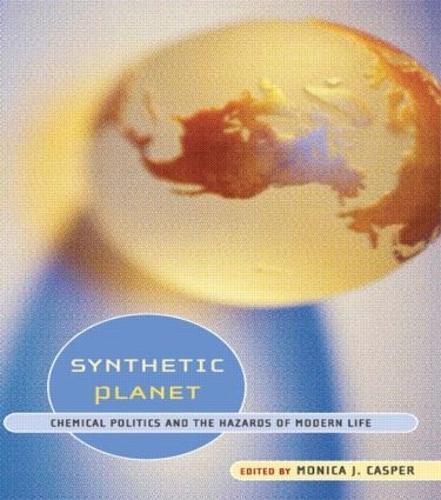
From chemistry sets to chemical weapons, from plastics to pesticides, and from air pollution to Agent Orange, industrial chemicals have transformed the way we live. Industrial chemicals have brought many good things to life, but at what cost - disease, disaster and death. This timely collection of original essays traces the migration of synthetic chemicals from the laboratory to the factory and then into our environment, bodies and communities. The impact these chemicals have on our ecosystems, human health and political processes is addressed by the the contributors, breaking new ground by focusing on the production and distribution of these potentially hazardous agents themselves rather than just detailing their effects. Synthetic Planet is a first-rate, cohesive argument about the risks of chemicals to the natural world - an issue that can no longer be ignored.
Full Product Details
Author: Monica J. Casper
Publisher: Taylor & Francis Ltd
Imprint: Routledge
Dimensions:
Width: 15.20cm
, Height: 2.70cm
, Length: 22.90cm
Weight: 0.810kg
ISBN: 9780415933544
ISBN 10: 0415933544
Pages: 352
Publication Date: 19 June 2003
Audience:
College/higher education
,
General/trade
,
Tertiary & Higher Education
,
General
Format: Hardback
Publisher's Status: Active
Availability: In Print

This item will be ordered in for you from one of our suppliers. Upon receipt, we will promptly dispatch it out to you. For in store availability, please contact us.
Reviews
Synthetic Planet documents the continuing toxic tragedy to which we were first alerted by Rachel Carson's Silent Spring. If you are concerned about weapons of mass destruction that have silently entered our homes and arms, our food and water, read Synthetic Planet. <br>-Vandana Shiva, author of Water Wars: Privatization, Pollution, and Profit <br> A much needed sociological account of how the chemical industry, while working under the guise of nation-building, is inextricably linked to the destabilization of human and ecological health. Underlying each of the striking essays is the growing concern that we are performing a vast chemical experiment on ourselves and our planet. If this thought-provoking research does not compel us to make wiser choices for the health of our children and grandchildren, I don't know what will. <br>-Elise G. Miller, Executive Director, Institute for Children's Environmental Health <br> Provides provocative, challenging, and informative analyses of some of the most pressing problems facing the world environment today. Synthetic Planet explains why and how complex scientific issues regarding the links between the environment and health remain highly vulnerable and unresolved far longer than need be. <br>-Devra Lee Davis, author of When Smoke Ran Like Water: Tales of Environmental Deception and the Battle Against Pollution <br> Synthetic Planet provides valuable insights into current environmental concerns. <br>- Social Development Issues <br>
Synthetic Planet documents the continuing toxic tragedy to which we were first alerted by Rachel Carson's Silent Spring. If you are concerned about weapons of mass destruction that have silently entered our homes and arms, our food and water, read Synthetic Planet. -Vandana Shiva, author of Water Wars: Privatization, Pollution, and Profit A much needed sociological account of how the chemical industry, while working under the guise of nation-building, is inextricably linked to the destabilization of human and ecological health. Underlying each of the striking essays is the growing concern that we are performing a vast chemical experiment on ourselves and our planet. If this thought-provoking research does not compel us to make wiser choices for the health of our children and grandchildren, I don't know what will. -Elise G. Miller, Executive Director, Institute for Children's Environmental Health Provides provocative, challenging, and informative analyses of some of the most pressing problems facing the world environment today. Synthetic Planet explains why and how complex scientific issues regarding the links between the environment and health remain highly vulnerable and unresolved far longer than need be. -Devra Lee Davis, author of When Smoke Ran Like Water: Tales of Environmental Deception and the Battle Against Pollution Synthetic Planet provides valuable insights into current environmental concerns. - Social Development Issues
Author Information
Monica J. Casper is an Associate Professor of Sociology at the University of California, Santa Cruz. She is the author of The Making of the Unborn Patient, which won the C. Wright Mills Award in 1998.