|
|
|||
|
||||
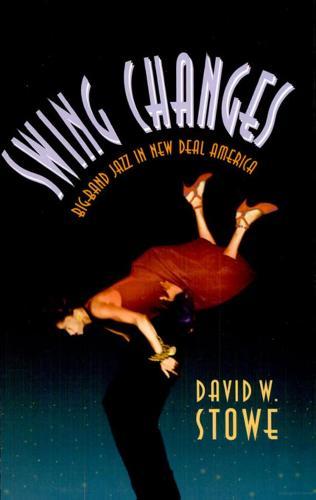
OverviewBands were playing, people were dancing, the music business was booming. It was the big-band era, and swing was giving a new shape and sound to American culture. Swing Changes looks at New Deal America through its music and shows us how the contradictions and tensions within swing-over race, politics, its own cultural status, the role of women-mirrored those played out in the larger society. Drawing on memoirs, oral histories, newspapers, magazines, recordings, photographs, literature, and films, Swing Changes offers a vibrant picture of American society at a pivotal time, and a new perspective on music as a cultural force. Full Product DetailsAuthor: David W. StowePublisher: Harvard University Press Imprint: Harvard University Press Edition: New edition Dimensions: Width: 15.60cm , Height: 1.70cm , Length: 23.50cm Weight: 0.476kg ISBN: 9780674858268ISBN 10: 0674858263 Pages: 299 Publication Date: 01 October 1996 Audience: College/higher education , Professional and scholarly , Undergraduate , Postgraduate, Research & Scholarly Format: Paperback Publisher's Status: Active Availability: Out of stock The supplier is temporarily out of stock of this item. It will be ordered for you on backorder and shipped when it becomes available. Table of ContentsIntroduction: Understanding Swing 1. The Tempo of the Time Song of the Jitterbug New Venues, New Audiences 2. Between Conjure and Kapital The Big Bringdown As American as Baseball and Hotdogs We Are All Americans Just Rich Men's Sons 3. The Incorporation of Swing Anyone Can Lead a Dance Band Broadcasting Swing The Jukes Take Over Are Colored Bands Doomed? Passing in Hollywood 4. The Conscription of Swing Soldiers of Music The Theater of Race The Gender Front 5. Swing and Its Discontents Tension Music and Concertitis Smothering the Market Crewcut, Jarb, Swixibop Swing Redux 6. Cracks in the Coalition That Modern Malice Jazz Is America's Own Epilogue: Shall We Dance? Notes IndexReviewsDavid Stowe's contention is that big-band swing, with its emphasis on regimented performances in which soloists made their personal contributions to the collective whole, was analogous to'the notion of a cooperative commonwealth central to Franklin Roosevelt's vision of America'... Swing Changes offers some fresh perspectives on music as 'social practice'--with a wealth of pertinent material...in the accompanying Notes . -- John White American Studies Author InformationDavid W. Stowe is Associate Professor of Writing, Rhetoric and American Cultures and director of American Studies at Michigan State University. Tab Content 6Author Website:Countries AvailableAll regions |
||||