Overview
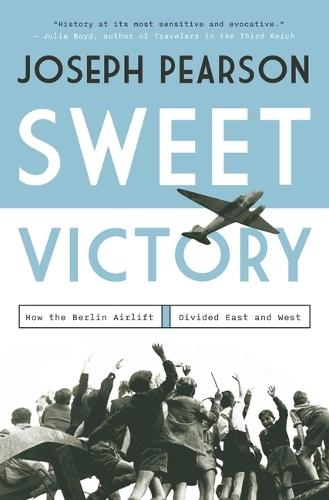
The fascinating story of how a forgotten group of airmen--who had spent World War II dropping Allied bombs on Berlin--risked their lives in 1948-49 dropping chocolate bars from the sky. After Hitler's defeat in World War II, Europe's ruins were divided between East and West. The center of the struggle for influence was Berlin, split between the victorious Allied powers: the Soviets on one side and the Anglo-American and French forces on the other. Berlin was closer to the Soviet border than Paris, a strategic springboard for Stalin to rule Central Europe. In June of 1948, three years after the war, Stalin made his move to take complete control of the city. Laying siege, he blocked off supplies and transport to the Western sectors. The stakes could not have been higher: the Russian leader risked nuclear conflict. A false move--even one American plane shot down by Russian fighters--could mean the atomic drop that American generals were contemplating. Was Berlin worth this enormous risk, and how would the West react? The Soviets expected West Berlin would be easy to win. They were stunned when their adversaries launched, instead, a daring operation to supply Berlin by plane. With 277,500 flights in total, one landing in Berlin every three minutes, British and American pilots delivered 2.3 million tons of essentials such as coal and flour and, famously, candy and chocolate. The Berlin Airlift became the largest air operation in history. The airlift, meanwhile, transformed West Germans from foes into willing partners against Stalin. In this sense, the first victory against Germany came in 1945--when the Allied powers pummeled it into submission. The sweet victory came three years later when the Western powers conquered the hearts and minds of their former enemy. The Berlin Airlift is one of the century's most dangerous and least understood crises of the twentieth century. Inexperienced and armed to the teeth, the world's superpowers surveyed each other for the first time. The Cold War began in this city in 1948-49, just as it would end there forty years later.
Full Product Details
Author: Joseph Pearson
Publisher: Pegasus Books
Imprint: Pegasus Books
Dimensions:
Width: 15.20cm
, Height: 2.80cm
, Length: 22.90cm
Weight: 0.549kg
ISBN: 9781639368587
ISBN 10: 1639368582
Pages: 288
Publication Date: 02 December 2025
Audience:
General/trade
,
General
Format: Hardback
Publisher's Status: Active
Availability: In Print

This item will be ordered in for you from one of our suppliers. Upon receipt, we will promptly dispatch it out to you. For in store availability, please contact us.
Reviews
""A thrilling portrait of the Berlin Airlift as seen through the eyes of those who lived through it, from pilots to photographers and ordinary citizens. Pearson weaves together his meticulous new research and his in-depth interviews with a prodigious gift for storytelling. This is history that unfolds like a great documentary film--I could not put down this book!""--J. M. Tyree, editor of Film Quarterly
""A revisionist scrutiny of a humanitarian mission. Pearson reminds readers that three years after their defeat, Germans were still hungry and their cities in ruins. The dawn of the Cold War through a gimlet eye.""--Kirkus Reviews ""Pearson takes an illuminating, up-close look at the Berlin Airlift and the kicking off of the Cold War. Through probing interviews with those who were present, Pearson reveals how the airlift, more than just a successful propaganda campaign by the Westerners, was a viscerally felt moment of political realignment, which engendered doubt among some Americans (who didn't want to ally with former Nazis) and hope among Berliners (who wanted to rehabilitate their image in the West). This adds complexity to a major historical turning point.""--Publishers Weekly ""A thrilling portrait of the Berlin Airlift as seen through the eyes of those who lived through it, from pilots to photographers and ordinary citizens. Pearson weaves together his meticulous new research and his in-depth interviews with a prodigious gift for storytelling. This is history that unfolds like a great documentary film--I could not put down this book!""--J. M. Tyree, editor of Film Quarterly
Author Information
Joseph Pearson is a writer and cultural historian based in Berlin. He is the author of two prior books, My Grandfather's Knife and Berlin, published in Britain. His short fiction, poetry, journalism, and nonfiction appear regularly in literary journals and other outlets such as the BBC and Newsweek. He is the house essayist of the Schaubühne, Berlin's best-known avant-garde theatre. Joseph received his doctorate in modern history from the University of Cambridge and previously taught at Columbia University in New York. He now lectures at the Barenboim-Said Akademie, a German university and peace project. Sweet Victory is Joseph's first book to be published in America.