Overview
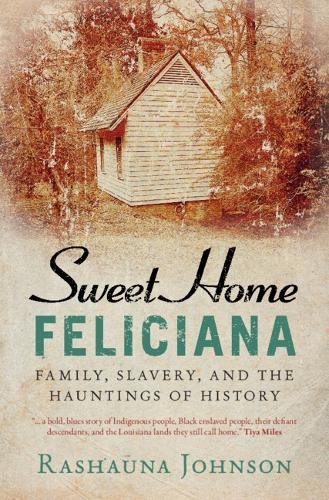
In this tapestry of intersecting stories, including those of her own family, Rashauna Johnson charts the global transformation of a rural region in Louisiana from European colonialism to Jim Crow. From her ancestor Virgil to her cousin Veronica and her hand-sewn Mardi Gras memorial suit more than a century later, this history is one of triumphs and trauma, illustrating the ways people of African descent have created sites of endurance, belonging, and resistance. Johnson uses her grandmother's birthplace in East Feliciana as a prism to illuminate foundational, if fraught, aspects of US history including colonialism, slavery, war, citizenship, and unfinished freedom. The result is a portrait of the world in a family, a family in a region, and a region in the world that insists on the bristling and complicated relationships of people to place and creates a new understanding of what it means to be American.
Full Product Details
Author: Rashauna Johnson (The University of Chicago)
Publisher: Cambridge University Press
Imprint: Cambridge University Press
Dimensions:
Width: 15.20cm
, Height: 2.10cm
, Length: 22.90cm
Weight: 0.711kg
ISBN: 9781009668323
ISBN 10: 1009668323
Pages: 368
Publication Date: 05 March 2026
Audience:
General/trade
,
General
Format: Hardback
Publisher's Status: Active
Availability: Manufactured on demand

We will order this item for you from a manufactured on demand supplier.
Reviews
'This is a book I have been waiting, yearning, for. In this important and beautifully written work, Johnson takes up the sorely neglected topic of Black homemaking/peacemaking in the rural South, rural but not unconnected to regional, national, and global webs of circulation – of economies, revolution, and knowledge. It is a powerful story not of people 'run off' but who stayed and fought and found 'warmth under the same old sun.'' Thavolia Glymph, author of Out of the House of Bondage: The Transformation of the Plantation Household 'A stunning work of social and cultural history and of creative historical thinking. Rashauna Johnson has given us a multi-layered story that not only conjoins the local, regional, and international but also shows how our present lives in the past and our past in the present. Sweet Home Feliciana exemplifies historical scholarship at its finest and most inventive.' Steven Hahn, author of Illiberal America: A History 'In lyrical prose as moving as song, Sweet Home Feliciana haunts a notorious southern anthem and the troubling nostalgia associated with it. Relying on a wealth of sources and a rare gift of interpretation, historian Rashauna Johnson tells a bold, blues story of Indigenous people, Black enslaved people, their defiant descendants, and the Louisiana lands they still call home. Readers of this book will never see New Orleans or the rural South in the same way again.' Tiya Miles, author of All That She Carried: The Journey of Ashley's Sack, a Black Family Keepsake 'Sweet Home Feliciana cuts through the myths of the Old South. What matters lies beneath the nostalgic facade. Black families bled, built, mourned, and made beauty out of the wreckage.' Kim Vaz-Deville, author of The 'Baby Dolls': Breaking the Race and Gender Barriers of the New Orleans Mardi Gras Tradition
'This is a book I have been waiting, yearning, for. In this important and beautifully written work, Johnson takes up the sorely neglected topic of Black homemaking/peacemaking in the rural South, rural but not unconnected to regional, national, and global webs of circulation—of economies, revolution, and knowledge. It is a powerful story not of people 'run off' but who stayed and fought and found 'warmth under the same old sun.' Thavolia Glymph, author of Out of the House of Bondage: The Transformation of the Plantation Household 'A stunning work of social and cultural history and of creative historical thinking. Rashauna Johnson has given us a multi-layered story that not only conjoins the local, regional, and international but also shows how our present lives in the past and our past in the present. Sweet Home Feliciana exemplifies historical scholarship at its finest and most inventive.' Steven Hahn, author of Illiberal America: A History 'In lyrical prose as moving as song, Sweet Home Feliciana haunts a notorious southern anthem and the troubling nostalgia associated with it. Relying on a wealth of sources and a rare gift of interpretation, historian Rashauna Johnson tells a bold, blues story of Indigenous people, Black enslaved people, their defiant descendants, and the Louisiana lands they still call home. Readers of this book will never see New Orleans or the rural South in the same way again.' Tiya Miles, author of All That She Carried: The Journey of Ashley's Sack, a Black Family Keepsake 'Sweet Home Feliciana cuts through the myths of the Old South. What matters lies beneath the nostalgic facade. Black families bled, built, mourned, and made beauty out of the wreckage.' Kim Vaz-Deville, author of The 'Baby Dolls': Breaking the Race and Gender Barriers of the New Orleans Mardi Gras Tradition
Author Information
Rashauna Johnson is Associate Professor of History at the University of Chicago. She is the author of the prizewinning book Slavery's Metropolis: Unfree Labor in New Orleans during the Age of Revolutions.