Overview
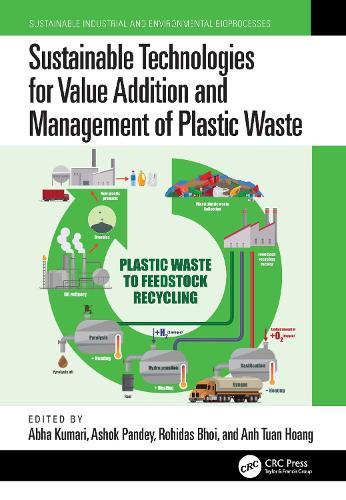
This book provides innovative and sustainable technologies for converting plastic waste into valuable resources. The book is structured into three sections, each focusing on a different aspect of plastic waste management and conversion technologies. The first section delves into sustainable technologies for producing various types of fuels from plastic waste, including liquid fuel, hydrogen, and aviation fuel. The second section examines technologies for converting plastic waste into value-added chemicals and materials, encompassing new materials, chemicals, and new plastics. The third section focuses on the management and recycling of plastic waste, covering treatment methods for general, electronic, micro-, and nano-plastic waste and the application of artificial intelligence in waste management. It also includes a life-cycle assessment of plastic waste management processes. Further, the book examines the broader concepts of circular economy and sustainability in the context of plastic waste management. The chapters discuss the principles and practices of a circular economy, aiming for a sustainable and waste-free future. They also address the role of policies and the implementation of green supply chains in promoting sustainable plastic waste management, emphasizing the importance of integrating policy and technological advancements. This book is a valuable resource for professionals, researchers, and students of environmental sciences and biotechnology. Key Features Emphasizes the sustainable technologies for converting plastic waste into various fuels, including liquid fuel, hydrogen, and aviation fuel Highlights the conversion of plastic waste into value-added chemicals and new materials Examines advanced management and recycling methods for different types of plastic waste, including general, electronic, micro-, and nano-plastic waste Provides a comprehensive life-cycle assessment of plastic waste management processes and evaluates their environmental impact and sustainability Discusses the principles and practices of a circular economy for a sustainable and waste-free future through innovative plastic waste management strategies Addresses the role of policies and green supply chains in promoting sustainable plastic waste management
Full Product Details
Author: Abha Kumari ,
Ashok Pandey ,
Rohidas Bhoi ,
Anh Tuan Hoang
Publisher: Taylor & Francis Ltd
Imprint: CRC Press
ISBN: 9781032939469
ISBN 10: 103293946
Pages: 228
Publication Date: 24 April 2026
Audience:
Professional and scholarly
,
College/higher education
,
Professional & Vocational
,
Postgraduate, Research & Scholarly
Format: Hardback
Publisher's Status: Forthcoming
Availability: Not yet available

This item is yet to be released. You can pre-order this item and we will dispatch it to you upon its release.
Author Information
Abha Kumari is currently working as an Associate Professor at the Centre for Biotechnology and Biochemical Engineering, Amity Institute of Biotechnology, Amity University, Noida, India. She has earlier served as an Associate Professor in the Department of Biotechnology at Delhi Technological University, Delhi, India, Visiting Researcher at the Tohoku Institute of Technology, Sendai, Japan, DBT Postdoctoral Fellow at National Chemical Laboratory, Pune, and Postdoctoral Fellow at Lakehead University, Ontario, Canada. She was awarded a Pool Officer fellowship from the Council of Scientific Industrial Research, India. Dr. Abha earned her Ph.D. and M.Sc. (Engg.) from the Indian Institute of Science (IISc), Bangalore, India. She received the fellowship during her master's and doctoral studies from IISC, Bangalore. Her research interest is in Biochemical engineering and biotechnology with a specialization in waste-to-value, municipal solid waste-to-biogas and carotenoid production, bio-enzyme from waste, waste treatment and management, metals recovery from electronic waste. She has more than 20 years of research and teaching experience in bioprocess technology, biochemical engineering, downstream processing, enzyme technology, and principles of chemical engineering. She is the author and editor of one book. She has published research articles in peer-reviewed international journals and authored numerous book chapters. She has worked as a Principal Investigator on two government-funded projects and as a Co-investigator on one government-funded project. She is a life member of the Indian Institute of Metals (IIM), India, and the Indian Science Congress Association. Ashok Pandey is currently a Distinguished Scientist at the Centre for Innovation and Translational Research, CSIR-Indian Institute of Toxicology Research, Lucknow, India. His major research interests lie in industrial and environmental biotechnology, as well as energy biosciences, with a focus on converting biomass to biofuels and chemicals and transforming waste into wealth and energy. He holds 16 patents, has authored 125 books, and has contributed to over 1000 papers and book chapters. Professor Pandey has received numerous national and international awards and honors. He is a Fellow of five international and four national academies, including the World Academy of Sciences, Indian National Science Academy, and the National Academy of Sciences. He is also a Distinguished Fellow of the Biotech Research Society, India, and an Academician of the European Academy of Sciences and Arts. Rohidas Bhoi is an Assistant Professor at the Malaviya National Institute of Technology, Jaipur. He obtained his Ph.D. in Chemical Engineering from IIT Bombay. His research areas include waste-to-energy, pyrolysis, biofuels, reaction engineering, and catalysis. Dr. Bhoi has published 20 research papers and 07 book chapters. Ahn Tuan Hoang is currently the Vice President of Dong Nai Technology University, Dong Nai, Vietnam. He received his Ph.D. in 2016. His research interests include energy conversion, renewable energy, bioenergy, and alternative fuels. Dr. Hoang has published over 200 papers, 8 book chapters, and 1 book. He has been ranked among the World’s Top 2% Scientists in the field of energy from 2019 to 2024. In 2023, he was recognized as a Highly Cited Researcher by Clarivate, Web of Science.