Overview
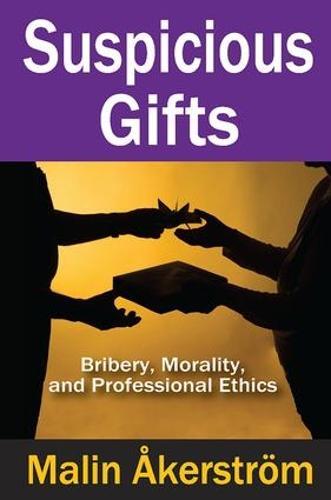
Gifts have been given and received in all eras and societies; gifts are part of a universal human exchange. The importance of creating and sustaining social bonds with the help of gifts is widely acknowledged by social scientists, not only from anthropological but also from economic, sociological, and political science perspectives. Contemporary anti-corruption campaigns, however, have led gifts to be viewed with ever-increasing suspicion, because it is feared that the social bonds created by gift giving may contaminate professional decision-making. Suspicious Gifts investigates the sensitive issue of gift exchanges and how they become an object of contention. Malin akerstro;m considers the moral dilemmas presented by bribes and gift giving as experienced by Swedish aid workers and professionals working in the public sector, business, and adoption agencies. She also deals with professionals' interaction with foreign officials or contractors. Often a gift is just that, although sometimes the gift giving may be seen by others as a bribe. akerstro;m highlights the tensions between strict regulations designed to prevent corruption with the human affection for the institution of gift giving. She argues that bribes and gifts are important social phenomena because they are windows into classic sociological and anthropological research issues concerning interaction, social control, exchange, and rituals. This unique analysis will be of keen interest to all sociologists, public officials, and professionals.
Full Product Details
Author: Malin Akerstrom ,
Malin Akerstrom
Publisher: Taylor & Francis Inc
Imprint: Routledge
Dimensions:
Width: 15.20cm
, Height: 1.70cm
, Length: 22.90cm
Weight: 0.444kg
ISBN: 9781412852913
ISBN 10: 1412852919
Pages: 210
Publication Date: 30 November 2013
Audience:
Professional and scholarly
,
Professional & Vocational
Format: Hardback
Publisher's Status: Active
Availability: In Print

This item will be ordered in for you from one of our suppliers. Upon receipt, we will promptly dispatch it out to you. For in store availability, please contact us.
Reviews
Examining the effects of the extended and intensified 'bribery gaze' arising from stringent anti-corruption efforts in Sweden, Suspicious Gifts provides unique insight into contemporary efforts to control bribery and corruption. . . . This book is a must read for those concerned both with the legal regulation of everyday behavior and with the divisive potential of such regulatory efforts on everyday workplace relationships in contemporary societies. --Robert M. Emerson, University of California, Los Angeles Bribery is a sensitive matter. It exists in a gray area of interaction, navigating its way between giving gifts and procuring favors. akerstrom addresses the issue in a variety of fascinating social situations. Introducing diverse perspectives, she skillfully applies the concept of the 'bribery gaze, ' a matter of looking at gift-giving under suspicion of bribery. . . akerstrom opens our eyes to the scope of this phenomenon, which penetrates both the grand scenarios and the nooks and crannies of everyday life. An important contribution from a seasoned social researcher, the book will be of interest to any and all of those interested in circumstances that are unclear and whose meanings can tilt in opposite directions. Highly recommended. --Jaber F. Gubrium, University of Missouri; author, The Self We Live By Malin akerstrom shows that the boundary between a gift and a bribe has become perilously vague. . . . With Suspicious Gifts, akerstrom makes another in a classic line of meditations on the relationship between constructing and corrupting relationships as begun by Simmel, advanced by Mauss, and refined by Zelizer. --Jack Katz, University of California, Los Angeles This is a gem of a book! Professor akerstrom invites us on the intriguing journey of the small gift in professional and organizational settings. . . . Her rich theoretical approach and sociological gaze make us see the meaning of our social activities . . . This book is man
Examining the effects of the extended and intensified 'bribery gaze' arising from stringent anti-corruption efforts in Sweden, Suspicious Gifts provides unique insight into contemporary efforts to control bribery and corruption. . . . This book is a must read for those concerned both with the legal regulation of everyday behavior and with the divisive potential of such regulatory efforts on everyday workplace relationships in contemporary societies. --Robert M. Emerson, University of California, Los Angeles Bribery is a sensitive matter. It exists in a gray area of interaction, navigating its way between giving gifts and procuring favors. kerstrom addresses the issue in a variety of fascinating social situations. Introducing diverse perspectives, she skillfully applies the concept of the 'bribery gaze, ' a matter of looking at gift-giving under suspicion of bribery. . . kerstrom opens our eyes to the scope of this phenomenon, which penetrates both the grand scenarios and the nooks and crannies of everyday life. An important contribution from a seasoned social researcher, the book will be of interest to any and all of those interested in circumstances that are unclear and whose meanings can tilt in opposite directions. Highly recommended. --Jaber F. Gubrium, University of Missouri; author, The Self We Live By
<p> Bribery is a sensitive matter. . . . kerstrom opens our eyes to the scope of this phenomenon, which penetrates both the grand scenarios and the nooks and crannies of everyday life. An important contribution from a seasoned social researcher, the book will be of interest to any and all of those interested in circumstances that are unclear and whose meanings can tilt in opposite directions. Highly recommended. <p>--Jaber F. Gubrium, University of Missouri; author, The Self We Live By
-For American readers, the AkerstrOm book may raise cautionary flags about the potential consequences of the unbounded state. Similarly, the developing American experience is raising red flags about the dangers of the crony capitalist state. Tolerance of a large-scale financial immorality in capitalist societies threatens the rule of law. Intolerance of small acts of gratitude in social democracies, like Sweden, subverts the future of liberty. It also creates the risk of personal isolation as people avoid friendly, relationship building acts for fear of generating suspicion. . . . Bearing these hazards in mind, Suspicious Gifts provides a timely reminder that to stay free, people must have the moral competency to differentiate trivial defects in the workings of liberty from dangerous deficits in accountability that threaten the integrity of the market system.- --Timothy J. Barnett, Journal of Markets and Morality
-For American readers, the AkerstrOm book may raise cautionary flags about the potential consequences of the unbounded state. Similarly, the developing American experience is raising red flags about the dangers of the crony capitalist state. Tolerance of a large-scale financial immorality in capitalist societies threatens the rule of law. Intolerance of small acts of gratitude in social democracies, like Sweden, subverts the future of liberty. It also creates the risk of personal isolation as people avoid friendly, relationship building acts for fear of generating suspicion. . . . Bearing these hazards in mind, Suspicious Gifts provides a timely reminder that to stay free, people must have the moral competency to differentiate trivial defects in the workings of liberty from dangerous deficits in accountability that threaten the integrity of the market system.- --Timothy J. Barnett, Journal of Markets and Morality -Examining the effects of the extended and intensified 'bribery gaze' arising from stringent anti-corruption efforts in Sweden, Suspicious Gifts provides unique insight into contemporary efforts to control bribery and corruption. . . . This book is a must read for those concerned both with the legal regulation of everyday behavior and with the divisive potential of such regulatory efforts on everyday workplace relationships in contemporary societies.- --Robert M. Emerson, University of California, Los Angeles -Bribery is a sensitive matter. It exists in a gray area of interaction, navigating its way between giving gifts and procuring favors. AkerstrOm addresses the issue in a variety of fascinating social situations. Introducing diverse perspectives, she skillfully applies the concept of the 'bribery gaze, ' a matter of looking at gift-giving under suspicion of bribery. . . AkerstrOm opens our eyes to the scope of this phenomenon, which penetrates both the grand scenarios and the nooks and crannies of everyday life. An important contribution from a seasoned social researcher, the book will be of interest to any and all of those interested in circumstances that are unclear and whose meanings can tilt in opposite directions. Highly recommended.- --Jaber F. Gubrium, University of Missouri; author, The Self We Live By -Malin AkerstrOm shows that the boundary between a gift and a bribe has become perilously vague. . . . With Suspicious Gifts, AkerstrOm makes another in a classic line of meditations on the relationship between constructing and corrupting relationships as begun by Simmel, advanced by Mauss, and refined by Zelizer.- --Jack Katz, University of California, Los Angeles -This is a gem of a book! Professor AkerstrOm invites us on the intriguing journey of the small gift in professional and organizational settings. . . . Her rich theoretical approach and sociological gaze make us see the meaning of our social activities . . . This book is mandatory reading for a wide spectrum of professionals from private business to NGOs and beyond, and will certainly be on the reading list for my students.- --Anne Ryen, University of Agder, Norway For American readers, the AkerstrOm book may raise cautionary flags about the potential consequences of the unbounded state. Similarly, the developing American experience is raising red flags about the dangers of the crony capitalist state. Tolerance of a large-scale financial immorality in capitalist societies threatens the rule of law. Intolerance of small acts of gratitude in social democracies, like Sweden, subverts the future of liberty. It also creates the risk of personal isolation as people avoid friendly, relationship building acts for fear of generating suspicion. . . . Bearing these hazards in mind, Suspicious Gifts provides a timely reminder that to stay free, people must have the moral competency to differentiate trivial defects in the workings of liberty from dangerous deficits in accountability that threaten the integrity of the market system. --Timothy J. Barnett, Journal of Markets and Morality Examining the effects of the extended and intensified 'bribery gaze' arising from stringent anti-corruption efforts in Sweden, Suspicious Gifts provides unique insight into contemporary efforts to control bribery and corruption. . . . This book is a must read for those concerned both with the legal regulation of everyday behavior and with the divisive potential of such regulatory efforts on everyday workplace relationships in contemporary societies. --Robert M. Emerson, University of California, Los Angeles Bribery is a sensitive matter. It exists in a gray area of interaction, navigating its way between giving gifts and procuring favors. AkerstrOm addresses the issue in a variety of fascinating social situations. Introducing diverse perspectives, she skillfully applies the concept of the 'bribery gaze, ' a matter of looking at gift-giving under suspicion of bribery. . . AkerstrOm opens our eyes to the scope of this phenomenon, which penetrates both the grand scenarios and the nooks and crannies of everyday life. An important contribution from a seasoned social researcher, the book will be of interest to any and all of those interested in circumstances that are unclear and whose meanings can tilt in opposite directions. Highly recommended. --Jaber F. Gubrium, University of Missouri; author, The Self We Live By Malin AkerstrOm shows that the boundary between a gift and a bribe has become perilously vague. . . . With Suspicious Gifts, AkerstrOm makes another in a classic line of meditations on the relationship between constructing and corrupting relationships as begun by Simmel, advanced by Mauss, and refined by Zelizer. --Jack Katz, University of California, Los Angeles This is a gem of a book! Professor AkerstrOm invites us on the intriguing journey of the small gift in professional and organizational settings. . . . Her rich theoretical approach and sociological gaze make us see the meaning of our social activities . . . This book is mandatory reading for a wide spectrum of professionals from private business to NGOs and beyond, and will certainly be on the reading list for my students. --Anne Ryen, University of Agder, Norway For American readers, the AkerstrOm book may raise cautionary flags about the potential consequences of the unbounded state. Similarly, the developing American experience is raising red flags about the dangers of the crony capitalist state. Tolerance of a large-scale financial immorality in capitalist societies threatens the rule of law. Intolerance of small acts of gratitude in social democracies, like Sweden, subverts the future of liberty. It also creates the risk of personal isolation as people avoid friendly, relationship building acts for fear of generating suspicion. . . . Bearing these hazards in mind, Suspicious Gifts provides a timely reminder that to stay free, people must have the moral competency to differentiate trivial defects in the workings of liberty from dangerous deficits in accountability that threaten the integrity of the market system. --Timothy J. Barnett, Journal of Markets and Morality Examining the effects of the extended and intensified 'bribery gaze' arising from stringent anti-corruption efforts in Sweden, Suspicious Gifts provides unique insight into contemporary efforts to control bribery and corruption. . . . This book is a must read for those concerned both with the legal regulation of everyday behavior and with the divisive potential of such regulatory efforts on everyday workplace relationships in contemporary societies. --Robert M. Emerson, University of California, Los Angeles Bribery is a sensitive matter. It exists in a gray area of interaction, navigating its way between giving gifts and procuring favors. AkerstrOm addresses the issue in a variety of fascinating social situations. Introducing diverse perspectives, she skillfully applies the concept of the 'bribery gaze, ' a matter of looking at gift-giving under suspicion of bribery. . . AkerstrOm opens our eyes to the scope of this phenomenon, which penetrates both the grand scenarios and the nooks and crannies of everyday life. An important contribution from a seasoned social researcher, the book will be of interest to any and all of those interested in circumstances that are unclear and whose meanings can tilt in opposite directions. Highly recommended. --Jaber F. Gubrium, University of Missouri; author, The Self We Live By Malin AkerstrOm shows that the boundary between a gift and a bribe has become perilously vague. . . . With Suspicious Gifts, AkerstrOm makes another in a classic line of meditations on the relationship between constructing and corrupting relationships as begun by Simmel, advanced by Mauss, and refined by Zelizer. --Jack Katz, University of California, Los Angeles This is a gem of a book! Professor AkerstrOm invites us on the intriguing journey of the small gift in professional and organizational settings. . . . Her rich theoretical approach and sociological gaze make us see the meaning of our social activities . . . This book is mandatory reading for a wide spectrum of professionals from private business to NGOs and beyond, and will certainly be on the reading list for my students. --Anne Ryen, University of Agder, Norway For American readers, the akerstrom book may raise cautionary flags about the potential consequences of the unbounded state. Similarly, the developing American experience is raising red flags about the dangers of the crony capitalist state. Tolerance of a large-scale financial immorality in capitalist societies threatens the rule of law. Intolerance of small acts of gratitude in social democracies, like Sweden, subverts the future of liberty. It also creates the risk of personal isolation as people avoid friendly, relationship building acts for fear of generating suspicion. . . . Bearing these hazards in mind, Suspicious Gifts provides a timely reminder that to stay free, people must have the moral competency to differentiate trivial defects in the workings of liberty from dangerous deficits in accountability that threaten the integrity of the market system. --Timothy J. Barnett, Journal of Markets and Morality Bribery is a sensitive matter. . . . kerstrom opens our eyes to the scope of this phenomenon, which penetrates both the grand scenarios and the nooks and crannies of everyday life. An important contribution from a seasoned social researcher, the book will be of interest to any and all of those interested in circumstances that are unclear and whose meanings can tilt in opposite directions. Highly recommended. --Jaber F. Gubrium, University of Missouri; author, The Self We Live By
Author Information
Malin Akerstrom is professor of sociology at Lund University in Sweden. Her research focuses on sociological criminology, cultural analysis, social control, and qualitative methods. Her recent work has appeared in Sociological Perspective, Qualitative Inquiry, Social Problems, and Symbolic Interaction . She is the author of Parenting and Expertise (in Swedish) and Betrayal and Betrayers.