Overview
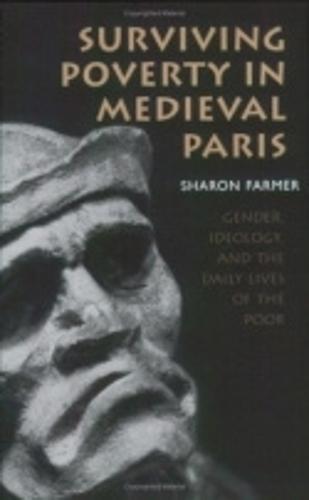
This book about poor men and women in thirteenth- and early fourteenth-century Paris reveals the other side of the ""age of cathedrals"" in the very place where gothic architecture and scholastic theology were born. In Surviving Poverty in Medieval Paris, Sharon Farmer extends and deepens the understanding of urban poverty in the High Middle Ages. She explores the ways in which cultural elites thought about the poor, and shows that their conceptions of poor men and women derived from the roles assigned to men and women in the opening chapters of the Book of Genesis-men are associated with productive labor, or labor within the public realm, and women with reproductive labor, or labor within the private realm.Farmer proceeds to complicate this picture, showing that elite society's attitude toward an individual's social role and moral capacity depended not only on gender but also on the person's social status. Such perceptions in turn influenced the kinds of care extended or denied to the poor by charitable organizations and the informal self-help networks that arose among the poor themselves. Of particular interest are Farmer's discussions of society's responses to men and women who were disabled to the point of being incapable of any work at all.
Full Product Details
Author: Sharon Farmer
Publisher: Cornell University Press
Imprint: Cornell University Press
Dimensions:
Width: 15.50cm
, Height: 1.40cm
, Length: 23.50cm
Weight: 0.454kg
ISBN: 9780801472695
ISBN 10: 0801472695
Pages: 224
Publication Date: 12 December 2005
Audience:
College/higher education
,
Professional and scholarly
,
Tertiary & Higher Education
,
Undergraduate
Format: Paperback
Publisher's Status: Active
Availability: To order

Stock availability from the supplier is unknown. We will order it for you and ship this item to you once it is received by us.
Reviews
We are starting to see several excellent histories of gender written by authors informed by feminist theories attuned to class, age, and marital status as important categories of difference-categories that only complicate and enrich our vision of past societies. Sharon Farmer's latest work on the lives of the poor in the thirteenth-and fourteenth century Paris is a prime example of this historiographical shift, and the author's approach, method, and insights will prove significant to early modern historians interested in social and gender history. -Christopher R. Corley, Minnesota State University, Sixteenth Century Journal, 34:2, 2003. This small but rich study raises some basic questions about polarizations and social cleavages in late-13th and early-14th-century France, mirroring general issues in medieval Europe... Touching many basic issues, this broad and learned book is recommended for all levels and collections. -Choice, September 2002, Vol. 40, No. 1 We now understand more clearly than before ... how the medieval urban poor managed and the place of affective social relationships in this milieu. -Dave Postles, University of Leicester, Medieval Feminist Forum 35, Spring 2003 From tiny fragments of forgotten lives Farmer has derived a disturbing, stimulating, convincing account, one that has great and widely pertinent importance. -Virginia Quarterly Review 78:4 Most non-poor Americans today have limited direct contact with poor people in their daily lives. Thus, attitudes and policy are based on unfounded generalizations undergirded by irrelevant moral value systems. A new book, Surviving Poverty in Medieval Paris, shows that the present-day stereotyping of poor people is not so different from the 13th Century. -No More Jobs, Vol. 8, No. 2, March 2002 This book cautions us from thinking too simply about gender constructs, and, most importantly in my opinion, brings property and social status to the center of the discussion about what constitute masculinities and femininities which were, Farmer convincingly argues, various and several. -James R. Farr, Purdue University, Labour/Le Travail 52, Fall 2003 Paris, the largest city in medieval western Europe, has been absent for far too long from debates on urban societies and their problems. Sharon Farmer's book will put Paris back on the map. This book redefines medieval poverty as a gendered experience, and deploys a dazzling array of sources to explain how church and state responded (or not) to the poor. -Steven Epstein, University of Colorado Surviving Poverty in Medieval Paris is a major contribution to our understanding of poverty and gender in the most important urban environment in the medieval west. -William Chester Jordan, Princeton University
We are starting to see several excellent histories of gender written by authors informed by feminist theories attuned to class, age, and marital status as important categories of difference-categories that only complicate and enrich our vision of past societies. Sharon Farmer's latest work on the lives of the poor in the thirteenth-and fourteenth century Paris is a prime example of this historiographical shift, and the author's approach, method, and insights will prove significant to early modern historians interested in social and gender history. -Christopher R. Corley, Minnesota State University, Sixteenth Century Journal, 34:2, 2003.
This book cautions us from thinking too simply about gender constructs, and, most importantly in my opinion, brings property and social status to the center of the discussion about what constitute masculinities and femininities which were, Farmer convincingly argues, various and several. James R. Farr, Purdue University, Labour/Le Travail 52, Fall 2003
Author Information
Sharon Farmer is Professor of History at the University of California, Santa Barbara. She is the coeditor, with Barbara Rosenwein, of Monks and Nuns, Saints and Outcasts: Religion in Medieval Society and the author of Communities of Saint Martin: Legend and Ritual in Medieval Tours, both from Cornell.