Awards
- Joint winner of Choice Outstanding Academic Title 2023 (UK)
Overview
Surveying the Anthropocene collates a range of approaches to image making concerning environmental issues by some of the best artist-photographers working worldwide. The incisive input to environmental questions is gathered together at a pivotal moment in the evolving human relationship with our home planet. Photographic approaches to environmental imagery have altered fundamentally in recent decades, largely as a result of increasing socio-ecological awareness. This insightful international survey, with a strong representation from Scotland, considers the varied range of current working practices of a representative selection of artist-photographers, both renowned and emerging, whose image-making explores human-caused environmental change. It concentrates particularly on work which relates to the types of impact, on climate and the web of life, that are sufficiently significant and globally widespread to appear in the future record of the rocks as a new geological epoch the Anthropocene. The concept of the Anthropocene has engaged the attention and imagination of a wide range of commentators from very different backgrounds and walks of life. It therefore provides an excellent context in which to discuss, in an open and cross-disciplinary way, the range of responses of artist-photographers and cultural writers to our present global situation of multiple, interconnected environmental and social crises and the options for human ingenuity in addressing these.
Full Product Details
Author: Patricia Macdonald
Publisher: Studies in Photography
Imprint: Studies in Photography
Volume: 2
ISBN: 9781838382230
ISBN 10: 1838382232
Pages: 248
Publication Date: 29 October 2021
Audience:
General/trade
,
General
Format: Hardback
Publisher's Status: Active
Availability: In Print

This item will be ordered in for you from one of our suppliers. Upon receipt, we will promptly dispatch it out to you. For in store availability, please contact us.
Reviews
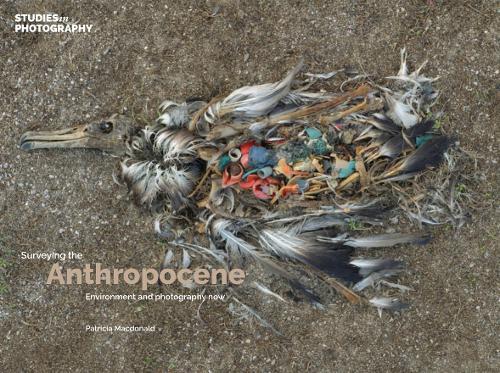
"Surveying the Anthropocene is a remarkable and timely book. Patricia Macdonald has brought together extraordinarily beautiful and compelling images by great contemporary photographers, and thoughtful essays by a constellation of contributors, to create a unique vision of the key environmental issues that confront us now. --Sir Mark Ellis Powell Jones, Former Director of the Victoria and Albert Museum An important, urgent and, at times frightening, collection. Stunning images and insightful analyses from around the world and across the disciplinary spectrum unpack the very concept of the anthropocene. From rewilding to nuclear spelunking, the contributions advance our understanding of climate and biodiversity and suggest where we go next. --Sam Alberti, Director of Collections, National Museums Scotland Beautiful, arresting and timely. --Gaia Vince, journalist, author, broadcaster and speaker This book surveys the impact of the human race on the world we inhabit. The industrial revolution took the work out of our hands; the information technology revolution has taken it out of our minds. We are wrecking the beautiful 'chaos' of our world: rendering ourselves an evolutionary dead-end. Humankind is now a critically endangered species. The presentation of the argument is notable. It starts, as it should for maximum effect, from the photographs. We turn back to photography for truth and reality, and the world's great environmentally aware artist-photographers have joined Patricia Macdonald to offer us the shock of both the small-scale impacts and the arrogance of landscape destruction. Studies in Photography is offering us, from Scotland with its impressive track-record in photography, the clear printing and beautiful design that gives the pictures their proper impact. This is a landmark publication. -- ""Dr. Sara Stevenson, Former Chief Curator of the Scottish National Photography Collection"" This is a stunning book. The reader revels in the richness and wonder of outstanding international photographs and personal insights. The book challenges our views of how humankind has changed the world's climate and biodiversity. Here is a powerful artistic voice for change that supplements that of the scientific community. --David Sugden, Emeritus Professor of Geography, University of Edinburgh This is an important examination of photography's role in documenting the increasing destruction of the Earth's environment. Extraordinary in its revelations, thanks to its numerous contributors, [this] volume includes many beautiful reproductions of photographs by numerous makers, and its entire design and presentation are impressive. This book will raise consciousness and motivate readers, by visual/verbal joining, to find ways to influence change, for example in mitigating use of destructive products and behaviors in response to all the exploitation by those whose life's primary purpose is to make money and ignore the result of that behavior. This reviewer cannot more forcefully urge all people, be they concerned or less attuned to the future of planet Earth, to engage with this volume. Summing Up: Essential. All readers. --C. Chiarenza ""CHOICE"" This remarkable book partners extraordinary images of the rape of the earth with a many-voiced commentary on the action, inaction and possible future actions that have got us to the pretty pass we are in now, but which also might one day help lead us out of it. --Duncan Macmillan, Professor Emeritus of the History of Scottish Art, University of Edinburgh This visually stunning collection of photographs and essays presents readers with an unsettling view of the moment in time in which we find ourselves. [...] Named after Buddhist stupas--hemispherical mounds usually containing relics--ice stupas are essentially artificial glaciers created to store water. [...] In this important book, Patricia Macdonald has constructed a kind of literary stupa that holds a rich reservoir of words and images. Hopefully the meltwater released by reading it will help inform and sustain the sense of environmental concern that is so urgently needed if we are to find our way through the Anthropocene deserts we have created. --Chris Arthur ""World Literature Today"" Vividly portrayed and bitingly depicted, the Anthropocene epoch is laid bare for what it is - a minuscule period in which planet earth bears our indelible imprint. Through an exceptional diversity of images, essays, commentaries and conversations, Surveying the Anthropocene challenges us to think about the climate-nature crisis. The decomposed remains of a fledgling Laysan Albatross with its stomach full of plastics is a damming indictment of our appalling relationship with carbon. Brilliantly edited, with a sensitive nod to prospects for nature restoration and regeneration, I find myself leafing back and forth immersed in the rich content of visual art and words. Patricia Macdonald and the scores of contributors have reminded us of what we have done, and could possibly do, for nature. This is a book about life and death, and hopefully a journey to recovery and resilience --Professor Des Thompson, Principal Adviser on Science and Biodiversity, NatureScot Weaving powerful imagery with compelling essays, Surveying the Anthropocene reminds us that all our actions have consequences for the biosphere: sometimes disastrous, at times negligible and, thank goodness, occasionally even beneficial. For me, Pedro David's Suffocation #12 shows the height of human folly, the replacement of the magnificently biodiverse Brazilian Cerrado by eucalyptus trees. The short term profits to international steel corporations from this wanton destruction could never truly compensate for the loss of a unique biome home to 10,000 plant species. Despite the enormity of the challenges, the book also offers hope. We know how to repair the damage we have done to our planet through rewilding, restoration, renewable energy and environmental justice. But we have left it dangerously late and it remains to be seen whether we will take the urgent and determined action needed to give life a future. --Stephen Blackmore, Her Majesty's Botanist in Scotland"
Surveying the Anthropocene is a remarkable and timely book. Patricia Macdonald has brought together extraordinarily beautiful and compelling images by great contemporary photographers, and thoughtful essays by a constellation of contributors, to create a unique vision of the key environmental issues that confront us now. --Sir Mark Ellis Powell Jones, Former Director of the Victoria and Albert Museum An important, urgent and, at times frightening, collection. Stunning images and insightful analyses from around the world and across the disciplinary spectrum unpack the very concept of the anthropocene. From rewilding to nuclear spelunking, the contributions advance our understanding of climate and biodiversity and suggest where we go next. --Sam Alberti, Director of Collections, National Museums Scotland Beautiful, arresting and timely. --Gaia Vince, journalist, author, broadcaster and speaker This book surveys the impact of the human race on the world we inhabit. The industrial revolution took the work out of our hands; the information technology revolution has taken it out of our minds. We are wrecking the beautiful 'chaos' of our world: rendering ourselves an evolutionary dead-end. Humankind is now a critically endangered species. The presentation of the argument is notable. It starts, as it should for maximum effect, from the photographs. We turn back to photography for truth and reality, and the world's great environmentally aware artist-photographers have joined Patricia Macdonald to offer us the shock of both the small-scale impacts and the arrogance of landscape destruction. Studies in Photography is offering us, from Scotland with its impressive track-record in photography, the clear printing and beautiful design that gives the pictures their proper impact. This is a landmark publication. -- ""Dr. Sara Stevenson, Former Chief Curator of the Scottish National Photography Collection"" This is a stunning book. The reader revels in the richness and wonder of outstanding international photographs and personal insights. The book challenges our views of how humankind has changed the world's climate and biodiversity. Here is a powerful artistic voice for change that supplements that of the scientific community. --David Sugden, Emeritus Professor of Geography, University of Edinburgh This is an important examination of photography's role in documenting the increasing destruction of the Earth's environment. Extraordinary in its revelations, thanks to its numerous contributors, [this] volume includes many beautiful reproductions of photographs by numerous makers, and its entire design and presentation are impressive. This book will raise consciousness and motivate readers, by visual/verbal joining, to find ways to influence change, for example in mitigating use of destructive products and behaviors in response to all the exploitation by those whose life's primary purpose is to make money and ignore the result of that behavior. This reviewer cannot more forcefully urge all people, be they concerned or less attuned to the future of planet Earth, to engage with this volume. Summing Up: Essential. All readers. --C. Chiarenza ""CHOICE"" This remarkable book partners extraordinary images of the rape of the earth with a many-voiced commentary on the action, inaction and possible future actions that have got us to the pretty pass we are in now, but which also might one day help lead us out of it. --Duncan Macmillan, Professor Emeritus of the History of Scottish Art, University of Edinburgh This visually stunning collection of photographs and essays presents readers with an unsettling view of the moment in time in which we find ourselves. [...] Named after Buddhist stupas--hemispherical mounds usually containing relics--ice stupas are essentially artificial glaciers created to store water. [...] In this important book, Patricia Macdonald has constructed a kind of literary stupa that holds a rich reservoir of words and images. Hopefully the meltwater released by reading it will help inform and sustain the sense of environmental concern that is so urgently needed if we are to find our way through the Anthropocene deserts we have created. --Chris Arthur ""World Literature Today"" Vividly portrayed and bitingly depicted, the Anthropocene epoch is laid bare for what it is - a minuscule period in which planet earth bears our indelible imprint. Through an exceptional diversity of images, essays, commentaries and conversations, Surveying the Anthropocene challenges us to think about the climate-nature crisis. The decomposed remains of a fledgling Laysan Albatross with its stomach full of plastics is a damming indictment of our appalling relationship with carbon. Brilliantly edited, with a sensitive nod to prospects for nature restoration and regeneration, I find myself leafing back and forth immersed in the rich content of visual art and words. Patricia Macdonald and the scores of contributors have reminded us of what we have done, and could possibly do, for nature. This is a book about life and death, and hopefully a journey to recovery and resilience --Professor Des Thompson, Principal Adviser on Science and Biodiversity, NatureScot Weaving powerful imagery with compelling essays, Surveying the Anthropocene reminds us that all our actions have consequences for the biosphere: sometimes disastrous, at times negligible and, thank goodness, occasionally even beneficial. For me, Pedro David's Suffocation #12 shows the height of human folly, the replacement of the magnificently biodiverse Brazilian Cerrado by eucalyptus trees. The short term profits to international steel corporations from this wanton destruction could never truly compensate for the loss of a unique biome home to 10,000 plant species. Despite the enormity of the challenges, the book also offers hope. We know how to repair the damage we have done to our planet through rewilding, restoration, renewable energy and environmental justice. But we have left it dangerously late and it remains to be seen whether we will take the urgent and determined action needed to give life a future. --Stephen Blackmore, Her Majesty's Botanist in Scotland
Author Information
Patricia Macdonald BSc PhD FRSE FSA (Scot) FRSA HonFRSGS HonFICS is an environmental / cultural-landscape researcher, writer and academic (since 2004 Honorary Fellow, University of Edinburgh & Edinburgh College of Art) and an award-winning artist-photographer whose powerful, boundary-crossing environmental aerial imagery – made in collaboration with her partner Professor Angus Macdonald of the University of Edinburgh – is commissioned, exhibited and published internationally, spanning fine-art and editorial contexts. She is the author / co-author of ten books / catalogues, including Shadow of Heaven (1989); Order & Chaos (1990); Views of Gaia (1992); Once in Europa / Einst in Europa (1999/2000, with John Berger); Airworks (2001); and The Hebrides: An Aerial View of a Cultural Landscape (2010, with Angus Macdonald).