Overview
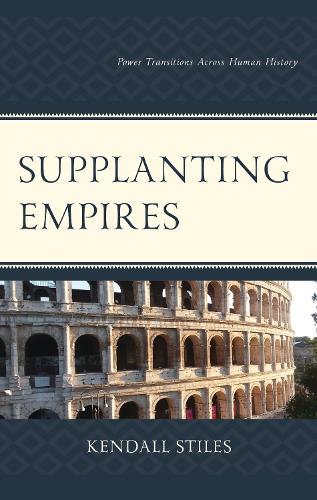
What happens when one empire or hegemon cedes the global stage to a rising power? Supplanting Empires: Power Transitions Across Human History argues that, historically, such power transitions tend to be relatively smooth, resulting in the preservation of the status quo with respect to the global order and institutions. This stems from the tendency of rising powers to be closely associated with declining powers, to the point that they generally support and perpetuate the old ways of governing. They maintain similar governing institutions, retain ties to the former empire’s allies, and generally endorse the declining empire’s ideology and norms. The violence involved in such transitions tends to be limited, and societies and economies are typically left undisturbed. To test this proposition, Kendall Stiles and his students undertake a systematic study of numerous power transitions across millennia of human history. The implications of these findings have considerable relevance with respect to the contemporary power struggle between the United States and China.
Full Product Details
Author: Kendall Stiles ,
Ashley Jackman ,
Brayden Blaylock ,
Colton Osguthorpe
Publisher: Bloomsbury Publishing Plc
Imprint: Lexington Books
ISBN: 9781666974331
ISBN 10: 1666974331
Pages: 524
Publication Date: 05 February 2025
Audience:
Professional and scholarly
,
Professional & Vocational
Format: Hardback
Publisher's Status: Active
Availability: Manufactured on demand

We will order this item for you from a manufactured on demand supplier.
Reviews
Supplanting Empires: Power Transitions Across Human History is an instant classic. It is grounded in history, insightful, and empirically relevant as it speaks directly to the core assumptions of American policymakers; namely their pessimistic fear that the expansion of a China-led BRICS, the growing de-dollarization of the global economy, and an emerging alternate world order could potentially displace the American post-war hegemonic liberal order. The book provides evidence that stands in direct contradiction to these fears showing instead that power transitions have generally been orderly, preserve existing institutions and norms, and take place under conditions of relatively little violence. More importantly, because Supplanting Empires also invalidates the core theoretical assumption of power transition theory that has for decades shaped not only the study of international relations but also the contemporary belief system and attitudes of American decision-makers towards China, will make it one of the most influential and must-read books for years to come. --Horace Bartilow Understanding power transitions in world politics has assumed heightened importance as America's star fades and China's rises. The existing literature--and our ritualised debates--is marred, however, by Eurocentrism, foreshortened time horizons, and a tendency to address 'power challenges' not 'power transitions'. Supplanting Empires: Power Transitions Across Human History seeks to overcome all three of these pathologies, and it yields powerful, counterintuitive insights. Studying diverse cases from global history, the contributors find that genuine power transitions are commonly peaceful and involve the reproduction or renovation of existing order, not their wholesale transformation. A fascinating revisionist history with an important contemporary message. --Christian Rues-Smit, University of Melbourne
Supplanting Empires: Power Transitions Across Human History offers a unique breadth of coverage as the author and team of researchers delve into a wide array of historical and more contemporary cases of successful power transitions. Their focus on the sociological and ideational dimensions of these transitions also adds greater depth and nuance to what often has been ahistorical and apolitical literature on 'war and change'. -- Alistair Edgar, Wilfrid Laurier University Supplanting Empires: Power Transitions Across Human History is an instant classic. It is grounded in history, insightful, and empirically relevant as it speaks directly to the core assumptions of American policymakers; namely their pessimistic fear that the expansion of a China-led BRICS, the growing de-dollarization of the global economy, and an emerging alternate world order could potentially displace the American post-war hegemonic liberal order. The book provides evidence that stands in direct contradiction to these fears showing instead that power transitions have generally been orderly, preserve existing institutions and norms, and take place under conditions of relatively little violence. More importantly, because Supplanting Empires also invalidates the core theoretical assumption of power transition theory that has for decades shaped not only the study of international relations but also the contemporary belief system and attitudes of American decision-makers towards China, will make it one of the most influential and must-read books for years to come. -- Horace Bartilow Understanding power transitions in world politics has assumed heightened importance as America’s star fades and China's rises. The existing literature—and our ritualised debates—is marred, however, by Eurocentrism, foreshortened time horizons, and a tendency to address ‘power challenges’ not ‘power transitions’. Supplanting Empires: Power Transitions Across Human History seeks to overcome all three of these pathologies, and it yields powerful, counterintuitive insights. Studying diverse cases from global history, the contributors find that genuine power transitions are commonly peaceful and involve the reproduction or renovation of existing order, not their wholesale transformation. A fascinating revisionist history with an important contemporary message. -- Christian Rues-Smit, University of Melbourne
Author Information
Kendall Stiles is professor of political science, Brigham Young University, specializing in international relations, including international law, international organization, and international ethics.