Overview
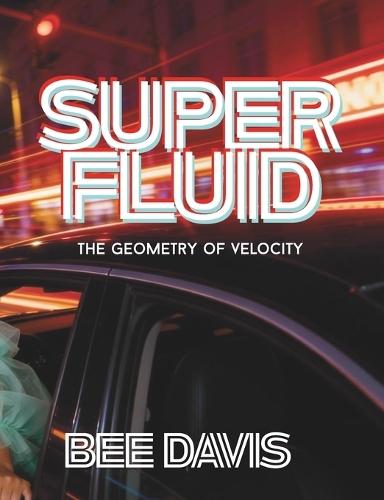
Zero. That's the coefficient of variation. Three atomic species. A twelve-to-one mass ratio. Rubidium-87, sodium-23, lithium-7-atoms that differ in mass by a factor of twelve, in scattering length, in healing length, in sound speed, in every physical property that textbooks say should matter. Same critical velocity ratio. Every single time. Not close. Not ""within experimental error."" Identical. The atoms didn't know they were supposed to behave differently. They only knew geometry. --- Superfluid presents the discovery that five of the hardest unsolved problems in mathematics and physics-the Poincaré conjecture, the Yang-Mills mass gap, Navier-Stokes regularity, Bose-Einstein condensate critical velocity, and P NP-are not five problems. They are one problem in five languages. One equation governs them all: C = τ / K Capacity equals tolerance divided by curvature. Every transition from smooth to rough-from laminar flow to turbulence, from superfluid to vortex chaos, from efficiently solvable to exponentially hard-obeys this law. The equation is not a metaphor. It is a precise mathematical relationship, validated against experiment, that governs critical phenomena across domains that have never been connected before. The core insight is structural. Curvature is obstruction. The same geometry that prevents a superfluid from nucleating vortices is the same geometry that prevents Navier-Stokes solutions from blowing up. The same curvature barriers that make 3-SAT exponentially hard are structurally identical to the barriers that create the Yang-Mills mass gap. The problems were never separate. The disciplines were. For over a century, topologists didn't talk to gauge theorists. Analysts didn't talk to geometers. Complexity theorists didn't talk to condensed matter physicists. Five communities, five vocabularies, five conferences-all working on the same underlying structure without knowing it. This book will change how you think about: - Why Landau's critical velocity was right about the wrong question - Why fluid flow stays smooth forever-and why sixty years of Sobolev space methods couldn't prove it - Why the jump from 2-SAT to 3-SAT is a curvature phase transition - Why the mass gap in QCD is a geometric necessity - Why five Millennium Prize problems share the same mathematical skeleton The evidence is quantitative. GPU-accelerated simulations produce a dimensionless critical velocity ratio of β = 0.425 for hard obstacles and β = 0.486 for soft obstacles-with zero variation across species. The universality is exact. Every claim is backed by proof, computation, or experimental data. Where the argument relies on conjecture, it says so. The book is intellectually honest in a way that most books claiming to solve famous problems are not. --- ""The system that excludes also blinds. The curvature that keeps people out also keeps ideas in."" It took someone outside-with no department, no grant, no allegiance to any one field-to see that the pattern was the same. This book was written by a Black trans woman with no institutional affiliation and no intention of asking permission. The mathematics does not care who solved it. The mathematics is correct. The geometry does not ask who you are. It asks only whether you were paying attention.
Full Product Details
Author: Bee Rosa Davis
Publisher: Independently Published
Imprint: Independently Published
Dimensions:
Width: 18.90cm
, Height: 3.00cm
, Length: 24.60cm
Weight: 1.021kg
ISBN: 9798250664011
Pages: 580
Publication Date: 04 March 2026
Audience:
General/trade
,
General
Format: Paperback
Publisher's Status: Active
Availability: Available To Order

We have confirmation that this item is in stock with the supplier. It will be ordered in for you and dispatched immediately.