Overview
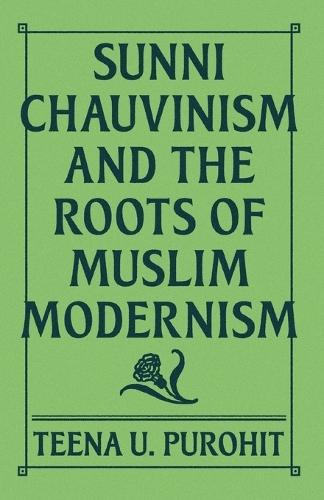
Muslim intellectuals who sought to establish the boundaries of modern Muslim identity Muslim modernism was a political and intellectual movement that sought to redefine the relationship between Islam and the colonial West in the late nineteenth and early twentieth centuries. Spearheaded by Muslim leaders in Asia and the Middle East, the modernist project arose from a desire to reconcile Islamic beliefs and practices with European ideas of secularism, scientific progress, women's rights, and democratic representation. Teena Purohit provides innovative readings of the foundational thinkers of Muslim modernism, showing how their calls for unity and reform led to the marginalization of Muslim minority communities that is still with us today. Sunni Chauvinism and the Roots of Muslim Modernism offers fresh perspectives on figures such as Jamal al-Din al-Afghani, Muhammad Abduh, Muhammad Iqbal, and Abul A'la Mawdudi. It sheds light on the exclusionary impulses and Sunni normative biases of modernist Muslim writers and explores how their aim to unite the global Muslim community-which was stagnant and fragmented in their eyes-also created lasting divisions. While modernists claimed to represent all Muslims when they asserted the centrality and significance of unity, they questioned the status of groups such as Ahmadis, Bahais, and the Shia more broadly. Addressing timely questions about religious authority and reform in modern Islam, this incisive book reveals how modernist notions of Islam as a single homogeneous tradition gave rise to enduring debates about who belongs to the Muslim community and who should be excluded.
Full Product Details
Author: Teena U. Purohit
Publisher: Princeton University Press
Imprint: Princeton University Press
ISBN: 9780691241661
ISBN 10: 069124166
Pages: 248
Publication Date: 31 March 2026
Audience:
College/higher education
,
Professional and scholarly
,
General/trade
,
Tertiary & Higher Education
,
Professional & Vocational
Format: Paperback
Publisher's Status: Active
Availability: Not yet available, will be POD

This item is yet to be released. You can pre-order this item and we will dispatch it to you upon it's release. This is a print on demand item which is still yet to be released.
Reviews
""An intellectually-absorbing work. . . . The book’s relevance extends far beyond academia. It provides invaluable insights into the modern-day challenges confronting Muslim societies across the world.""---Saleem Rashid Shah, The Wire ""Sunni Chauvinism and the Roots of Muslim Modernism refreshingly rethinks the history of canonical, politically oriented Muslim modernist thinkers between the nineteenth and twentieth centuries under the conditions of European colonialism. . . . [T]hought-provoking, timely, and important.""---Sarah Waheed, American Historical Review ""A deft and valuable study that boasts numerous successes. The patterns that Purohit traces in Sunni modernists and their successors are compelling, elucidating some of the shared concerns of these authors and the important contributions of Muslim minorities within the broader modern reformist milieu. More broadly, Sunni Chauvinism is exemplary as a study of inter-communal relations that reads against unhelpful normative biases and determines to interrogate antagonism, its processes and its causes, rather than accepting doctrinal differences as self-evident grounds for enmity.""---George Waner, Reading Religion
Author Information
Teena U. Purohit is Associate Professor of Religion at Boston University. She is the author of The Aga Khan Case: Religion and Identity in Colonial India.