Overview
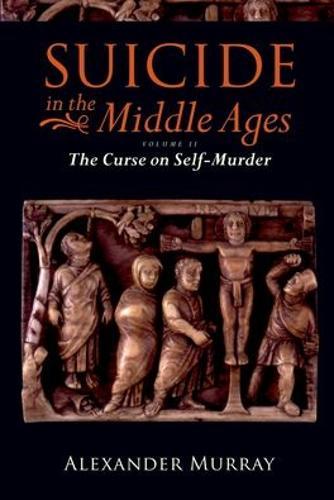
A group of men dig a tunnel under the threshold of a house. Then they go and fetch a heavy, sagging object from inside the house, pull it out through the tunnel, and put it on a cow-hide to be dragged off and thrown into the offal-pit. Why should the corpse of a suicide - for that is what it is - have earned this unusual treatment? In The Curse on Self-Murder, Alexander Murray explores the origin of the condemnation of suicide, in a quest which leads along the most unexpected byways of medieval theology, law, mythology, and folklore -and, indeed, in some instances beyond them. At an epoch when there might be plenty of ostensible reasons for not wanting to live, the ways used to block the suicidal escape route give a unique perspective on medieval religion.
Full Product Details
Author: Alexander Murray (University College, Oxford)
Publisher: Oxford University Press
Imprint: Oxford University Press
Dimensions:
Width: 15.50cm
, Height: 3.70cm
, Length: 23.50cm
Weight: 0.986kg
ISBN: 9780199553181
ISBN 10: 0199553181
Pages: 662
Publication Date: 03 March 2011
Audience:
College/higher education
,
Undergraduate
,
Postgraduate, Research & Scholarly
Format: Paperback
Publisher's Status: Active
Availability: To order

Stock availability from the supplier is unknown. We will order it for you and ship this item to you once it is received by us.
Reviews
Book of the year chosen by Eric Christiansen * The Spectator * His most excellent dissection of the body of the judiciary in post-Conquest England cuts through records of coroners and the eyre rolls, as well as King's Bench in Westminster ... Suffice to say, his explication of legal records is nothing less than brilliant ... This is truly a history book for historians...I devoured it with a good strong claret before the fireplace. * David Lederer, The Medieval Review * It will become the definitive study almost as a by-product. * Contemporary Review * We could hope for no better guide. * Margaret Atkins, The Tablet * This is an astonishing and very individual work. Its range and erudition are prodigious. Monumental labour and great fixity of vision and purpose will have been needed to create it. The grand design is kept in view all the time while the interlocking subordinate parts and arguments move forward. * English Historical Review * Murray's description of Emile Durkheim's book on suicide can be applied to his own monumental work - 'long, cogent, lucid and unobtrusively tender'. * English Historical Review * Fascinating comments on medieval law and culture ... This is a book of breathtaking learning, full of insights on a great range of aspects of medieval culture, not least because, as Murray so brilliantly shows, the issue of suicide threw up so many paradoxes and anomalies within legal and ethical systems of thought and practice. * Journal of Ecclesiastical History * Review from previous edition No other work on the history of thought and action touches it * Spectator *
`Review from previous edition No other work on the history of thought and action touches it ' Spectator `Fascinating comments on medieval law and culture ... This is a book of breathtaking learning, full of insights on a great range of aspects of medieval culture, not least because, as Murray so brilliantly shows, the issue of suicide threw up so many paradoxes and anomalies within legal and ethical systems of thought and practice. ' Journal of Ecclesiastical History `Murray's description of Emile Durkheim's book on suicide can be applied to his own monumental work - 'long, cogent, lucid and unobtrusively tender'. ' English Historical Review `This is an astonishing and very individual work. Its range and erudition are prodigious. Monumental labour and great fixity of vision and purpose will have been needed to create it. The grand design is kept in view all the time while the interlocking subordinate parts and arguments move forward. ' English Historical Review `We could hope for no better guide.' Margaret Atkins, The Tablet `It will become the definitive study almost as a by-product.' Contemporary Review `His most excellent dissection of the body of the judiciary in post-Conquest England cuts through records of coroners and the eyre rolls, as well as King's Bench in Westminster ... Suffice to say, his explication of legal records is nothing less than brilliant ... This is truly a history book for historians...I devoured it with a good strong claret before the fireplace. ' David Lederer, The Medieval Review `Book of the year chosen by Eric Christiansen ' The Spectator
Review from previous edition No other work on the history of thought and action touches it Spectator Fascinating comments on medieval law and culture ... This is a book of breathtaking learning, full of insights on a great range of aspects of medieval culture, not least because, as Murray so brilliantly shows, the issue of suicide threw up so many paradoxes and anomalies within legal and ethical systems of thought and practice. Journal of Ecclesiastical History Murray's description of Emile Durkheim's book on suicide can be applied to his own monumental work - 'long, cogent, lucid and unobtrusively tender'. English Historical Review This is an astonishing and very individual work. Its range and erudition are prodigious. Monumental labour and great fixity of vision and purpose will have been needed to create it. The grand design is kept in view all the time while the interlocking subordinate parts and arguments move forward. English Historical Review We could hope for no better guide. Margaret Atkins, The Tablet It will become the definitive study almost as a by-product. Contemporary Review His most excellent dissection of the body of the judiciary in post-Conquest England cuts through records of coroners and the eyre rolls, as well as King's Bench in Westminster ... Suffice to say, his explication of legal records is nothing less than brilliant ... This is truly a history book for historians...I devoured it with a good strong claret before the fireplace. David Lederer, The Medieval Review Book of the year chosen by Eric Christiansen The Spectator