Overview
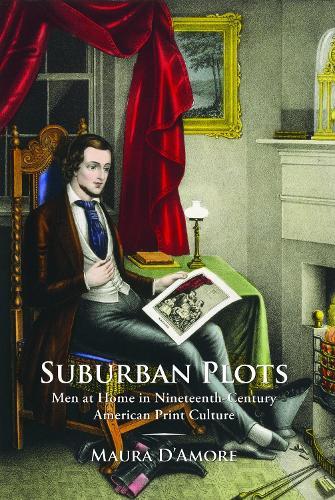
In the middle of the nineteenth century, as Americans contended with rapid industrial and technological change, readers relied on periodicals and books for information about their changing world. Within this print culture, a host of writers, editors, architects, and reformers urged men to commute to and from their jobs in the city, which was commonly associated with overcrowding, disease, and expense. Through a range of materials, from pattern books to novels and a variety of periodicals, men were told of the restorative effects on body and soul of the natural environment, found in the emerging suburbs outside cities such as New York, Boston, and Philadelphia. They were assured that the promise of an ideal home, despite its association with women’s work, could help to motivate them to engage in the labour and commute that took them away from it each day. In Suburban Plots, Maura D’Amore explores how Henry David Thoreau, Henry Ward Beecher, Donald Grant Mitchell, Nathaniel Hawthorne, Nathaniel Parker Willis, and others utilised the pen to plot opportunities for a new sort of male agency grounded, literarily and spatially, in a suburbanised domestic landscape. D’Amore uncovers surprising narratives that do not fit easily into standard critical accounts of midcentury home life. Taking men out of work spaces and locating them in the domestic sphere, these writers were involved in a complex process of portraying men struggling to fulfill fantasies outside of their professional lives, in newly emerging communities. These representations established the groundwork for popular conceptions of suburban domestic life that remain today.
Full Product Details
Author: Maura D'Amore
Publisher: University of Massachusetts Press
Imprint: University of Massachusetts Press
Dimensions:
Width: 15.20cm
, Height: 1.70cm
, Length: 22.60cm
Weight: 0.341kg
ISBN: 9781625340955
ISBN 10: 1625340958
Pages: 208
Publication Date: 10 June 2014
Audience:
College/higher education
,
Undergraduate
,
Postgraduate, Research & Scholarly
Format: Paperback
Publisher's Status: Active
Availability: In Print

This item will be ordered in for you from one of our suppliers. Upon receipt, we will promptly dispatch it out to you. For in store availability, please contact us.
Reviews
Suburban Plots redraws many of the boundaries and concepts that have shaped American literary and cultural studies for the past decades; it refines our critical attitudes toward gendered activities, labor, authorship, and domesticity.--Martin BrA1/4ckner, author of The Geographic Revolution in Early America: Maps, Literacy, and National IdentityAn exemplary work of literary and cultural history.--SHARP NewsD'Amore's study provides a fruitful spatial remapping of popular and literary writing, and of nineteenth-century masculinity.The strongest chapter imagines Nathaniel Parker Willis as an antebellum Martha Stewart, analyzing his creation of an imagined suburban lifestyle community in the readership of the Home Journal. D'Amore frequently returns to the lack of closure in these narratives and the gaps that emerge between the real and the ideal, which provide material for humorists and indicate tensions in these masculine fantasies.--American Literature to 1900
Suburban Plots redraws many of the boundaries and concepts that have shaped American literary and cultural studies for the past decades; it refines our critical attitudes toward gendered activities, labor, authorship, and domesticity.--Martin Bruckner, author of The Geographic Revolution in Early America: Maps, Literacy, and National Identity An exemplary work of literary and cultural history.--SHARP News D'Amore's study provides a fruitful spatial remapping of popular and literary writing, and of nineteenth-century masculinity.The strongest chapter imagines Nathaniel Parker Willis as an antebellum Martha Stewart, analyzing his creation of an imagined suburban lifestyle community in the readership of the Home Journal. D'Amore frequently returns to the lack of closure in these narratives and the gaps that emerge between the real and the ideal, which provide material for humorists and indicate tensions in these masculine fantasies.--American Literature to 1900
""Suburban Plots redraws many of the boundaries and concepts that have shaped American literary and cultural studies for the past decades; it refines our critical attitudes toward gendered activities, labor, authorship, and domesticity.""--Martin BrÃ1/4ckner, author of The Geographic Revolution in Early America: Maps, Literacy, and National Identity ""An exemplary work of literary and cultural history.""--SHARP News ""D'Amore's study provides a fruitful spatial remapping of popular and literary writing, and of nineteenth-century masculinity.The strongest chapter imagines Nathaniel Parker Willis as an antebellum Martha Stewart, analyzing his creation of an imagined suburban lifestyle community in the readership of the Home Journal. D'Amore frequently returns to the lack of closure in these narratives and the gaps that emerge between the real and the ideal, which provide material for humorists and indicate tensions in these masculine fantasies.""--American Literature to 1900
Suburban Plots redraws many of the boundaries and concepts that have shaped American literary and cultural studies for the past decades; it refines our critical attitudes toward gendered activities, labor, authorship, and domesticity.--Martin BrÃ1/4ckner, author of The Geographic Revolution in Early America: Maps, Literacy, and National Identity An exemplary work of literary and cultural history.--SHARP News D'Amore's study provides a fruitful spatial remapping of popular and literary writing, and of nineteenth-century masculinity.The strongest chapter imagines Nathaniel Parker Willis as an antebellum Martha Stewart, analyzing his creation of an imagined suburban lifestyle community in the readership of the Home Journal. D'Amore frequently returns to the lack of closure in these narratives and the gaps that emerge between the real and the ideal, which provide material for humorists and indicate tensions in these masculine fantasies.--American Literature to 1900
Author Information
Maura D’Amore is assistant professor of English at Saint Michael’s College.