Awards
- Commended for Richard Wall Memorial Award 2017
- Commended for Richard Wall Memorial Award, Theatre Library Association 2016
- Commended for Richard Wall Memorial Award, Theatre Library Association 2017
- Winner of Choice Outstanding Academic Title 2015
- Winner of Choice Outstanding Academic Title 2017
- Winner of Outstanding Academic Title 2017
Overview
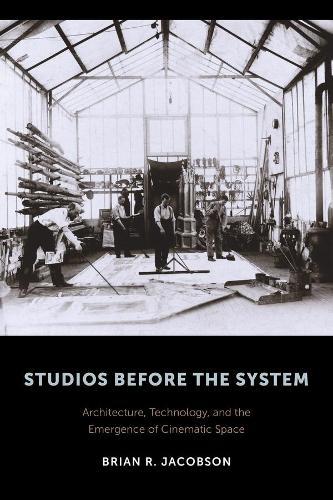
By 1915, Hollywood had become the epicenter of American filmmaking, with studio ""dream factories"" structuring its vast production. Filmmakers designed Hollywood studios with a distinct artistic and industrial mission in mind, which in turn influenced the form, content, and business of the films that were made and the impressions of the people who viewed them. The first book to retell the history of film studio architecture, Studios Before the System expands the social and cultural footprint of cinema's virtual worlds and their contribution to wider developments in global technology and urban modernism. Focusing on six significant early film corporations in the United States and France-the Edison Manufacturing Company, American Mutoscope and Biograph, American Vitagraph, Georges Méliès's Star Films, Gaumont, and Pathé Frères-as well as smaller producers and film companies, Studios Before the System describes how filmmakers first envisioned the space they needed and then sourced modern materials to create novel film worlds. Artificially reproducing the natural environment, film studios helped usher in the world's Second Industrial Revolution and what Lewis Mumford would later call the ""specific art of the machine."" From housing workshops for set, prop, and costume design to dressing rooms and writing departments, studio architecture was always present though rarely visible to the average spectator in the twentieth century, providing the scaffolding under which culture, film aesthetics, and our relation to lived space took shape.
Full Product Details
Author: Brian R. Jacobson
Publisher: Columbia University Press
Imprint: Columbia University Press
Dimensions:
Width: 15.20cm
, Height: 1.50cm
, Length: 22.90cm
Weight: 0.411kg
ISBN: 9780231172813
ISBN 10: 0231172818
Pages: 312
Publication Date: 01 September 2015
Audience:
General/trade
,
General
,
Postgraduate, Research & Scholarly
Format: Paperback
Publisher's Status: Active
Availability: Manufactured on demand

We will order this item for you from a manufactured on demand supplier.
Language: English
Reviews
This is an impressive, groundbreaking book that joins other recent revisionist works in offering an innovative notion of early cinema history that has invaluable ramifications for cinema history overall. Furthermore, it promises to make a considerable impact on the study of cinema's profound interrelations with architecture, modern technologies, and urban infrastructure at the beginnings of the 20th century. -- Richard Abel, University of Michigan
This is an impressive, groundbreaking book that joins other recent revisionist works in offering an innovative notion of early cinema history that has invaluable ramifications for cinema history overall. Furthermore, it promises to make a considerable impact on the study of cinema's profound interrelations with architecture, modern technologies, and urban infrastructure at the beginnings of the 20th century. -- Richard Abel, University of Michigan A breakthrough book--at once a history of technology, of cinema, and of architecture--showing how they merge in the invention of the cinematic studio in a few wildly innovative years around 1900. Jacobson tells the story of this invention with flair, fluency, and most of all with awareness of its historical significance: by uniting real and virtual space in cinematic space, the studio transformed the human-built world. -- Rosalind H. Williams, Massachusetts Institute of Technology
This is an impressive, groundbreaking book that joins other recent revisionist works in offering an innovative notion of early cinema history that has invaluable ramifications for cinema history overall. Furthermore, it promises to make a considerable impact on the study of cinema's profound interrelations with architecture, modern technologies, and urban infrastructure at the beginnings of the 20th century. -- Richard Abel, University of Michigan A breakthrough book--at once a history of technology, of cinema, and of architecture--showing how they merge in the invention of the cinematic studio in a few wildly innovative years around 1900. Jacobson tells the story of this invention with flair, fluency, and most of all with awareness of its historical significance: by uniting real and virtual space in cinematic space, the studio transformed the human-built world. -- Rosalind H. Williams, Massachusetts Institute of Technology Rare is the book that justly can be called an instant classic, but Studios Before the System is just that. Meticulously researched, elegantly written, and admirably capacious, it is a landmark study of the built environments of early cinematic production. Jacobson's masterful command of the histories of architecture, cinema, and technology generates new questions while restoring architectural detail to our understanding of the first film studios. This is a foundational work that is also a pleasure to read. -- Edward Dimendberg, author of Diller Scofidio + Renfro: Architecture after Images
Author Information
Brian R. Jacobson is a historian of film and visual culture and assistant professor of cinema studies and history at the University of Toronto.