Overview
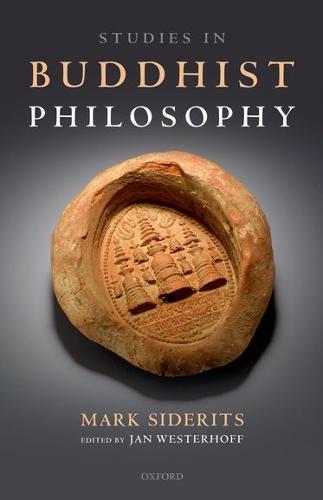
This volume brings together nineteen of Mark Siderits's most important essays on Buddhist philosophy. Together they cover a wide range of topics, from metaphysics, logic, philosophy of language, epistemology, and ethics, to the specific discussions of the interaction between Buddhist and classical Indian philosophy. Each of the essays is followed by a postscript that Siderits has written specifically for this volume. The postscripts connect essays of the volume with each other, show thematic interrelations, and locate them relative to the development of Siderits's thought. In addition, they provide the opportunity to bring the discussion of the essays up to date by acquainting the reader with the development of research in the field since the publication of the essays. Siderits's work is based on an investigation of Indian sources in their original language, nevertheless the focus of the essays is primarily systematic, not historical or philological. The idea of 'fusion philosophy' (a term coined by Siderits) embodies precisely the assumption that by bringing a Western and an Eastern tradition together, both can benefit by learning from each other about new ways of tackling old philosophical problems.
Full Product Details
Author: Mark Siderits (, Seoul National University) , Jan Westerhoff (Lady Margaret Hall, Oxford)
Publisher: Oxford University Press
Imprint: Oxford University Press
Dimensions:
Width: 16.80cm
, Height: 2.40cm
, Length: 24.00cm
Weight: 0.628kg
ISBN: 9780198754862
ISBN 10: 0198754868
Pages: 322
Publication Date: 24 March 2016
Audience:
College/higher education
,
Undergraduate
,
Postgraduate, Research & Scholarly
Format: Hardback
Publisher's Status: Active
Availability: Manufactured on demand 
We will order this item for you from a manufactured on demand supplier.
Table of Contents
Jan Westerhoff: Introduction 1: Madhyamaka and anti-realism 1.1: Nagarjuna as anti-realist 1.2: Thinking on empty: Madhyamaka anti-realism and canons of rationality 1.3: On the soteriological significance of emptiness 1.4: A Note on the Early Buddhist Theory of Truth 2: Logical and metaphysical problems 2.1: Perceiving Particulars: A Buddhist Defense 2.2: Do Persons Supervene on Skandhas? 2.3: Causation in Early Madhyamaka 2.4: Contradiction in Buddhist argumentation 2.5: Deductive, inductive, both, or neither? 3: Philosophy of language 3.1: Buddhist nominalism and desert 3.2: Apohavada, nominalism, and resemblance theories 3.3: The Sense-Reference Distinction in Indian Philosophy of Language 4: Epistemology 4.1: The Madhyamaka critique of epistemology I 4.2: The Madhyamaka critique of epistemology II 4.3: Madhyamaka on Naturalized Epistemology 5: Ethics 5.1: Buddhist paleo-compatibilism 5.2: Buddhist reductionism and the structure of Buddhist ethics 6: Buddhist and non-Buddhist Indian Philosophy 6.1: Nyaya realism, Buddhist critique 6.2: Distinguishing the Madhyamika from the Advaitin: a field guide Abbreviations Bibliography
Reviews
For those with an interest in Buddhist thought, the collection is of great value. Siderits takes us on an illuminating and informative tour of ancient debates that to many may have seemed both dated and obscure; and from these debates, drawing on his remarkable knowledge, imagination and insight, he is often able to help us learn real philosophical lessons...these essays more than repay the effort required to engage with them. Collectively they represent perhaps the single most important effort yet made to build a world philosophy, one that would learn from the various great wisdom traditions of humanity while being at the same time highly respectful and searchingly critical of all sides in the conversation. -- Notre Dame Philosophical Reviews
For those with an interest in Buddhist thought, the collection is of great value. Siderits takes us on an illuminating and informative tour of ancient debates that to many may have seemed both dated and obscure; and from these debates, drawing on his remarkable knowledge, imagination and insight, he is often able to help us learn real philosophical lessons...these essays more than repay the effort required to engage with them. Collectively they represent perhaps the single most important effort yet made to build a world philosophy, one that would learn from the various great wisdom traditions of humanity while being at the same time highly respectful and searchingly critical of all sides in the conversation. -- <em>Notre Dame Philosophical Reviews</em>
For those with an interest in Buddhist thought, the collection is of great value. Siderits takes us on an illuminating and informative tour of ancient debates that to many may have seemed both dated and obscure; and from these debates, drawing on his remarkable knowledge, imagination and insight, he is often able to help us learn real philosophical lessons...these essays more than repay the effort required to engage with them. Collectively they represent perhaps the single most important effort yet made to build a world philosophy, one that would learn from the various great wisdom traditions of humanity while being at the same time highly respectful and searchingly critical of all sides in the conversation. -- Notre Dame Philosophical Reviews
Author Information
Mark Siderits' research interests lie in the intersection between classical Indian philosophy on the one hand, and analytic metaphysics and philosophy of language on the other. He received his PhD from Yale University, and taught first at Illinois State University and then at Seoul National University, retiring from the latter in 2012. Among his more recent publications are Buddhism As Philosophy (Ashgate/Hackett, 2007), Personal Identity and Buddhist Philosophy: Empty Persons (Ashgate, 2nd revised edition 2015) and, together with Shôryû Katsura,Nâgârjuna's Middle Way: Mûlamadhyamakakârikâ (Wisdom, 2013). He has also edited several collections of work on Indian/analytic philosophy, including Self, No Self? (with Evan Thompson and Dan Zahavi OUP, 2010). Jan Westerhoff is Associate Professor of Religious Ethics at the University of Oxford, a Fellow and Tutor in Theology and Religion at Lady Margaret Hall, University of Oxford, and a Research Associate at the School of Oriental and African Studies, University of London. His publications include Nagarjuna's Madhyamaka (OUP, 2009), The Dispeller of Disputes: Nagarjuna's Vigrahavyavartani (OUP, 2010), and Reality: A Very Short Introduction (OUP, 2011). His research concentrates on systematic aspects of ancient Indian Philosophy, especially on Madhyamaka.
Tab Content 6
Author Website:
Countries Available
All regions
|