Overview
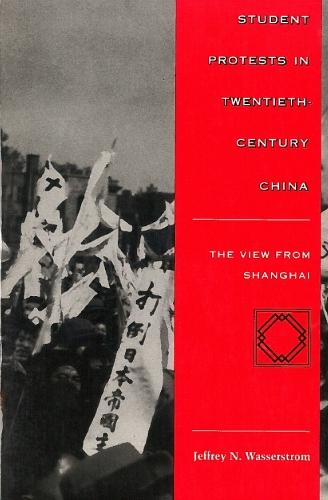
Long before the dramatic events of 1989, Shanghai students had been at the center of many similar mass movements and political upheavals that wracked China from 1919 on. This book looks at how these students experienced and helped shape the course of the Chinese Revolution. Unlike most previous studies of Chinese youth movements, which have emphasized ideologies and the activities of political parties, this book is primarily concerned with the symbolic meanings of student protests and the process by which students were able to translate collective anger into effective collective action. Narrative chapters provide general information concerning Shanghai and its students during the eras in question and case studies of the most important student-led mass movements of the time. Interspersed are thematic chapters that explore general features of campus unrest throughout the Republican era. Throughout, the book is enriched with material from newly available Chinese documents and from personal interviews with Chinese scholars and participants in various protests.
Full Product Details
Author: Jeffrey N. Wasserstrom
Publisher: Stanford University Press
Imprint: Stanford University Press
Edition: New edition
Dimensions:
Width: 15.20cm
, Height: 2.60cm
, Length: 22.90cm
Weight: 0.612kg
ISBN: 9780804731669
ISBN 10: 0804731667
Pages: 444
Publication Date: 01 August 1997
Audience:
College/higher education
,
Professional and scholarly
,
Undergraduate
,
Postgraduate, Research & Scholarly
Format: Paperback
Publisher's Status: Active
Availability: In Print

This item will be ordered in for you from one of our suppliers. Upon receipt, we will promptly dispatch it out to you. For in store availability, please contact us.
Reviews
Wasserstrom has made a major contribution by shaping the history of student protest into a single, twentieth-century story and pattern of complexity. In doing so, he offers a model for rethinking the late imperial, republican, and communist periods as a historical unit conditioned by indigenous and global forces, and explained by sinological and comparative methods. -Journal of Asian Studies It succeeds very well at what it sets out to do: to bring Shanghai and performance theory to bear upon our understanding of student activism in twentieth-century China. Enriched by a comprehensive bibliographical essay and suggestive comparisons with Russian, American, and European student movements, this study sets a new standard for research in social history. -The China Quarterly Wasserstrom's study is an important contribution to political, social, and cultural history, and by focusing on the role and techniques of student protest has added an important piece to the complex jigsaw of China's twentieth-century revolution. -Bulletin of the School of Oriental and African Studies Analytical and rich in detail, ... this study makes an important contribution to our understanding of the roles educated Chinese youth played as challengers of authority. -Journal of Asian History
Wasserstrom has made a major contribution by shaping the history of student protest into a single, twentieth-century story and pattern of complexity. In doing so, he offers a model for rethinking the late imperial, republican, and communist periods as a historical unit conditioned by indigenous and global forces, and explained by sinological and comparative methods. - Journal of Asian Studies It succeeds very well at what it sets out to do: to bring Shanghai and performance theory to bear upon our understanding of student activism in twentieth-century China. Enriched by a comprehensive bibliographical essay and suggestive comparisons with Russian, American, and European student movements, this study sets a new standard for research in social history. - The China Quarterly Wasserstrom's study is an important contribution to political, social, and cultural history, and by focusing on the role and techniques of student protest has added an important piece to the complex jigsaw of China's twentieth-century revolution. - Bulletin of the School of Oriental and African Studies Analytical and rich in detail, ... this study makes an important contribution to our understanding of the roles educated Chinese youth played as challengers of authority. - Journal of Asian History
'Wasserstrom's study is an important contribution to political, social, and cultural history, and by focusing on the role and techniques of student p rotest has added an important piece to the complex jigsaw of China's twentieth-century revolution.' Bulletin of the School of Oriental and African Studies
Author Information
Jeffrey N. Wasserstrom is Associate Professor of History at Indiana University, Bloomington.