Structure-Based Drug Discovery: An Overview

Author:   Roderick E Hubbard (University of York, UK) ,  Maria M Flocco ,  Xavier Barril ,  Robert Soliva
Publisher:   Royal Society of Chemistry
Volume:   Volume 3
ISBN:  

9780854043514


Pages:   278
Publication Date:   07 April 2006
Format:   Hardback
Availability:   In Print   Availability explained
This item will be ordered in for you from one of our suppliers. Upon receipt, we will promptly dispatch it out to you. For in store availability, please contact us.

Our Price $344.11 Quantity:  
Add to Cart

Share |

Structure-Based Drug Discovery: An Overview


Overview

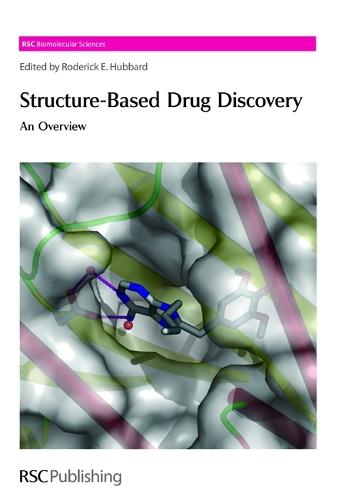
Structure-based drug discovery is a collection of methods that exploits the ability to determine and analyse the three dimensional structure of biological molecules. These methods have been adopted and enhanced to improve the speed and quality of discovery of new drug candidates. After an introductory overview of the principles and application of structure-based methods in drug discovery, this book then describes the essential features of the various methods. Chapters on X-ray crystallography, NMR spectroscopy, and computational chemistry and molecular modelling describe how these particular techniques have been enhanced to support rational drug discovery, with discussions on developments such as high throughput structure determination, probing protein-ligand interactions by NMR spectroscopy, virtual screening and fragment-based drug discovery. The concluding chapters complement the overview of methods by presenting case histories to demonstrate the major impact that structure-based methods have had on discovering drug molecules. Written by international experts from industry and academia, this comprehensive introduction to the methods and practice of structure-based drug discovery not only illustrates leading-edge science but also provides the scientific background for the non-expert reader. The book provides a balanced appraisal of what structure-based methods can and cannot contribute to drug discovery. It will appeal to industrial and academic researchers in pharmaceutical sciences, medicinal chemistry and chemical biology, as well as providing an insight into the field for recent graduates in the biomolecular sciences.

Full Product Details

Author:   Roderick E Hubbard (University of York, UK) ,  Maria M Flocco ,  Xavier Barril ,  Robert Soliva
Publisher:   Royal Society of Chemistry
Imprint:   Royal Society of Chemistry
Volume:   Volume 3
Dimensions:   Width: 15.60cm , Height: 2.20cm , Length: 23.40cm
Weight:   0.571kg
ISBN:  

9780854043514


ISBN 10:   0854043519
Pages:   278
Publication Date:   07 April 2006
Audience:   College/higher education ,  Professional and scholarly ,  Postgraduate, Research & Scholarly ,  Professional & Vocational
Format:   Hardback
Publisher's Status:   Active
Availability:   In Print   Availability explained
This item will be ordered in for you from one of our suppliers. Upon receipt, we will promptly dispatch it out to you. For in store availability, please contact us.

Table of Contents

Chapter 1: 3D Structure and the Drug Discovery Process; 1: Introduction; 2: The Drug Discovery Process; 3: What is Structure-based Drug Discovery?; 4: The Evolution of the Ideas of Structure-based Drug Discovery; 5: What isn't in this Book; 6: Concluding Remarks; References; Chapter 2: Structure Detemination - Crystallography for Structure-based Drug Design; 1: What is X-ray Crystallography?; 2: What is required to Produce a Crystal Structure?; 3: Crystallisability of Proteins; 4: How Does the X-ray Data Relate to the Electron Density? The Phase Problem; 5: Electron Density Map Interpretation and Atomic Model of the Protein; 6: Useful Crystallographic Therminology when Utilising Crystal Structures; 7: The Structure Determination Process; 8: Recent technological Advances; 9: The Role of Crystal Structures in the Discovery Process; 10: The Optimal SBDD System; 11: The Impact of Structural Genomics; 12: Producing a Biologically Relevant Structure; 13: Phosphorylation; 14: Balancing Solubility with Crystallisability; 15: Engineering Solubility; 16: Specific Crystal Packing Engineering; 17: Engineering Stability; 18: Use of Surrogate Proteins; References; Chapter 3: Molecular Modelling; 1: Introduction; 2: Methods; 3: Applications; 4: Conclusion; References; Chapter 4: Applications of NMR in Structure-based Drug Design; 1: Introduction; 2: Studying Ligand/Receptor Interactions by NMR; 3: NMR in Structure-based Lead Optimization; 4: Other Applications of NMR in SBDD; 5: Conclusion and Outlook; References; Chapter 5:Fragment Screening - An Introduction; 1: Introduction; 2: The Concept of Drug Likeness; 3: The Evolution of Lead-likeness and Fragment Screening; 4: Finding Fragments by Screening; 5: The Design of Fragment Screening Sets; 6: Turning Fragment Hits into Leads; 7:Summary; References; Chapter 6: Iterative Structure-based Screening of Virtual Chemical Libraries and Factor Xa: Finding the Orally Available Antithrombotic Candadate LY517717; 1: Introduction; 2: Morphology of the Factor Xa Active Site; 3: Structure-based Library Design; 4: Design Strategy for Factor Xa; 5: Introducing Oral Availability; 6: Non-basic S1 Series; 7: Oral Antithrombotic Activity; 8: Conclusion; References; Chapter 7: Anti-influenza Drugs from Sialidase Inhibitors; 1: Introduction; 2: Influenza Viruses; 3: Early Attempts to Discover Neuraminidase Inhibitors; 4: Neuraminidase Structure; 5: Structure-based Discovery of Inhibitors; 6: Retrospective Analyses of Inhibitor-binding; 7: Laboratory Studies of Inhibitor Resistant Variants; 8: Clinical Studies of Drug Resistance; 9: Drug Profiles; Conclusions; References; Chapter 8: Isoform Specificity: The Design of Estrogen Receptor- Selective Compounds; 1: Introduction; 2: Structure-based Design Methodology; 3: The Design of Aryl Diphenolic Azoles as ER? Selective Agonists; 4: Learning From and Moving Beyond the Genistein Scaffold; 5: Evaluation of ER? Selective Compounds in Biological Assays; Conclusions; Acknowledgements; References

Reviews

Well written......most illuminating.This is a book that the practising medicinal chemist should have at the bedside. * Chemistry & Industry, 26 March 2007 (Christopher Newton) * ....good didactic overview....good artwork reinforcing the text.....warmly recommend this book to those about to embark on a structure-based drug design project. There are very few of us who will invent a drug, but by using the techniques described, you will shorten your own odds considerably. * Chemistry World, January 2007, p59 (Richard Lewis) *


...good didactic overview...good artwork reinforcing the text...warmly recommend this book to those about to embark on a structure-based drug design project. There are very few of us who will invent a drug, but by using the techniques described, you will shorten your own odds considerably. -- Chemistry World, January 2007, p59 (Richard Lewis) Chemistry World Well written...most illuminating. This is a book that the practising medicinal chemist should have at the bedside. -- Chemistry & Industry, 26 March 2007 (Christopher Newton) Chemistry and Industry


Author Information

Tab Content 6

Author Website:  

Countries Available

All regions
Latest Reading Guide

NOV RG 20252


Shopping Cart
Your cart is empty
Shopping cart
Mailing List