|
|
|||
|
||||
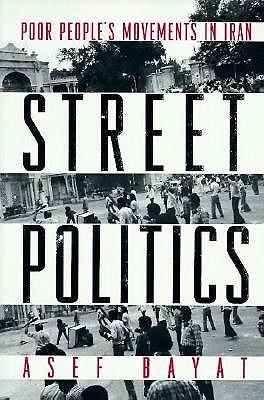
OverviewIn the late 1970s and throughout the 1980s, an active political movement emerged on the streets of Iran's largest cities. Poor people began to construct their own communities on unused urban lands, creating an infrastructure––roads, electricity, running water, garbage collection, and shelters––all their own. As the Iranian government attempted to evict these illegal settlers, they resisted––fiercely and ultimately successfully. This is the story of their economic and political strategies. Full Product DetailsAuthor: Asef BayatPublisher: Columbia University Press Imprint: Columbia University Press Dimensions: Width: 17.50cm , Height: 1.70cm , Length: 22.40cm Weight: 0.397kg ISBN: 9780231108591ISBN 10: 0231108591 Pages: 256 Publication Date: 25 November 1997 Audience: Professional and scholarly , Professional & Vocational Format: Paperback Publisher's Status: Active Availability: Available To Order We have confirmation that this item is in stock with the supplier. It will be ordered in for you and dispatched immediately. Language: English Table of ContentsReviews"""Focusing on the immediate prerevolutionary period and the first decade of the Islamic Republic, Bayat discusses the economic and political strategies of 'ordinary'[Iranian] people, mainly in Tehran.... He demonstrates that, for these people at least, the populist revolution did not bring about the changes that they needed or wanted."" -- ""Choice""" Focusing on the immediate prerevolutionary period and the first decade of the Islamic Republic, Bayat discusses the economic and political strategies of 'ordinary'[Iranian] people, mainly in Tehran.... He demonstrates that, for these people at least, the populist revolution did not bring about the changes that they needed or wanted. -- Choice Author InformationAsef Bayat is associate professor of sociology at The American University in Cairo. Tab Content 6Author Website:Countries AvailableAll regions |
||||