Overview
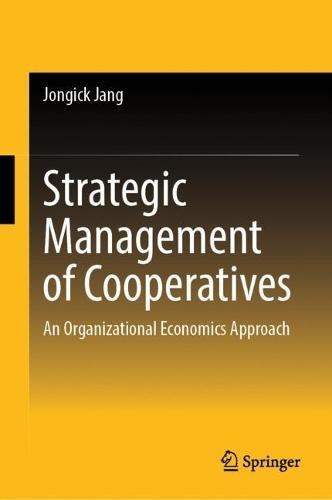
This textbook aims to systematically identify the factors and mechanisms that influence the sustainability of cooperative enterprises, which have unique characteristics that distinguish them from investor-owned firms, by analyzing existing theoretical and empirical literature, as well as success and failure cases of cooperatives. In recent years, cooperatives have proliferated in many countries and across a wide range of sectors and types. The sustainability of cooperatives as an alternative enterprise is crucial for the creation and maintenance of decent work, the creation of socially integrated employment, the provision of participatory social services, and the restoration of local community. Since cooperatives are a form of enterprise, the knowledge of traditional business administration textbooks can be helpful in managing a cooperative. However, the problem is that most of the contents of business management textbooks, are mainly designed for profit-seeking enterprises, so they are often not appropriate for cooperative enterprises. For example, cooperatives have different business objectives, different ownership types, different capital financing methods, different business relationships, and different cultures than profit-seeking companies. These differences need to be reflected in business strategy, corporate strategy, internal organizational design, financial strategy, and corporate culture and leadership formation strategies. If the cooperative's purpose and values are not reflected in each area of the cooperative's management, the purpose and values will become taxidermy, and the cooperative will disappear from the capitalist market competition, or even if it survives, its original purpose and values will fade and it will be indistinguishable from profit-seeking enterprises. This book is designed and written to contribute to the understanding of co-operative management by analyzing existing research findings that may have implications for the success of co-operative management.
Full Product Details
Author: Jongick Jang
Publisher: Springer Verlag, Singapore
Imprint: Springer Verlag, Singapore
ISBN: 9789819574285
ISBN 10: 9819574285
Pages: 269
Publication Date: 14 April 2026
Audience:
Professional and scholarly
,
Professional & Vocational
Format: Hardback
Publisher's Status: Forthcoming
Availability: Not yet available

This item is yet to be released. You can pre-order this item and we will dispatch it to you upon its release.
Author Information
Jongick Jang is professor at the School of Global Business and Social Management Program of Graduate School, Hanshin University. He has 13 years' experience of working at the Korean Research Institute of Cooperatives and the Farmer’s Union of Korea after he finished his MA in economics at the Graduate School of Yonsei University. He obtained Ph.D. in agricultural and applied economics with a focus on organizational economics and new institutional economics at the University of Missouri. Dr. Jang is president of Korean Society of Cooperative Studies, member of the Council of Cooperative Policy operated by the Korean Ministry of Planning and Budget, member of the Council for Enhancement of Social Enterprise operated by the Korean Ministry of Employment and Labor, and cooperative specialist of the Korea International Cooperation Agency. He was auditor of the Federation of Hansalim, member of the State Affair Planning Committee, and member of the Presidential Committee of Social Economy in Korea. He has published more than forty papers and ten books regarding cooperatives, social economy, and economics of institutions.