Overview
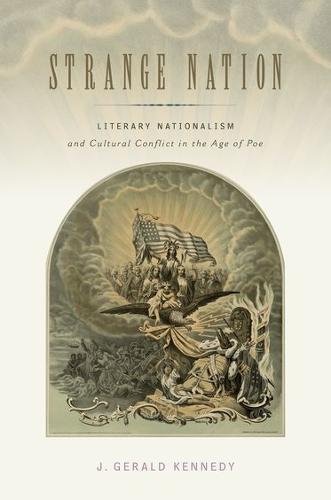
After the War of 1812, Americans belatedly realized that they lacked national identity. The subsequent campaign to articulate nationality transformed every facet of culture from architecture to painting, and in the realm of letters, literary jingoism embroiled American authors in the heated politics of nationalism. The age demanded stirring images of U.S. virtue, often achieved by contriving myths and obscuring brutalities. Between these sanitized narratives of the nation and U.S. social reality lay a grotesque discontinuity: vehement conflicts over slavery, Indian removal, immigration, and territorial expansion divided the country. Authors such as Washington Irving, James Fenimore Cooper, Catharine M. Sedgwick, William Gilmore Simms, Nathaniel Hawthorne, and Lydia Maria Child wrestled uneasily with the imperative to revise history to produce national fable. Counter-narratives by fugitive slaves, Native Americans, and defiant women subverted literary nationalism by exposing the plight of the unfree and dispossessed. And with them all, Edgar Allan Poe openly mocked literary nationalism and deplored the celebration of ""stupid"" books appealing to provincial self-congratulation. More than any other author, he personifies the contrary, alien perspective that discerns the weird operations at work behind the facade of American nation-building.
Full Product Details
Author: J. Gerald Kennedy (Boyd Professor of English, Boyd Professor of English, Louisiana State University)
Publisher: Oxford University Press Inc
Imprint: Oxford University Press Inc
Dimensions:
Width: 15.50cm
, Height: 2.80cm
, Length: 23.40cm
Weight: 0.635kg
ISBN: 9780195393699
ISBN 10: 0195393694
Pages: 472
Publication Date: 19 May 2016
Audience:
College/higher education
,
Professional and scholarly
,
Tertiary & Higher Education
,
Professional & Vocational
Format: Paperback
Publisher's Status: Active
Availability: Manufactured on demand

We will order this item for you from a manufactured on demand supplier.
Reviews
Strange Nation is an engaging and impressive book, showing in detail how American writers, from the post-Revolutionary years through the late antebellum period, pushed back against the more patriotic, jingoistic versions of nationalism while at the same time constructing their own versions of a national myth. Embracing the virtues of a large-scale literary history, Kennedy covers an extraordinary range of authors and issues while moving dexterously between wide-angle perspectives and detailed interpretations. --Eric J. Sundquist, author of King's Dream: The Legacy of Martin Luther King's I Have a Dream Speech Strange Nation is a big book that revisits big themes. Using Poe both as inspiration and fulcrum for his wide-ranging examination, Kennedy shows how national identity is forever caught between memory and forgetting. Hymns, epics, fables, songs, speeches, paintings, and, of course, short stories and novels are brought together in these pages to tell a story of a people who have been simultaneously united and divided, cosmopolitan and suspicious, enlightened and backward, free and slave. --Russ Castronovo, author of Propaganda 1776: Secrets, Leaks, and Revolutionary Communications in Early America In this lucidly written, historically rich and theoretically suggestive study of American nationalism during the formative period of 1820-1850, Kennedy sheds new light on the 'strangeness' of US nation building. Recovering neglected works by canonical writers, forgotten texts of 19th-century popular print culture and unsettling narratives by those excluded from citizenship, Kennedy illuminates the messy and contingent strategies by which these writers grappled with the nation's (still) unresolved contradictions to shape much of what Americans now understand about themselves and their country. This is a timely and important book. --Susan Scheckel, author of The Insistence of the Indian: Race and Nationalism in Nineteenth-Century American Culture
This outstanding book of literary history is a fine example of how engaging and trenchant academic criticism, at its best, can be. In 'Strange Nation, ' J. Gerald Kennedy constructs an incisive reading of 19th-century literature that profoundly illuminates the dark, troubling underside of American culture. ... Time and time again, we are struck with passages that seem to unlock the inner meanings of our own turbulent times. ... Kennedy's evocation of those far-off times when murderous passions stirred in hard people and a rough country was only finding its way ends up not seeming so far-off after all. It is still a strange nation. --The Washington Post Strange Nation is an engaging and impressive book, showing in detail how American writers, from the post-Revolutionary years through the late antebellum period, pushed back against the more patriotic, jingoistic versions of nationalism while at the same time constructing their own versions of a national myth. Embracing the virtues of a large-scale literary history, Kennedy covers an extraordinary range of authors and issues while moving dexterously between wide-angle perspectives and detailed interpretations. --Eric J. Sundquist, author of King's Dream: The Legacy of Martin Luther King's I Have a Dream Speech Strange Nation is a big book that revisits big themes. Using Poe both as inspiration and fulcrum for his wide-ranging examination, Kennedy shows how national identity is forever caught between memory and forgetting. Hymns, epics, fables, songs, speeches, paintings, and, of course, short stories and novels are brought together in these pages to tell a story of a people who have been simultaneously united and divided, cosmopolitan and suspicious, enlightened and backward, free and slave. --Russ Castronovo, author of Propaganda 1776: Secrets, Leaks, and Revolutionary Communications in Early America In this lucidly written, historically rich and theoretically suggestive study of American nationalism during the formative period of 1820-1850, Kennedy sheds new light on the 'strangeness' of US nation building. Recovering neglected works by canonical writers, forgotten texts of 19th-century popular print culture and unsettling narratives by those excluded from citizenship, Kennedy illuminates the messy and contingent strategies by which these writers grappled with the nation's (still) unresolved contradictions to shape much of what Americans now understand about themselves and their country. This is a timely and important book. --Susan Scheckel, author of The Insistence of the Indian: Race and Nationalism in Nineteenth-Century American Culture
Kennedy's most important accomplishment here might be his convincing and consistent positioning of Edgar Allan Poe as a vital interlocutor and investigator of this period of strange nationalism. * Kevin Modestino, American Literature * What historians will likely find most useful in Strange Nation is the detailed exegesis of myriad literary works. Kennedy's book serves as a virtual compendium of antebellum American nationalist literature that provides a wealth of material to use in research into and courses on the antebellum era. * Reynolds J. Scott-Childress, The Journal of American History *
Kennedy (Louisiana State Univ.) has written a detailed, in-depth, exceedingly relevant book about American nationalism in and around the 1840s. Focusing on the ways one can define a nation- the land it covers, the people who live on that land-and how that nation is divided by demographics, Kennedy highlights the contrast between the overarching American ideal of glory and greatness and the ruin depicted in many works of the age by authors such as Edgar Allan Poe and Washington Irving. Kennedy is deft in looking at how the views of the ideal impact how a nation interacts with the rest of the world and how beliefs held sacred in one land look absurd in another. With a democracy born of monarchy, the US has a storied past and tells glorious tales while striving to hide the darker realities of that transition, realities brought forth by the authors of the era. Detailed notes are included. --R. Stone, <em>CHOICE</em> This outstanding book of literary history is a fine example of how engaging and trenchant academic criticism, at its best, can be. In 'Strange Nation, ' J. Gerald Kennedy constructs an incisive reading of 19th-century literature that profoundly illuminates the dark, troubling underside of American culture. ... Time and time again, we are struck with passages that seem to unlock the inner meanings of our own turbulent times. ... Kennedy's evocation of those far-off times when murderous passions stirred in hard people and a rough country was only finding its way ends up not seeming so far-off after all. It is still a strange nation. --<em>The Washington Post</em> <em>Strange Nation</em> is an engaging and impressive book, showing in detail how American writers, from the post-Revolutionary years through the late antebellum period, pushed back against the more patriotic, jingoistic versions of nationalism while at the same time constructing their own versions of a national myth. Embracing the virtues of a large-scale literary history, Kennedy covers an extraordinary range of authors and issues while moving dexterously between wide-angle perspectives and detailed interpretations. --Eric J. Sundquist, author of <em>King's Dream: The Legacy of Martin Luther King's</em> <em> I Have a Dream Speech</em> <em>Strange Nation</em> is a big book that revisits big themes. Using Poe both as inspiration and fulcrum for his wide-ranging examination, Kennedy shows how national identity is forever caught between memory and forgetting. Hymns, epics, fables, songs, speeches, paintings, and, of course, short stories and novels are brought together in these pages to tell a story of a people who have been simultaneously united and divided, cosmopolitan and suspicious, enlightened and backward, free and slave. --Russ Castronovo, author of <em>Propaganda 1776: Secrets, Leaks, and Revolutionary Communications in Early</em> <em>America</em> In this lucidly written, historically rich and theoretically suggestive study of American nationalism during the formative period of 1820-1850, Kennedy sheds new light on the 'strangeness' of US nation building. Recovering neglected works by canonical writers, forgotten texts of 19th-century popular print culture and unsettling narratives by those excluded from citizenship, Kennedy illuminates the messy and contingent strategies by which these writers grappled with the nation's (still) unresolved contradictions to shape much of what Americans now understand about themselves and their country. This is a timely and important book. --Susan Scheckel, author of <em>The Insistence of the Indian: Race and Nationalism in Nineteenth-Century American Culture</em>
Author Information
J. Gerald Kennedy is Boyd Professor of English at Louisiana State University and author of Poe, Death, and the Life of Writing and Imagining Paris: Exile, Writing, and American Identity. He is the editor of A Historical Guide to Edgar Allan Poe.