Overview
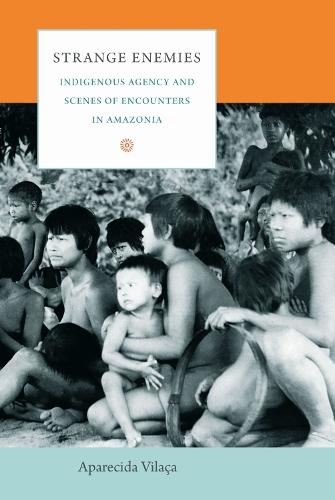
In 1956, in the Brazilian state of RondÔnia, a group of Wari’ Indians had their first peaceful contact with whites: Protestant missionaries and officers from the national Indian Protection Service. On returning to their villages, the Wari’ announced, “We touched their bodies!” Meanwhile the whites reported to their own people that “the region’s most warlike tribe has entered the pacification phase!” Initially published in Brazil, Strange Enemies is an ethnographic narrative of the first encounters between these peoples with radically different worldviews.During the 1940s and 1950s, white rubber tappers invading the Wari’ lands raided the native villages, shooting and killing their victims as they slept. These massacres prompted the Wari’ to initiate a period of intense retaliatory warfare. The national government and religious organizations subsequently intervened, seeking to “pacify” the Indians. Aparecida VilaÇa was able to interview both Wari’ and non-Wari’ participants in these encounters, and here she shares their firsthand narratives of the dramatic events. Taking the Wari’ perspective as its starting point, Strange Enemies combines a detailed examination of these cross-cultural encounters with analyses of classic ethnological themes such as kinship, shamanism, cannibalism, warfare, and mythology.
Full Product Details
Author: Aparecida Vilaça ,
David Rodgers
Publisher: Duke University Press
Imprint: Duke University Press
Dimensions:
Width: 15.60cm
, Height: 3.00cm
, Length: 23.50cm
Weight: 0.699kg
ISBN: 9780822345565
ISBN 10: 0822345560
Pages: 392
Publication Date: 19 May 2010
Audience:
College/higher education
,
Professional and scholarly
,
Tertiary & Higher Education
,
Professional & Vocational
Format: Hardback
Publisher's Status: Active
Availability: In Print

This item will be ordered in for you from one of our suppliers. Upon receipt, we will promptly dispatch it out to you. For in store availability, please contact us.
Reviews
It is based upon an intimate and extensive knowledge of their culture and fundamental notions and proposes an explanation of how and why these contingent events unfolded in the last hundred years the way they did. As is evident from this enumeration, the depth of the ethnography is combined with an analysis firmly based upon the current state of Amazonian ethnology. The book is a well-written, highly readable, profound and original ethnographic and analytic contribution to Amazonian ethnology and 'first encounter' literature, such that any divergence in interpretation will also need an extended argument: it should be read by everyone interested in the subject. Edwin Reesink, European Review of Latin American and Caribbean Studies Thanks to the excellent anthropological work of Aparecida Vilaca and colleagues studying Amazonia and Melanesia, it becomes increasingly apparent that the incorporation of otherness--in practices ranging from marriage and shamanism to warfare and cannibalism--is an essential condition of human being. It follows that the relationship between societies is an essential condition of their respective cultural orders as well as their historical development. Now Vilaca has produced a landmark ethnography of these processes, with an unparalleled documentation from the inside of the assimilation of the outside, highlighted by a stunning analysis of the cultural reciprocities of the colonial encounter. --Marshall Sahlins, author of The Western Illusion of Human Nature This intimate portrait of a remarkable people who insist on encountering modernity on their own terms challenges us to think beyond outmoded notions about acculturation and loss of tradition. Deftly weaving the insights of Amazonian perspectivism with history, myth, and personal experience, Aparecida Vilaca shows how Wari' choices to live with whites and adopt many of their ways are part of the logic of being indigenous. Empowerment derives from seeing the world through the eyes of others. Strange Enemies invites us to see the world through Wari' eyes. The view is fascinating. --Beth A. Conklin, author of Consuming Grief: Compassionate Cannibalism in an Amazonian Society
This work has profound and far-reaching implications for anthropologists and historians who examine the frontiers of colonialism and globalization... This is contemporary ethnography at its best, skillfully weaving together nuanced theoretical arguments, rich prose and storytelling, and insights that can only be gained by immersion in local settings... Vilaca's remarkable depiction of the coherence and resilience of native Amazonian peoples even in the face of catastrophic change is a must read for anyone interested in colonialism, globalization, and the place of indigenous peoples in the modern world. -- Michael Heckenberger American Historical Review Strange Enemies is the best ethnography ever written about a first contact history and thus probably the single most anthropologically satisfying publication of any kind for thinking about this subject. -- Rupert Stasch American Anthropologist Among the many works on first contact between Indians and non-Indians, Strange Enemies stands out for its illuminating focus on indigenous perspectives and its sophisticated analysis of how the Wari' conceived of historical change. -- Christine Mathias Ethnohistory [B]road scope makes Strange Enemies a book that should be read even by anthropologists who have little familiarity with Amazonia. It is a compelling example of the vital work that has been emerging from Amazonian anthropologists for the past decade. Like the best of that work, it offers us glimpses into worldviews and practices that are nothing if not mesmerizingly 'far out.' And it uses those worldviews and practices to develop insights and conclusions that are unexpected and exhilarating. -- Don Kulick American Ethnologist Aparecida Vilaca's book, first published in Portuguese in 2006, is an excellent contribution to the anthropology of Amazonia and Melanesia... Vilaca's book is recommended as important reading to anthropologists, students, and the general reader interested in understanding' the Other' in our modern world. Colonial Latin American Historical Review The book is a well-written, highly readable, profound and original ethnographic and analytic contribution to Amazonian ethnology and 'first encounter' literature, such that any divergence in interpretation will also need an extended argument: it should be read by everyone interested in the subject. -- Edwin Reesink European Review of Latin American and Caribbean Studies Thanks to the excellent anthropological work of Aparecida Vilaca and colleagues studying Amazonia and Melanesia, it becomes increasingly apparent that the incorporation of otherness-in practices ranging from marriage and shamanism to warfare and cannibalism-is an essential condition of human being. It follows that the relationship between societies is an essential condition of their respective cultural orders as well as their historical development. Now Vilaca has produced a landmark ethnography of these processes, with an unparalleled documentation from the inside of the assimilation of the outside, highlighted by a stunning analysis of the cultural reciprocities of the colonial encounter. -- Marshall Sahlins, author of The Western Illusion of Human Nature This intimate portrait of a remarkable people who insist on encountering modernity on their own terms challenges us to think beyond outmoded notions about acculturation and loss of tradition. Deftly weaving the insights of Amazonian perspectivism with history, myth, and personal experience, Aparecida Vilaca shows how Wari' choices to live with whites and adopt many of their ways are part of the logic of being indigenous. Empowerment derives from seeing the world through the eyes of others. Strange Enemies invites us to see the world through Wari' eyes. The view is fascinating. -- Beth A. Conklin, author of Consuming Grief: Compassionate Cannibalism in an Amazonian Society Thanks to the excellent anthropological work of Aparecida Vilaca and colleagues studying Amazonia and Melanesia, it becomes increasingly apparent that the incorporation of otherness-in practices ranging from marriage and shamanism to warfare and cannibalism-is an essential condition of human being. It follows that the relationship between societies is an essential condition of their respective cultural orders as well as their historical development. Now Vilaca has produced a landmark ethnography of these processes, with an unparalleled documentation from the inside of the assimilation of the outside, highlighted by a stunning analysis of the cultural reciprocities of the colonial encounter. -Marshall Sahlins, author of The Western Illusion of Human Nature This intimate portrait of a remarkable people who insist on encountering modernity on their own terms challenges us to think beyond outmoded notions about acculturation and loss of tradition. Deftly weaving the insights of Amazonian perspectivism with history, myth, and personal experience, Aparecida Vilaca shows how Wari' choices to live with whites and adopt many of their ways are part of the logic of being indigenous. Empowerment derives from seeing the world through the eyes of others. Strange Enemies invites us to see the world through Wari' eyes. The view is fascinating. -Beth A. Conklin, author of Consuming Grief: Compassionate Cannibalism in an Amazonian Society
Thanks to the excellent anthropological work of Aparecida Vilaca and colleagues studying Amazonia and Melanesia, it becomes increasingly apparent that the incorporation of otherness-in practices ranging from marriage and shamanism to warfare and cannibalism-is an essential condition of human being. It follows that the relationship between societies is an essential condition of their respective cultural orders as well as their historical development. Now Vilaca has produced a landmark ethnography of these processes, with an unparalleled documentation from the inside of the assimilation of the outside, highlighted by a stunning analysis of the cultural reciprocities of the colonial encounter. -Marshall Sahlins, author of The Western Illusion of Human Nature This intimate portrait of a remarkable people who insist on encountering modernity on their own terms challenges us to think beyond outmoded notions about acculturation and loss of tradition. Deftly weaving the insights of Amazonian perspectivism with history, myth, and personal experience, Aparecida Vilaca shows how Wari' choices to live with whites and adopt many of their ways are part of the logic of being indigenous. Empowerment derives from seeing the world through the eyes of others. Strange Enemies invites us to see the world through Wari' eyes. The view is fascinating. -Beth A. Conklin, author of Consuming Grief: Compassionate Cannibalism in an Amazonian Society Strange Enemies is the best ethnography ever written about a first contact history and thus probably the single most anthropologically satisfying publication of any kind for thinking about this subject. -- Rupert Stasch American Anthropologist Among the many works on first contact between Indians and non-Indians, Strange Enemies stands out for its illuminating focus on indigenous perspectives and its sophisticated analysis of how the Wari' conceived of historical change. -- Christine Mathias Ethnohistory Thanks to the excellent anthropological work of Aparecida Vilaca and colleagues studying Amazonia and Melanesia, it becomes increasingly apparent that the incorporation of otherness-in practices ranging from marriage and shamanism to warfare and cannibalism-is an essential condition of human being. It follows that the relationship between societies is an essential condition of their respective cultural orders as well as their historical development. Now Vilaca has produced a landmark ethnography of these processes, with an unparalleled documentation from the inside of the assimilation of the outside, highlighted by a stunning analysis of the cultural reciprocities of the colonial encounter. -- Marshall Sahlins, author of The Western Illusion of Human Nature This intimate portrait of a remarkable people who insist on encountering modernity on their own terms challenges us to think beyond outmoded notions about acculturation and loss of tradition. Deftly weaving the insights of Amazonian perspectivism with history, myth, and personal experience, Aparecida Vilaca shows how Wari' choices to live with whites and adopt many of their ways are part of the logic of being indigenous. Empowerment derives from seeing the world through the eyes of others. Strange Enemies invites us to see the world through Wari' eyes. The view is fascinating. -- Beth A. Conklin, author of Consuming Grief: Compassionate Cannibalism in an Amazonian Society [B]road scope makes Strange Enemies a book that should be read even by anthropologists who have little familiarity with Amazonia. It is a compelling example of the vital work that has been emerging from Amazonian anthropologists for the past decade. Like the best of that work, it offers us glimpses into worldviews and practices that are nothing if not mesmerizingly 'far out.' And it uses those worldviews and practices to develop insights and conclusions that are unexpected and exhilarating. -- Don Kulick American Ethnologist Aparecida Vilaca's book, first published in Portuguese in 2006, is an excellent contribution to the anthropology of Amazonia and Melanesia... Vilaca's book is recommended as important reading to anthropologists, students, and the general reader interested in understanding' the Other' in our modern world. Colonial Latin American Historical Review The book is a well-written, highly readable, profound and original ethnographic and analytic contribution to Amazonian ethnology and 'first encounter' literature, such that any divergence in interpretation will also need an extended argument: it should be read by everyone interested in the subject. -- Edwin Reesink European Review of Latin American and Caribbean Studies This work has profound and far-reaching implications for anthropologists and historians who examine the frontiers of colonialism and globalization... This is contemporary ethnography at its best, skillfully weaving together nuanced theoretical arguments, rich prose and storytelling, and insights that can only be gained by immersion in local settings... Vilaca's remarkable depiction of the coherence and resilience of native Amazonian peoples even in the face of catastrophic change is a must read for anyone interested in colonialism, globalization, and the place of indigenous peoples in the modern world. -- Michael Heckenberger American Historical Review
Thanks to the excellent anthropological work of Aparecida Vilaca and colleagues studying Amazonia and Melanesia, it becomes increasingly apparent that the incorporation of othernessoin practices ranging from marriage and shamanism to warfare and cannibalismois an essential condition of human being. It follows that the relationship between societies is an essential condition of their respective cultural orders as well as their historical development. Now Vilaca has produced a landmark ethnography of these processes, with an unparalleled documentation from the inside of the assimilation of the outside, highlighted by a stunning analysis of the cultural reciprocities of the colonial encounter. oMarshall Sahlins, author of The Western Illusion of Human Nature This intimate portrait of a remarkable people who insist on encountering modernity on their own terms challenges us to think beyond outmoded notions about acculturation and loss of tradition. Deftly weaving the insights of Amazonian perspectivism with history, myth, and personal experience, Aparecida Vilaca shows how Wari' choices to live with whites and adopt many of their ways are part of the logic of being indigenous. Empowerment derives from seeing the world through the eyes of others. Strange Enemies invites us to see the world through Wari' eyes. The view is fascinating. oBeth A. Conklin, author of Consuming Grief: Compassionate Cannibalism in an Amazonian Society
Thanks to the excellent anthropological work of Aparecida Vilaca and colleagues studying Amazonia and Melanesia, it becomes increasingly apparent that the incorporation of otherness-in practices ranging from marriage and shamanism to warfare and cannibalism-is an essential condition of human being. It follows that the relationship between societies is an essential condition of their respective cultural orders as well as their historical development. Now Vilaca has produced a landmark ethnography of these processes, with an unparalleled documentation from the inside of the assimilation of the outside, highlighted by a stunning analysis of the cultural reciprocities of the colonial encounter. -Marshall Sahlins, author of The Western Illusion of Human Nature This intimate portrait of a remarkable people who insist on encountering modernity on their own terms challenges us to think beyond outmoded notions about acculturation and loss of tradition. Deftly weaving the insights of Amazonian perspectivism with history, myth, and personal experience, Aparecida Vilaca shows how Wari' choices to live with whites and adopt many of their ways are part of the logic of being indigenous. Empowerment derives from seeing the world through the eyes of others. Strange Enemies invites us to see the world through Wari' eyes. The view is fascinating. -Beth A. Conklin, author of Consuming Grief: Compassionate Cannibalism in an Amazonian Society Thanks to the excellent anthropological work of Aparecida Vilaca and colleagues studying Amazonia and Melanesia, it becomes increasingly apparent that the incorporation of otherness-in practices ranging from marriage and shamanism to warfare and cannibalism-is an essential condition of human being. It follows that the relationship between societies is an essential condition of their respective cultural orders as well as their historical development. Now Vilaca has produced a landmark ethnography of these processes, with an unparalleled documentation from the inside of the assimilation of the outside, highlighted by a stunning analysis of the cultural reciprocities of the colonial encounter. -- Marshall Sahlins, author of The Western Illusion of Human Nature This intimate portrait of a remarkable people who insist on encountering modernity on their own terms challenges us to think beyond outmoded notions about acculturation and loss of tradition. Deftly weaving the insights of Amazonian perspectivism with history, myth, and personal experience, Aparecida Vilaca shows how Wari' choices to live with whites and adopt many of their ways are part of the logic of being indigenous. Empowerment derives from seeing the world through the eyes of others. Strange Enemies invites us to see the world through Wari' eyes. The view is fascinating. -- Beth A. Conklin, author of Consuming Grief: Compassionate Cannibalism in an Amazonian Society This work has profound and far-reaching implications for anthropologists and historians who examine the frontiers of colonialism and globalization... This is contemporary ethnography at its best, skillfully weaving together nuanced theoretical arguments, rich prose and storytelling, and insights that can only be gained by immersion in local settings... Vilaca's remarkable depiction of the coherence and resilience of native Amazonian peoples even in the face of catastrophic change is a must read for anyone interested in colonialism, globalization, and the place of indigenous peoples in the modern world. -- Michael Heckenberger American Historical Review Strange Enemies is the best ethnography ever written about a first contact history and thus probably the single most anthropologically satisfying publication of any kind for thinking about this subject. -- Rupert Stasch American Anthropologist Among the many works on first contact between Indians and non-Indians, Strange Enemies stands out for its illuminating focus on indigenous perspectives and its sophisticated analysis of how the Wari' conceived of historical change. -- Christine Mathias Ethnohistory [B]road scope makes Strange Enemies a book that should be read even by anthropologists who have little familiarity with Amazonia. It is a compelling example of the vital work that has been emerging from Amazonian anthropologists for the past decade. Like the best of that work, it offers us glimpses into worldviews and practices that are nothing if not mesmerizingly 'far out.' And it uses those worldviews and practices to develop insights and conclusions that are unexpected and exhilarating. -- Don Kulick American Ethnologist Aparecida Vilaca's book, first published in Portuguese in 2006, is an excellent contribution to the anthropology of Amazonia and Melanesia... Vilaca's book is recommended as important reading to anthropologists, students, and the general reader interested in understanding' the Other' in our modern world. Colonial Latin American Historical Review The book is a well-written, highly readable, profound and original ethnographic and analytic contribution to Amazonian ethnology and 'first encounter' literature, such that any divergence in interpretation will also need an extended argument: it should be read by everyone interested in the subject. -- Edwin Reesink European Review of Latin American and Caribbean Studies
Author Information
Aparecida VilaÇa is Associate Professor of Social Anthropology in the Graduate Program in Social Anthropology of the Museu Nacional, Universidade Federal de Rio de Janeiro. She is a co-editor of Native Christians: Modes and Effects of Christianity in the Americas.