|
|
|||
|
||||
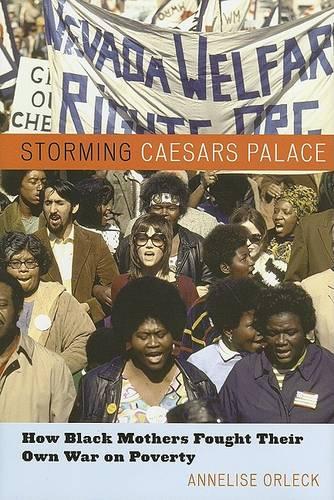
OverviewThe author explains how a group of welfare mothers living in Las Vegas mounted the most successful anti-poverty campaign in the country, organizing in the early 1970s to gain a medical center, daycare center, job training, and senior citizen housing for the poor. Full Product DetailsAuthor: Annelise OrleckPublisher: Beacon Press Imprint: Beacon Press Dimensions: Width: 15.20cm , Height: 3.30cm , Length: 22.80cm Weight: 0.680kg ISBN: 9780807050323ISBN 10: 0807050326 Pages: 376 Publication Date: 10 August 2005 Audience: General/trade , General Format: Hardback Publisher's Status: No Longer Our Product Availability: Out of stock The supplier is temporarily out of stock of this item. It will be ordered for you on backorder and shipped when it becomes available. Table of ContentsReviewsAn up-close-and-personal account of nine strong-minded African-American women who became welfare-rights activists in Las Vegas. Historian Orleck (History and Women's and Gender Studies/Dartmouth) spent some 12 years following the determined women who in 1972 founded Operation Life, an antipoverty program that challenged the stereotype of welfare mothers as apolitical or apathetic. She recounts the early years of her subjects as the poorest of the poor in the cotton fields of the South, their postwar migration to Nevada in search of a better life for their children and their experiences at the bottom of the economic and social ladder in segregated Las Vegas. In the 1960s came Lyndon Johnson's War on Poverty, but its focus was on jobs for men, reports Orleck, and mothers receiving welfare found the system onerous and humiliating. Having learned through the Hotel and Culinary Workers Union the value of organizing to bring about change, they formed a welfare-rights group. After successfully fighting Nevada welfare cuts, the group of black mothers became active in the Democratic party and began lobbying, fund-raising and running for office. They turned to community development as well, in time building clinics, daycare centers and libraries in their rundown Westside neighborhood. Orleck's leading character is the powerful matriarch Ruby Duncan, who eventually advised Jimmy Carter on welfare and jobs programs, but she sees all the mothers of Operation Life as poster women for a new model of welfare reform-from the bottom up. She argues that the history of Operation Life demonstrates the rich potential of a poor women's movement for economic justice. A worthy history of the country's changing attitudes toward welfare and the various attempts to eradicate poverty. (Kirkus Reviews) Author InformationTab Content 6Author Website:Countries AvailableAll regions |
||||