Overview
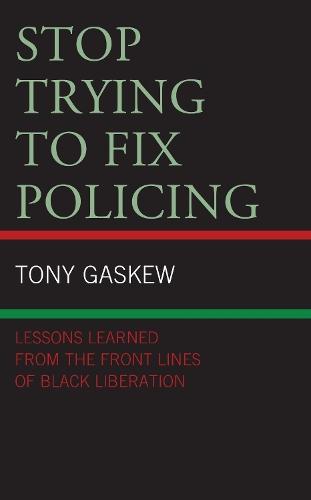
In Stop Trying to Fix Policing: Lessons Learned from the Front Lines of Black Liberation, Tony Gaskew guides readers through the phenomena of police abolition, using the cultural lens of the Black radical tradition. The author weaves an electrifying combination of critical race theory, spiritual inheritance, decolonization, self-determination, and armed resistance, into a critical autoethnographic journey that illuminates the rituals of revolution required for dismantling the institution of American policing. Stop Trying to Fix Policing is an essential work for anyone who wants to go beyond the rhetoric of police reform, to the next step: contributing to the formation of a world without policing.
Full Product Details
Author: Tony Gaskew
Publisher: Bloomsbury Publishing Plc
Imprint: Lexington Books
Dimensions:
Width: 16.40cm
, Height: 1.50cm
, Length: 24.00cm
Weight: 0.340kg
ISBN: 9781498589505
ISBN 10: 1498589502
Pages: 130
Publication Date: 16 December 2020
Audience:
Professional and scholarly
,
Professional & Vocational
Format: Hardback
Publisher's Status: Active
Availability: Manufactured on demand

We will order this item for you from a manufactured on demand supplier.
Reviews
Some might claim that this short book is just a polemic, not to be taken as seriously as standard criminological research conducted according to conventions of objectivity and detachment. However, the author would rightly maintain that such rhetoric disguises a deferential commitment to a brutal status quo. In fact, Gaskew pursues a key principle of good sociological practice here, namely, that it is more important to focus on outcomes rather than official discourses. Gaskew applies this method to policing, identifying key myths, such as that policing is dangerous for police, that it is an effective mechanism for public safety, that police are at risk of disciplinary action, and, most critically, that police reform is possible. In fact, policing is rooted in legacies of white supremacy and violence. Grounding his argument in critical race theory, Gaskew makes a reasonable case for abolition. Recommended.-- Choice
Some might claim that this short book is just a polemic, not to be taken as seriously as standard criminological research conducted according to conventions of objectivity and detachment. However, the author would rightly maintain that such rhetoric disguises a deferential commitment to a brutal status quo. In fact, Gaskew pursues a key principle of good sociological practice here, namely, that it is more important to focus on outcomes rather than official discourses. Gaskew applies this method to policing, identifying key myths, such as that policing is dangerous for police, that it is an effective mechanism for public safety, that police are at risk of disciplinary action, and, most critically, that police reform is possible. In fact, policing is rooted in legacies of white supremacy and violence. Grounding his argument in critical race theory, Gaskew makes a reasonable case for abolition. Recommended.
Author Information
Tony Gaskew is professor of criminal justice, affiliate faculty of Africana studies, director of the criminal justice program, and founding director of the prison education program at the University of Pittsburgh, Bradford.