Overview
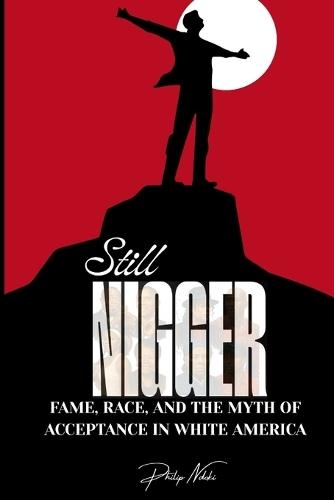
Still Nigger dismantles the comforting illusion that Black fame signals racial equality in America. It argues that visibility and wealth have been mistaken for freedom, masking a deeper reality: Black success is often conditional, permitted only within boundaries set by a white-dominated system. This book reframes celebrity not as liberation, but as a form of controlled inclusion-where applause is abundant, yet true autonomy remains elusive. It challenges the ""myth of arrival,"" the belief that each prominent Black athlete, artist, or billionaire proves racism is fading. Instead, this book contends that fame in America functions as permission rather than power-allowing Black individuals to exist and excel only so long as they remain non-threatening. Integration, once a triumph, became a trap: merging into institutions that never intended to share control, while the masses remained excluded. Fame thus emerges as a modern plantation-glamorous and lucrative, yet still governed by gatekeepers. Historically, Still Nigger highlights the Jim Crow era as a paradoxical period of forced but fertile self-reliance. Segregation compelled Black communities to build parallel institutions-banks, schools, businesses, and media-that fostered economic independence and cultural dignity without white validation. Far from mere survival, these structures represented one of the strongest experiments in Black self-determination, a blueprint later eroded by integration without power. For Black celebrities, success often brings surveillance rather than safety. Their pain is commodified, their silence rewarded, and their dissent punished. Historical and contemporary examples-from Paul Robeson and Nina Simone to Muhammad Ali and Colin Kaepernick-illustrate how speaking truth to power leads to exile, while compliance earns fragile acceptance. Fame becomes a ""glass cage"" highly visible, yet confining. Black culture is celebrated, sold, and consumed, while Black humanity remains negotiable. Acceptance evaporates the moment a celebrity challenges the system. This contradiction exacts a heavy emotional cost-forcing Black public figures to perform respectability, carry collective expectations, and endure constant scrutiny. The result is alienation, echoing W.E.B. Du Bois's concept of double consciousness: success shadowed by imposed inferiority. Despite its searing critique, Still Nigger ultimately turns toward liberation through ownership. True power, it argues, lies in economic and cultural sovereignty-not applause. Wealth without control is illusion; representation without influence is decoration. By owning production, narratives, and capital, Black creators can transform celebrity from spectacle into infrastructure and redirect influence toward community empowerment. Figures like Tyler Perry, Ava DuVernay, Jay-Z, and LeBron James exemplify a shift from participation to ownership. Yet, even these advances operate within a system still controlled by white capital and distribution. Independence remains partial, and resistance intensifies whenever Black autonomy threatens profit or dominance. This book warns against confusing inclusion with liberation. Sitting at someone else's table does not equal freedom; building one's own does. It closes by reimagining a future where Black success is defined by authenticity and self-determination rather than assimilation-where celebrity amplifies truth instead of silencing it. Still Nigger is less about fame than about America itself. It exposes how progress can be performed without being realized and insists that liberation requires rejecting conditional acceptance altogether. True freedom is not permission to exist in the spotlight, but the power to walk away, define one's own worth, and build independent systems-because as long as acceptance is conditional, equality remains counterfeit.
Full Product Details
Author: Philip Ndoki
Publisher: Independently Published
Imprint: Independently Published
Dimensions:
Width: 15.20cm
, Height: 2.60cm
, Length: 22.90cm
Weight: 0.599kg
ISBN: 9798245375441
Pages: 452
Publication Date: 24 January 2026
Audience:
General/trade
,
General
Format: Paperback
Publisher's Status: Active
Availability: Available To Order

We have confirmation that this item is in stock with the supplier. It will be ordered in for you and dispatched immediately.