Overview
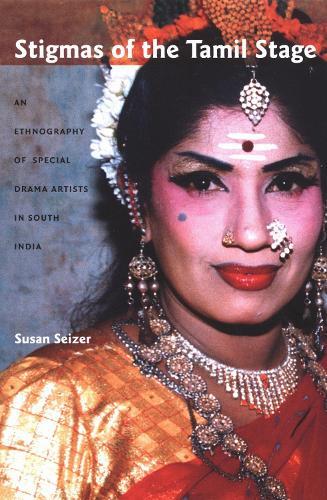
Stigmas of the Tamil Stage is the first in-depth study of Special Drama, a form of performance unique to the southernmost Indian state of Tamil Nadu. Held in villages throughout the region, Special Drama performances last from 10 p.m. until dawn. The first two hours are filled with bawdy comedy; the remaining six are taken up with more staid dramatic performances. There are no theatrical troupes; individual artists are contracted specially for each event. While performers vary widely in age, caste, and religious affiliations, class is a common denominator: all of them come from the ranks of the poor. Special Drama is looked down upon by middle- and upper-class Indians as too popular, too mixed-up, and, in the case of the comedic performances, too vulgar. The artists are intensely stigmatized: people insult them in public and landlords refuse to rent to them. Female actors are frowned upon not only for their participation in Special Dramas but also for violating the circumscribed boundaries of activities acceptable for women. Susan Seizer learned the Tamil language in order to learn about performance in Tamil Nadu, and in this rich ethnography, she explores Special Drama performers' lives on and off stage. As Seizer's sensitive study shows, one of the primary ways the performers deal with their stigmatization is through humour and language. Their comedic scenes directly address questions of class, culture, and gender - the very issues that have made them outcasts. Stigmas of the Tamil Stage draws on extensive interviews with performers, sponsors, and agents; more than one hundred viewings of live Special Drama performances; and conversations with audience members. Seizer discusses the history of Special Drama and its place in Tamil society. She provides in-depth analyses of three popular, recurring comedy scenes to show how performers negotiate their stigma on stage. Looking at their lives off stage, she describes their speech, domestic arrangements, and attempts to blend into Tamil public life.
Full Product Details
Author: Susan Seizer
Publisher: Duke University Press
Imprint: Duke University Press
Weight: 0.807kg
ISBN: 9780822334323
ISBN 10: 0822334321
Pages: 464
Publication Date: 11 April 2005
Audience:
Professional and scholarly
,
College/higher education
,
Professional & Vocational
,
Tertiary & Higher Education
Format: Hardback
Publisher's Status: Active
Availability: In Print 
This item will be ordered in for you from one of our suppliers. Upon receipt, we will promptly dispatch it out to you. For in store availability, please contact us.
Table of Contents
"List of Illustrations xiii Acknowledgments xv Notes on Transliteration xxi Introduction Preface: A Conversation on Culture 1 Birth of This Project 9 Writing about Special Drama 12 Methods 14 Geographic Relations and the Historical Ethnographic Present 16 Why Comedy Is a Good Site for the Study of Culture 19 What Is Special Drama? 21 Making a Living 24 What Is Special about Special Drama? 26 Naming Matters 28 ""Hey Drama People!"": Stigma at Work 30 ""Actors Have No Murai"": A Proverbial Lack 32 Part One: The History and Organization of Special Drama 35 Part Two: Comedy 36 Part Three: Lives 38 Part One: The History and Organization of Special Drama 1. Legacies of Discourse: Special Drama and Its History 43 The Legend and Legacy of Sankaradas Swamigal 43 The History of Special Drama 47 Tamil Drama History, Stage One (of Undatable Roots) 49 Tamil Drama History, Stage Two 51 Tamil Drama History, Stage Three 52 Tamil Drama History, Stage Four 53 The Disciplined Life of the Drama Company 55 Life on the Margins of the Companies 60 Tamil Drama History, Stage Five: A New Historical Trajectory 62 The Legacy of the Company Model in Special Drama 64 Discourse of Vulgarity, Legacy of Shame 66 Context: The History of Modernity in Tamilnadu 70 Drama Actors Sangams 71 Why Actors Stand Still: Onstage Movement as the Embodiment of Vulgarity 77 The Stage Today 81 From Urban to Rurban 83 2. Prestige Hierarchies in Two and Three Dimensions: Drama Notices and the Organization of Special Drama 86 Early Drama Notices, 1891-1926 87 The Photograph Enters Notices, 1926-1936 92 English in the Vocabulary of Special Drama Artists: Jansirani and Sivakami 99 Midcentury Notices and Artists, 1942-1964 (M. K. Kamalam) 103 The Current Form of Notices: Roles and Ranks 111 The Photographic Style of Contemporary Notices 117 The Prestige Hierarchies of Artists as Pictured on Drama Notices 122 The Iconicity of the Contemporary Notice: Structured Spaces and Places 131 Drama Sponsorship and the Written Text of the Contemporary Drama Notice 132 The Working Network That Makes Special Drama Work 140 The Ritual Calendar of Drama Sponsorship 142 The Grounds of a Social Economy 144 3. Discipline in Practice: The Actors Sangam 146 Sivakami Winks… 146 …and Jansirani Disapproves 146 Competing Claims: A Matter of Bearing 149 Internalized Historiography: Artists' Discourses 152 Controlling Bodies and the Control of the Body 154 Discipline in Practice 157 Cross-Roles: Marked Men and Funny Women 165 Multiple Strategies 173 4. The Buffoon's Comedy: Jokes, Gender, and Discursive Distance 177 The Distances Appropriate to Humor 177 The Buffoon's Comedy Scene 180 Modernity and Its States of Desire 185 Layers of Meaning and the Meaning of Layers 198 The Ambivalence of Laughter: A Final Consideration 200 5. The Buffoon-Dance Duet: Social Space and Gendered Place 202 Mise-en-Scene 202 The Five Use-Areas and the Five Story Elements of the Duet 205 Architecture of the Stage: Inside, Outside, Behind, Above, and Beyond 205 Configuring the Stage: The Duet in Performance 207 The Dancer's Entrance 209 The Bumpy Meeting 212 The Meaning of a Bump between Men and Women 214 The Contest between Men and Women 216 Mutual Admiration and ""Love Marriage"" 223 Analogic Relations Onstage and Off 226 Conclusion 229 Coda 230 6. Atipiti Scene: Laughing at Domestic Violence 232 Atipiti 233 Anthropologists Viewing Laughter 234 The Ritual Frame of the Atipiti Scene 237 The Atipiti Scene 239 Act I: The Wife 239 Act II: The Husband 244 Act III: Their Meeting 250 A Discussion with the Artists 260 Four Theories of Spectatorship 264 Why Does the Audience Laugh? 267 An Audience Account 268 7. The Drama Tongue and the Local Eye 277 A Secret Language 279 Language Matters 281 Situating the Drama Tongue as an Argot 282 Researching the Drama Tongue 285 Terms of the Tongue 287 People of the Drama Tongue 293 What Do We Expect of a Secret Language? 296 Centered in Mobility, or, An Insider Language That Isn't 300 8. The Roadwork of Actresses 301 Offstage with Actresses 302 Narrative One: Regarding the Gender Dimensions of Booking a Drama 305 Work and the Internalization of Gendered Behavior 310 Narrative Two: Regarding Traveling to a Drama in a Private Conveyance 314 Roads and the Externalization of Gendered Behavior 316 Narrative Three: Regarding Traveling to a Drama in a Public Conveyance 319 Narrative Four: Regarding the Spatial Arrangements at a Drama Site 323 Theoretical Grounds 324 Narrative Five: Regarding Traveling Home in the Morning 327 Conclusion 329 9. Kinship Murai and the Stigma on Actors 334 An Excess Born of Lack 334 Kinship, Incest, and the Onstage Locus of Stigma 336 Known and Unknown People 349 Prestigious Patrilines and Activist Actresses 354 N. S. Varatarajan's Family 359 Karur Ambika's Family 354 Many Murai 363 Epilogue 365 Flower Garlands 365 Jansirani and Sivakami, 2001 368 Stigma and Its Sisters 371 Appendix I: Sangam Rules 375 Appendix 2: Tamil Transliteration of Buffoon Selvam's Monologue, 1 April 1992 381 Notes 385 Works Cited 417 Index 433"
Reviews
""Stigmas of the Tamil Stage is masterful, a paradigm of ethnographic scholarship and social analysis and a major contribution to the human sciences and to South Asian studies. A classic in the making."" Lawrence Cohen, author of No Aging in India: Alzheimer's, the Bad Family, and Other Modern Things ""Susan Seizer's moving and unique perspective on the fate of popular cultural practices in an age and society dominated by the norms and prescriptions of bourgeois modernity makes her work important and insightful not just for scholars of South Asia but for all those who are interested in the general problematic of popular culture, performance traditions, and modernity globally.""--Sumathi Ramaswamy, author of The Lost Land of Lemuria: Fabulous Geographies, Catastrophic Histories ""Susan Seizer presents rich and intriguing material about a dramatic performance tradition at the same time that she provides smart, insightful, and sophisticated interpretations linking it to wider discussions. Stigmas of the Tamil Stage deserves to be read, discussed, and used to further debates in many fields of study.""--Paula Richman, editor of Many Ramayanas: The Diversity of a Narrative Tradition in South Asia
Stigmas of the Tamil Stage is masterful, a paradigm of ethnographic scholarship and social analysis and a major contribution to the human sciences and to South Asian studies. A classic in the making. Lawrence Cohen, author of No Aging in India: Alzheimer's, the Bad Family, and Other Modern Things Susan Seizer's moving and unique perspective on the fate of popular cultural practices in an age and society dominated by the norms and prescriptions of bourgeois modernity makes her work important and insightful not just for scholars of South Asia but for all those who are interested in the general problematic of popular culture, performance traditions, and modernity globally. --Sumathi Ramaswamy, author of The Lost Land of Lemuria: Fabulous Geographies, Catastrophic Histories Susan Seizer presents rich and intriguing material about a dramatic performance tradition at the same time that she provides smart, insightful, and sophisticated interpretations linking it to wider discussions. Stigmas of the Tamil Stage deserves to be read, discussed, and used to further debates in many fields of study. --Paula Richman, editor of Many Ramayanas: The Diversity of a Narrative Tradition in South Asia
Author Information
Susan Seizer is Professor of Anthropology at Indiana University. Visit Susan Seizer’s website, which includes links to full-text reviews.
Tab Content 6
Author Website:
Countries Available
All regions
|