Overview
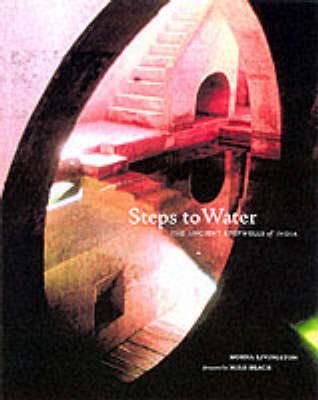
From the 5th to the 19th centuries, the people of western India built stone cisterns to collect the water of the monsoon rains and keep it accessible for the remaining dry months of the year. These magnificent structures - known as stepwells or stepped ponds - are much more than utilitarian reservoirs. Their lattice-like walls, carved columns, decorated towers and intricate sculpture make them exceptional architecture, while their very presence tells much about the region's ecology and history. For the past 500 years, stepwells have been an integral part of western Indian communities as sites for drinking, washing and bathing, as well as for colourful festivals and sacred rituals. This work traces the history of stepwells, from their Hindu origins, to their zenith during Muslim rule, and eventual decline under British occupation. It also reflects on their current use, preservation, and place in Indian communities. There are many photographs and drawings of the stepwells.
Full Product Details
Author: Morna Livingston (Teacher of Design, Drawing and Vernacular Architecture, University of Philadelphia, USA) ,
Milo Beach
Publisher: Princeton Architectural Press
Imprint: Princeton Architectural Press
Dimensions:
Width: 24.40cm
, Height: 2.70cm
, Length: 30.50cm
Weight: 1.680kg
ISBN: 9781568983240
ISBN 10: 1568983247
Pages: 208
Publication Date: 01 April 2002
Audience:
College/higher education
,
Professional and scholarly
,
General/trade
,
Undergraduate
,
Postgraduate, Research & Scholarly
Format: Hardback
Publisher's Status: Out of Stock Indefinitely
Availability: Awaiting stock

Reviews
Think of Egypt's great pyramids, inverted and elegantly lodged in the earth to serve a subcontinent's thirst for water. That's the role of India's stepwells and stepped ponds, which, from the 5th through 19th centuries, served to catch water from the monsoons and save it for drinking, washing and bathing. These stone buildings, some as deep as nine stories with elaborate carved walls, columns and towers, are largely unappreciated outside the country and neglected and underprotected inside the country, circumstances this book hopes to change. These photographs (color and black-and-white, all by the author) and architectural drawings can be staggering; think of an M.C. Escher pattern tugged into three dimensions and reflected in a pool. Author Morna Livingston, and image maker and a scholar, has studied India's stepwells for 15 years and spend four extended trips visiting and photographing them. -Los Angeles Times ---
Think of Egypt's great pyramids, inverted and elegantly lodged in the earth to serve a subcontinent's thirst for water. That's the role of India's stepwells and stepped ponds, which, from the 5th through 19th centuries, served to catch water from the monsoons and save it for drinking, washing and bathing. These stone buildings, some as deep as nine stories with elaborate carved walls, columns and towers, are largely unappreciated outside the country and neglected and underprotected inside the country, circumstances this book hopes to change. <p>These photographs (color and black-and-white, all by the author) and architectural drawings can be staggering; think of an M.C. Escher pattern tugged into three dimensions and reflected in a pool. Author Morna Livingston, and image maker and a scholar, has studied India's stepwells for 15 years and spend four extended trips visiting and photographing them. -Los Angeles Times
Author Information
Morna Livingston, a documentary photographer specializing in architecture and cultural landscapes, has spent 15 years researching and photographing stepwells. She currently teaches design, drawing, and vernacular architecture at the Philadelphia Universit Milo Beach is form Director of the Freer Gallery of Art and the Arthur M. Sackler Gallery, Smithsonian Institution.