|
|
|||
|
||||
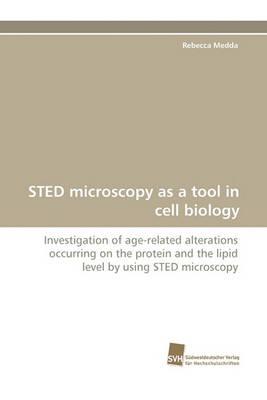
OverviewThis thesis reports on two applications of the STED (stimulated emission depletion) principle investigating alterations on the protein and lipid level. One hallmark of age-related neurodegenerative diseases is the abnormal post-translationally hyperphosphorylation of proteins. Here, the interplay of two main post-translational modifications of neurofilaments was investigated. The organization pattern of these modifications that were not resolvable by conventional light microscopy could finally be displayed with the about 10-times higher resolution of STED microscopy. Furthermore this technique allowed the detection of early alterations in these patterns in dependence of the provided glucose amount. Another effect occurring during aging is the change in the plasma membrane's fluidity. This thesis reports on the investigation of the diffusion characteristics of different phospholipids using STED-FCS in living cells. It was shown that sphingolipids, in contrast to phosphoglycerolipids, were trapped on spatial scales below 30 nm, which could not be examined by confocal microscopy. Upon changing the endogenous cholesterol level this hindered diffusion could be reversibly abolished. Full Product DetailsAuthor: Rebecca MeddaPublisher: Sudwestdeutscher Verlag Fur Hochschulschriften AG Imprint: Sudwestdeutscher Verlag Fur Hochschulschriften AG Dimensions: Width: 15.20cm , Height: 1.00cm , Length: 22.90cm Weight: 0.272kg ISBN: 9783838115382ISBN 10: 3838115384 Pages: 180 Publication Date: 13 July 2010 Audience: General/trade , General Format: Paperback Publisher's Status: Active Availability: In Print This item will be ordered in for you from one of our suppliers. Upon receipt, we will promptly dispatch it out to you. For in store availability, please contact us. Table of ContentsReviewsAuthor InformationTab Content 6Author Website:Countries AvailableAll regions |
||||