Overview
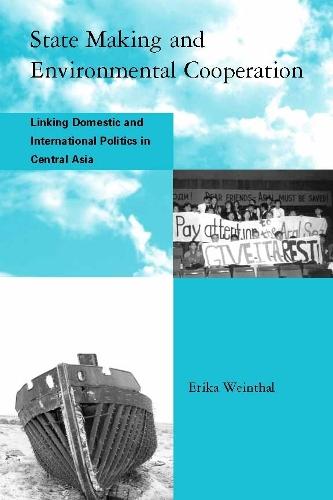
The Amu Darya and Syr Darya rivers of Central Asia flow across deserts to empty into the Aral Sea. Under Soviet rule, so much water was diverted from the rivers for agricultural purposes that salinity levels rapidly rose and the sea shrank. There was an upsurge in dust storms containing toxic salt residue, and a new desert began to replace the sea. At the same time, agricultural runoff rendered the drinking water unfit for human consumption. In this text Erika Weinthal examines how the Central Asian states of Kazakhstan, Kyrgyzstan, Tajikistan, Turkmenistan, and Uzbekistan have tackled the Aral Sea Basin crisis since the 1991 collapse of the Soviet Union. The Amu Darya now flows through three new nation-states, and the Syr Darya through four. This shakeup of political borders created a collective-action problem for the successor states. While they needed to consolidate domestic sovereignty, they also needed to relinquish sovereignty over their water resources in order to develop a joint solution to the desiccation of the Aral Sea. Weinthal examines why they were able to cooperate over their shared water resources. She emphasizes the roles of nonstate actors (international organizations, nongovernmental organizations, and bilateral aid organizations) in the building of institutions for regional cooperation and for state formation, shows how cooperation was nested within the state-building process when international third-party actors were involved, and highlights the dispensing of side payments (financial and material resources) by nonstate actors to aid both regional cooperation and state formation.
Full Product Details
Author: Erika Weinthal (Nicholas School) ,
Nazli Choucri (Massachusetts Institute of Technology)
Publisher: MIT Press Ltd
Imprint: MIT Press
Dimensions:
Width: 15.20cm
, Height: 1.90cm
, Length: 22.90cm
Weight: 0.472kg
ISBN: 9780262731461
ISBN 10: 0262731460
Pages: 288
Publication Date: 18 January 2002
Recommended Age: From 18
Audience:
College/higher education
,
Professional and scholarly
,
Undergraduate
,
Postgraduate, Research & Scholarly
Format: Paperback
Publisher's Status: Out of Stock Indefinitely
Availability: Out of stock

Reviews
""State Making and Environmental Cooperation presents a theoretically innovative and empirically rich analysis. I know of no other comparable study of domestic and international water and environmental politics in post-Soviet Central Asia.""--Robert Darst, Department of Political Science, University of Oregon, author of Smokestack Diplomacy ""A compelling and richly nuanced analysis of several important problems in international relations: under what conditions does cooperation emerge, through what causal mechanisms, and with what domestic political effects? This work greatly expands our knowledge about the role of domestic institutions, the international community, and the use of strategic side payments in shaping cooperative arrangements."" Douglas Blum, Department of Political Science, Providence College ""A compelling and richly nuanced analysis of several important problems in international relations: under what conditions does cooperation emerge, through what causal mechanisms, and with what domestic political effects? This work greatly expands our knowledge about the role of domestic institutions, the international community, and the use of strategic side payments in shaping cooperative arrangements.""--Douglas Blum, Department of Political Science, Providence CollegePlease note: Endorser gives permission to excerpt from quote. ""State Making and Environmental Cooperation should be required reading for those wanting to know more about Central Asia, environmental security, and international collaboration in the region. The book highlights the intended and unintended consequences of international involvement with transitional states. This focus on the role of international organizations, aid groups, and NGOs could not be more timely. The book also sheds light on the Soviet legacies that continue to influence development in these states, ten years after the collapse of the Soviet Union.""--Sarah E. Mendelson, Center for Strategic and International Studies and the Fletcher School of Law and Diplomacy, Tufts University, and co-editor, The Power and Limits of NGOsPlease note: Endorser gives permission to excerpt from quote.
State Making and Environmental Cooperation presents a theoretically innovative and empirically rich analysis. I know of no other comparable study of domestic and international water and environmental politics in post-Soviet Central Asia. --Robert Darst, Department of Political Science, University of Oregon, author of Smokestack Diplomacy A compelling and richly nuanced analysis of several important problems in international relations: under what conditions does cooperation emerge, through what causal mechanisms, and with what domestic political effects? This work greatly expands our knowledge about the role of domestic institutions, the international community, and the use of strategic side payments in shaping cooperative arrangements. Douglas Blum, Department of Political Science, Providence College A compelling and richly nuanced analysis of several important problems in international relations: under what conditions does cooperation emerge, through what causal mechanisms, and with what domestic political effects? This work greatly expands our knowledge about the role of domestic institutions, the international community, and the use of strategic side payments in shaping cooperative arrangements. --Douglas Blum, Department of Political Science, Providence CollegePlease note: Endorser gives permission to excerpt from quote. State Making and Environmental Cooperation should be required reading for those wanting to know more about Central Asia, environmental security, and international collaboration in the region. The book highlights the intended and unintended consequences of international involvement with transitional states. This focus on the role of international organizations, aid groups, and NGOs could not be more timely. The book also sheds light on the Soviet legacies that continue to influence development in these states, ten years after the collapse of the Soviet Union. --Sarah E. Mendelson, Center for Strategic and International Studies and the Fletcher School of Law and Diplomacy, Tufts University, and co-editor, The Power and Limits of NGOsPlease note: Endorser gives permission to excerpt from quote.
Author Information
Erika Weinthal is Assistant Professor of Political Science at Tel Aviv University.