Awards
- Nominated for Bancroft Prize 2014
- Nominated for James A. Rawley Prize 2014
- Nominated for Merle Curti Award 2014
- Winner of OAH Frederick Jackson Turner Award 2014
Overview
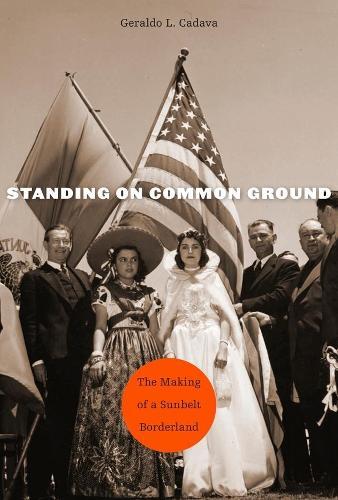
Under constant surveillance and policed by increasingly militarized means, Arizona's border is portrayed in the media as a site of sharp political and ethnic divisions. But this view obscures the region's deeper history. Bringing to light the shared cultural and commercial ties through which businessmen and politicians forged a transnational Sunbelt, Standing on Common Ground recovers the vibrant connections between Tucson, Arizona, and the neighboring Mexican state of Sonora. Geraldo L. Cadava corrects misunderstandings of the borderland's past and calls attention to the many types of exchange, beyond labor migrations, that demonstrate how the United States and Mexico continue to shape one another. In the 1940s, a flourishing cross-border traffic developed in the Arizona-Sonora Sunbelt, as the migrations of entrepreneurs, tourists, shoppers, and students maintained a densely connected transnational corridor. Politicians on both sides worked to cultivate a common ground of free enterprise, spurring the growth of manufacturing, ranching, and agriculture. However, as Cadava illustrates, these modernizing forces created conditions that marginalized the very workers who propped up the regional economy, and would eventually lead to the social and economic instability that has troubled the Arizona-Sonora borderland in recent times. Grounded in rich archival materials and oral histories, Standing on Common Ground clarifies why we cannot understand today's fierce debates over illegal immigration and border enforcement without identifying the roots of these problems in the Sunbelt's complex pan-ethnic and transnational history.
Full Product Details
Author: Geraldo L. Cadava
Publisher: Harvard University Press
Imprint: Harvard University Press
Dimensions:
Width: 15.60cm
, Height: 2.20cm
, Length: 23.50cm
Weight: 0.368kg
ISBN: 9780674970892
ISBN 10: 0674970896
Pages: 320
Publication Date: 29 August 2016
Audience:
Professional and scholarly
,
General/trade
,
College/higher education
,
Professional & Vocational
,
General
Format: Paperback
Publisher's Status: Active
Availability: Out of stock

The supplier is temporarily out of stock of this item. It will be ordered for you on backorder and shipped when it becomes available.
Reviews
Thoroughly researched and cleverly organized around iconic Tucson events and people, the book gives illuminating historical background to current strife over racial and migrant issues. Cadava has crafted a compelling story of the whole border region as the various people there experienced it.-- (03/01/2014) By bringing Arizona's relationship with Mexico and Mexicans into focus, this groundbreaking and illuminating new book will change the way we think about the postwar history of the southwestern United States and help us to understand the origins of the contentious debates over immigration and civil rights that divide Arizonans today.--Rachel St. John, author of Line in the Sand: A History of the Western U.S.-Mexico Border An astute and insightful book, Standing on Common Ground is a richly detailed portrait of a region that is very much in the news today. Solidly researched, keenly conceptualized, and beautifully written, it will become one of the most important explorations of the lands and lives along the U.S.-Mexico border.--David G. Guti rrez, author of Walls and Mirrors: Mexican Americans, Mexican Immigrants, and the Politics of Ethnicity In a time when the history of the Southwest is rewritten every few months, the simple act of telling the truth is invaluable. Standing on Common Ground recreates the look, feel, and sound of the greatest growth spurt the region has ever seen. The stories in these pages are not just the stories of men, women and children working hard to build better lives for themselves. They're the stories of how we got to where we are now, why we face the issues we face, and who the people of the Southwest really are.--Ra l M. Grijalva, U.S. Representative for Arizona's 3rd congressional district and member of the Congressional Hispanic Caucus Crisis, trauma, and crime steal most headlines about the U.S.-Mexican border, but Standing on Common Ground recovers a deeper and more important history of everyday connections across the line. With quiet empathy and a storyteller's eye for detail, Cadava expertly narrates the transnational hopes and frustrations of the businessmen, laborers, students, politicians, immigrants, and activists who reinvented the Arizona-Sonora borderlands after World War II. If you care about the region's present and future, read this book.--Brian DeLay, author of War of a Thousand Deserts: Indian Raids and the U.S.-Mexican War Cadava breaks new ground by tracing the common threads connecting the societies on both sides of the U.S.-Mexico border, focusing on the economic, cultural, and political intersections between Southern Arizona and Northern Sonora. Among other topics, he shows that we cannot begin to understand the current acerbic public debates about undocumented immigration from Mexico into Arizona without understanding the roots of those debates in the years after the Second World War. This book represents the best of the new borderlands history.--Albert Camarillo, author of Chicanos in a Changing Society: From Mexican Pueblos to American Barrios, 1850-1930 The headlines and debates serve as a backdrop to Geraldo Cadava's timely book Standing on Common Ground. Standing against conventional readings of this border's recent history, Cadava's study accents how from the Second World War through the Cold War the history of the U.S.-Mexico borderlands 'defied simple claims about the opening or closing of borders.' ...For its recovery of forgotten histories and its insistence on transnational connections, Standing on Common Ground commands the attention of scholars of the Arizona-Sonora region and of all who study borderlands.-- (10/01/2014)
Thoroughly researched and cleverly organized around iconic Tucson events and people, the book gives illuminating historical background to current strife over racial and migrant issues. Cadava has crafted a compelling story of the whole border region as the various people there experienced it.-- (03/01/2014) The headlines and debates serve as a backdrop to Geraldo Cadava's timely book Standing on Common Ground. Standing against conventional readings of this border's recent history, Cadava's study accents how from the Second World War through the Cold War the history of the U.S.-Mexico borderlands 'defied simple claims about the opening or closing of borders.' ...For its recovery of forgotten histories and its insistence on transnational connections, Standing on Common Ground commands the attention of scholars of the Arizona-Sonora region and of all who study borderlands.-- (10/01/2014) In a time when the history of the Southwest is rewritten every few months, the simple act of telling the truth is invaluable. Standing on Common Ground recreates the look, feel, and sound of the greatest growth spurt the region has ever seen. The stories in these pages are not just the stories of men, women and children working hard to build better lives for themselves. They're the stories of how we got to where we are now, why we face the issues we face, and who the people of the Southwest really are.--Raul M. Grijalva, U.S. Representative for Arizona's 3rd congressional district and member of the Congressional Hispanic Caucus Crisis, trauma, and crime steal most headlines about the U.S.-Mexican border, but Standing on Common Ground recovers a deeper and more important history of everyday connections across the line. With quiet empathy and a storyteller's eye for detail, Cadava expertly narrates the transnational hopes and frustrations of the businessmen, laborers, students, politicians, immigrants, and activists who reinvented the Arizona-Sonora borderlands after World War II. If you care about the region's present and future, read this book.--Brian DeLay, author of War of a Thousand Deserts: Indian Raids and the U.S.-Mexican War Cadava breaks new ground by tracing the common threads connecting the societies on both sides of the U.S.-Mexico border, focusing on the economic, cultural, and political intersections between Southern Arizona and Northern Sonora. Among other topics, he shows that we cannot begin to understand the current acerbic public debates about undocumented immigration from Mexico into Arizona without understanding the roots of those debates in the years after the Second World War. This book represents the best of the new borderlands history.--Albert Camarillo, author of Chicanos in a Changing Society: From Mexican Pueblos to American Barrios, 1850-1930 By bringing Arizona's relationship with Mexico and Mexicans into focus, this groundbreaking and illuminating new book will change the way we think about the postwar history of the southwestern United States and help us to understand the origins of the contentious debates over immigration and civil rights that divide Arizonans today.--Rachel St. John, author of Line in the Sand: A History of the Western U.S.-Mexico Border An astute and insightful book, Standing on Common Ground is a richly detailed portrait of a region that is very much in the news today. Solidly researched, keenly conceptualized, and beautifully written, it will become one of the most important explorations of the lands and lives along the U.S.-Mexico border.--David G. Gutierrez, author of Walls and Mirrors: Mexican Americans, Mexican Immigrants, and the Politics of Ethnicity
Author Information
Geraldo L. Cadava is Associate Professor of History at Northwestern University.