Overview
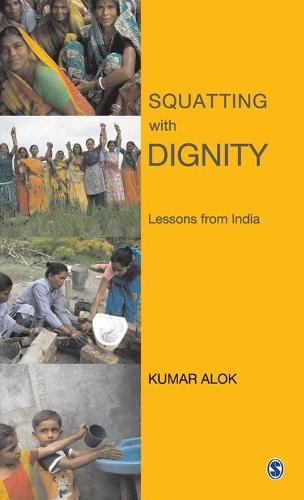
This book provides an analytical view of the successes and challenges encountered while creating the fast expanding rural sanitation movement in India, with a special focus on the last decade. While attempting to break the sanitation taboo in the country, this book presents a historical account of the importance attached to hygiene and sanitation in ancient India and the evolution of the sanitation policy. The key challenges and debates that have been encountered by policy makers while implementing the Total Sanitation Campaign have been discussed in detail along with a critical analysis of the key factors of success and the lessons learned. The book targets an audience that includes policy makers, programme managers and implementers, and outlines a vision for the future of sanitation programmes in India. It also presents innovative ideas for launching the second generation of sanitation initiatives which will be relevant not only for India but also for many other countries across the globe.
Full Product Details
Author: Kumar Alok
Publisher: SAGE Publications India Pvt Ltd
Imprint: SAGE Publications India Pvt Ltd
Edition: UK ed.
Dimensions:
Width: 13.90cm
, Height: 2.50cm
, Length: 21.50cm
Weight: 0.560kg
ISBN: 9788132103059
ISBN 10: 813210305
Pages: 408
Publication Date: 02 February 2010
Audience:
College/higher education
,
Professional and scholarly
,
Tertiary & Higher Education
,
Professional & Vocational
Format: Hardback
Publisher's Status: No Longer Our Product
Availability: Awaiting stock

The supplier is currently out of stock of this item. It will be ordered for you and placed on backorder. Once it does come back in stock, we will ship it out for you.
Reviews
This book is a blueprint of the Indian state functionaries' experience and attempts to provide constructive suggestions from that perspective. -- Economic & Political Weekly Vol XLVI, No 51, Dec 2011 20111217
This book is a blueprint of the Indian state functionaries' experience and attempts to provide constructive suggestions from that perspective. -- Economic & Political Weekly [The author] perspectives as an insider to the policy making process are spread over this book and that certainly adds a distinct flavour to an otherwise simple but comprehensive narrative...An interesting feature of the book is that it clearly brings out certain facets of public administration enlightening an ordinary reader on how the system functions in India... the book is extremely informative and goes to the extent of describing minute details of the projects as well as project proposals, which will be of great use to policy makers. This book has definitely added to the scarce published material on sanitation throughout the world. It will certainly help the policy makers and implementers in designing suitable programmes on sanitation not only in India but also in other developing countries. -- Current Science Written with commitment and passion, Squatting with Dignity provides an in-depth analytical account of what has worked and what remains to be achieved in the sanitation arena. -- www.d-sector.org
Author Information
Kumar Alok is an Indian Administrative Service (IAS) officer of the 1990 batch and presently the Chief Executive Officer of the Tripura Tribal Areas Autonomous District Council (TTAADC), an autonomous institution created under the Sixth Schedule of Indian Constitution for overall welfare of the tribal population in Tripura. An M.Tech. from Indian Institute of Technology (IIT), Kanpur in Aeronautical Engineering, he is a social development professional with wide-ranging experience in various social sectors. He has long and rich experience in sanitation and hygiene promotion at the national level in India as well as in the international agency—UNICEF. He played a key role in designing and scaling up of India’s national rural sanitation programme while working as Director, Rural Sanitation in the Department of Drinking Water Supply in the Ministry of Rural Development, Government of India. He was responsible for initiating a large number of innovations in ‘Total Sanitation Campaign (TSC)’—the flagship rural sanitation programme in India, including designing and operationalizing the innovative incentive scheme, Nirmal Gram Puraskar, and an effective online monitoring system for TSC. These innovations were instrumental in revamping and rejuvenating the rural sanitation programme in India.