Overview
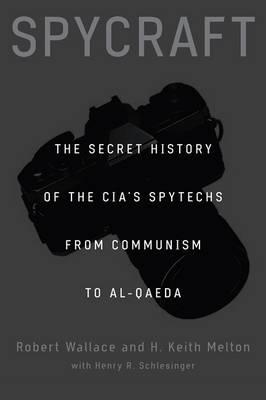
From ultra-miniature document cameras and audio bugs to disguises and dead drops, the covert devices used by spies have captured our imaginations for decades. Now America's Q' - the former director of the CIA's Office of Technical Service (OTS) - and an internationally renowned intelligence historian take readers behind the scenes to tell amazing life and death stories of these spy gadgets and the remarkable individuals behind them. From the Cold War to Iraq, from cats with embedded listening devices to quiet helicopters and altered documents.'
Full Product Details
Author: Robert Wallace ,
Keith H. Melton ,
Henry R. Schlesinger
Publisher: Penguin Putnam Inc
Imprint: E P Dutton & Co Inc
Dimensions:
Width: 15.50cm
, Height: 4.80cm
, Length: 23.40cm
Weight: 0.918kg
ISBN: 9780525949800
ISBN 10: 0525949801
Pages: 480
Publication Date: 24 December 2009
Audience:
General/trade
,
General
Format: Paperback
Publisher's Status: No Longer Our Product
Availability: In Print

This item will be ordered in for you from one of our suppliers. Upon receipt, we will promptly dispatch it out to you. For in store availability, please contact us.
Reviews
?Today's CIA is regularly criticized for emphasizing technology at the expense of ?human intelligence.? In this history of the agency's Office of Technical Services, Wallace, its former head, and academic specialist Melton (Ultimate Spy) refute the charge with exciting content and slam-bang style. The book's chief value is its perspective on the synergy of technology and tradecraft. From WWII through the Cold War and up to the present, the authors say, technical equipment?for clandestine audio surveillance, for example?has been an essential element of agent operations. In the post-Cold War ?information society, ? technology plays an even more significant role in fighting terrorism. Agents remain important, along with their traditional skills. Increasingly, however, they support clandestine technical operations, especially infiltrating and compromising computer networks. The authors persuasively argue that employing and defending against sophisticated digital technology is the primary c aTodayas CIA is regularly criticized for emphasizing technology at the expense of ahuman intelligence.a In this history of the agencyas Office of Technical Services, Wallace, its former head, and academic specialist Melton (Ultimate Spy) refute the charge with exciting content and slam-bang style. The bookas chief value is its perspective on the synergy of technology and tradecraft. From WWII through the Cold War and up to the present, the authors say, technical equipmentafor clandestine audio surveillance, for exampleahas been an essential element of agent operations. In the post-Cold War ainformation society, a technology plays an even more significant role in fighting terrorism. Agents remain important, along with their traditional skills. Increasingly, however, they support clandestine technical operations, especially infiltrating and compromising computer networks. The authors persuasively argue that employing and defending against sophisticated digital technology is the primary challenge facing U.S. intelligence in the 21st century. Their position invites challenge, but it cannot be dismissed.a --""Publishers Weekly"" aModern espionage requires more than a fast car and a shaken martini; it demands suitable equipment with which to gather, store, and transmit information. Wallace, former director of the CIA's Office of Technical Services (OTS), and H. Keith Melton (CIA Special Weapons & Equipment: Spy Devices of the Cold War), together with Henry Robert Schlesinger (coauthor, ""Brooklyn Bounce: The True- Life Adventures of a Good Cop in a Bad Precinct""), present this well-written account of the ingenious items and procedures developed by the OTS to support field agents. Thedetails of operational activity are as engrossing as the descriptions of the equipment, military and otherwiseae.g., miniature cameras and radios, obscure drugs, tiny weapons, secret compartments, and forged documentsadepicted here in 100- plus fascinating diagrams and photographs.a --""Library Journal"" aJust amazing! Page after page of jaw-dropping revelations about incredible cases and amazing technology. There has never been anything like this book.a aRichard Gid Powers, author of ""Secrecy and Power: The Life of J. Edgar Hoover"" and ""Broken: The Troubled Past and Uncertain Future of the FBI"" aThis book is absolutely the best I've ever read about the CIA's ""spy-techs"" and the critical role they have playeda] Painstakingly researched, yet written with a novelist's flair, ""SPYCRAFT"" rips back the veils, revealing unfamiliar cases and offering fresh insights into infamous ones. From chronicling the invention of exploding pancakes to wristwatch cameras and quiet helicopters, ""SPYCRAFT"" documents how ingenious ""techies"" turned the CIA's lab into ""the greatest toy shop in the world"" and proved that if they ""could think it --(they) could do it.""a --Pete Earley, author of ""Comrade J: The Untold Secrets of Russia's Master Spy After The End of The Cold War"" and ""Confessions of a Spy; The Real Story of Aldrich Ames"" aA must read for anyone interested in the world of CIA clandestine operations. The authors open a door on a hidden area that even those of us who have served in the Agency rarely see. Incredible research and great writing make this a fun ride through the history of this until now overlooked secret world deep inside the CIA.a aGary C. Schroen, author of""First In"" aThis is a story I thought could never be told. The CIA's super-secret gadgets and technical operations were the difference maker in the espionage wars. Bob Wallace and Keith Melton have done a brilliant job of taking us into this amazing and arcane world. Behind all of us who did the front line spying for the CIA stood some remarkable and unsung heroes, the scientists and engineers of OTS. It was a beautiful partnership. Don't miss this book. Nothing like it has been written before.a aJames M. Olson, former chief of CIA counterintelligence and author of ""Fair Play: The Moral Dilemmas of Spying"" aStuffed with stories about chemical taggants, forged documents, physical and psychological disguises, software beacons that reveal the location of a cell phone or a laptopa]this extraordinary, detailed, accurate book tells more about what spies really do, the risks they run and their schemes to avoid them, than all the James Bond stories put together.a aDavid Kahn, author of ""The Codebreakers"" aJust amazing! Page after page of jaw-dropping revelations about incredible cases and amazing technology. There has never been anything like this book.a aRichard Gid Powers, author of ""Secrecy and Power: The Life of J. Edgar Hoover"" and ""Broken: The Troubled Past and Uncertain Future of the FBI"" aThis book is absolutely the best I've ever read about the CIA's ""spy-techs"" and the critical role they have playeda] Painstakingly researched, yet written with a novelist's flair, ""SPYCRAFT"" rips back the veils, revealing unfamiliar cases and offering fresh insights into infamous ones. From chronicling the invention of exploding pancakes to wristwatch cameras and quiet helicopters, ""SPYCRAFT"" documents how ingenious ""techies"" turned the CIA's lab into ""the greatest toy shop in the world"" and proved that if they ""could think it --(they) could do it.""a --Pete Earley, author of ""Comrade J: The Untold Secrets of Russia's Master Spy After The End of The Cold War"" and ""Confessions of a Spy; The Real Story of Aldrich Ames"" aA must read for anyone interested in the world of CIA clandestine operations. The authors open a door on a hidden area that even those of us who have served in the Agency rarely see. Incredible research and great writing make this a fun ride through the history of this until now overlooked secret world deep inside the CIA.a aGary C. Schroen, author of ""First In"" aThis is a story I thought could never be told. The CIA's super-secret gadgets and technical operations were the difference maker in the espionage wars. Bob Wallace and Keith Melton have done a brilliant job of taking us into this amazing and arcane world. Behind all of us who did the front linespying for the CIA stood some remarkable and unsung heroes, the scientists and engineers of OTS. It was a beautiful partnership. Don't miss this book. Nothing like it has been written before.a aJames M. Olson, former chief of CIA counterintelligence and author of ""Fair Play: The Moral Dilemmas of Spying"" aStuffed with stories about chemical taggants, forged documents, physical and psychological disguises, software beacons that reveal the location of a cell phone or a laptopa]this extraordinary, detailed, accurate book tells more about what spies really do, the risks they run and their schemes to avoid them, than all the James Bond stories put together.a aDavid Kahn, author of ""The Codebreakers""
?Today's CIA is regularly criticized for emphasizing technology at the expense of ?human intelligence.? In this history of the agency's Office of Technical Services, Wallace, its former head, and academic specialist Melton (Ultimate Spy) refute the charge with exciting content and slam-bang style. The book's chief value is its perspective on the synergy of technology and tradecraft. From WWII through the Cold War and up to the present, the authors say, technical equipment?for clandestine audio surveillance, for example?has been an essential element of agent operations. In the post-Cold War ?information society, ? technology plays an even more significant role in fighting terrorism. Agents remain important, along with their traditional skills. Increasingly, however, they support clandestine technical operations, especially infiltrating and compromising computer networks. The authors persuasively argue that employing and defending against sophisticated digital technology is the primary c aTodayas CIA is regularly criticized for emphasizing technology at the expense of ahuman intelligence.a In this history of the agencyas Office of Technical Services, Wallace, its former head, and academic specialist Melton (Ultimate Spy) refute the charge with exciting content and slam-bang style. The bookas chief value is its perspective on the synergy of technology and tradecraft. From WWII through the Cold War and up to the present, the authors say, technical equipmentafor clandestine audio surveillance, for exampleahas been an essential element of agent operations. In the post-Cold War ainformation society, a technology plays an even more significant role in fighting terrorism. Agents remain important, along with their traditional skills. Increasingly, however, they support clandestine technical operations, especially infiltrating and compromising computer networks. The authors persuasively argue that employing and defending against sophisticated digital technology is the primary challenge facing U.S. intelligence in the 21st century. Their position invites challenge, but it cannot be dismissed.a -- Publishers Weekly aModern espionage requires more than a fast car and a shaken martini; it demands suitable equipment with which to gather, store, and transmit information. Wallace, former director of the CIA's Office of Technical Services (OTS), and H. Keith Melton (CIA Special Weapons & Equipment: Spy Devices of the Cold War), together with Henry Robert Schlesinger (coauthor, Brooklyn Bounce: The True- Life Adventures of a Good Cop in a Bad Precinct ), present this well-written account of the ingenious items and procedures developed by the OTS to support field agents. Thedetails of operational activity are as engrossing as the descriptions of the equipment, military and otherwiseae.g., miniature cameras and radios, obscure drugs, tiny weapons, secret compartments, and forged documentsadepicted here in 100- plus fascinating diagrams and photographs.a -- Library Journal aJust amazing! Page after page of jaw-dropping revelations about incredible cases and amazing technology. There has never been anything like this book.a aRichard Gid Powers, author of Secrecy and Power: The Life of J. Edgar Hoover and Broken: The Troubled Past and Uncertain Future of the FBI aThis book is absolutely the best I've ever read about the CIA's spy-techs and the critical role they have playeda] Painstakingly researched, yet written with a novelist's flair, SPYCRAFT rips back the veils, revealing unfamiliar cases and offering fresh insights into infamous ones. From chronicling the invention of exploding pancakes to wristwatch cameras and quiet helicopters, SPYCRAFT documents how ingenious techies turned the CIA's lab into the greatest toy shop in the world and proved that if they could think it --(they) could do it. a --Pete Earley, author of Comrade J: The Untold Secrets of Russia's Master Spy After The End of The Cold War and Confessions of a Spy; The Real Story of Aldrich Ames aA must read for anyone interested in the world of CIA clandestine operations. The authors open a door on a hidden area that even those of us who have served in the Agency rarely see. Incredible research and great writing make this a fun ride through the history of this until now overlooked secret world deep inside the CIA.a aGary C. Schroen, author of First In aThis is a story I thought could never be told. The CIA's super-secret gadgets and technical operations were the difference maker in the espionage wars. Bob Wallace and Keith Melton have done a brilliant job of taking us into this amazing and arcane world. Behind all of us who did the front line spying for the CIA stood some remarkable and unsung heroes, the scientists and engineers of OTS. It was a beautiful partnership. Don't miss this book. Nothing like it has been written before.a aJames M. Olson, former chief of CIA counterintelligence and author of Fair Play: The Moral Dilemmas of Spying aStuffed with stories about chemical taggants, forged documents, physical and psychological disguises, software beacons that reveal the location of a cell phone or a laptopa]this extraordinary, detailed, accurate book tells more about what spies really do, the risks they run and their schemes to avoid them, than all the James Bond stories put together.a aDavid Kahn, author of The Codebreakers aJust amazing! Page after page of jaw-dropping revelations about incredible cases and amazing technology. There has never been anything like this book.a aRichard Gid Powers, author of Secrecy and Power: The Life of J. Edgar Hoover and Broken: The Troubled Past and Uncertain Future of the FBI aThis book is absolutely the best I've ever read about the CIA's spy-techs and the critical role they have playeda] Painstakingly researched, yet written with a novelist's flair, SPYCRAFT rips back the veils, revealing unfamiliar cases and offering fresh insights into infamous ones. From chronicling the invention of exploding pancakes to wristwatch cameras and quiet helicopters, SPYCRAFT documents how ingenious techies turned the CIA's lab into the greatest toy shop in the world and proved that if they could think it --(they) could do it. a --Pete Earley, author of Comrade J: The Untold Secrets of Russia's Master Spy After The End of The Cold War and Confessions of a Spy; The Real Story of Aldrich Ames aA must read for anyone interested in the world of CIA clandestine operations. The authors open a door on a hidden area that even those of us who have served in the Agency rarely see. Incredible research and great writing make this a fun ride through the history of this until now overlooked secret world deep inside the CIA.a aGary C. Schroen, author of First In aThis is a story I thought could never be told. The CIA's super-secret gadgets and technical operations were the difference maker in the espionage wars. Bob Wallace and Keith Melton have done a brilliant job of taking us into this amazing and arcane world. Behind all of us who did the front linespying for the CIA stood some remarkable and unsung heroes, the scientists and engineers of OTS. It was a beautiful partnership. Don't miss this book. Nothing like it has been written before.a aJames M. Olson, former chief of CIA counterintelligence and author of Fair Play: The Moral Dilemmas of Spying aStuffed with stories about chemical taggants, forged documents, physical and psychological disguises, software beacons that reveal the location of a cell phone or a laptopa]this extraordinary, detailed, accurate book tells more about what spies really do, the risks they run and their schemes to avoid them, than all the James Bond stories put together.a aDavid Kahn, author of The Codebreakers
aTodayas CIA is regularly criticized for emphasizing technology at the expense of ahuman intelligence.a In this history of the agencyas Office of Technical Services, Wallace, its former head, and academic specialist Melton (Ultimate Spy) refute the charge with exciting content and slam-bang style. The bookas chief value is its perspective on the synergy of technology and tradecraft. From WWII through the Cold War and up to the present, the authors say, technical equipmentafor clandestine audio surveillance, for exampleahas been an essential element of agent operations. In the post-Cold War ainformation society, a technology plays an even more significant role in fighting terrorism. Agents remain important, along with their traditional skills. Increasingly, however, they support clandestine technical operations, especially infiltrating and compromising computer networks. The authors persuasively argue that employing and defending against sophisticated digital technology is the primary challenge facing U.S. intelligence in the 21st century. Their position invites challenge, but it cannot be dismissed.a<br> -- Publishers Weekly <br> aModern espionage requires more than a fast car and a shaken martini; it demands suitable equipment with which to gather, store, and transmit information. Wallace, former director of the CIA's Office of Technical Services (OTS), and H. Keith Melton (CIA Special Weapons & Equipment: Spy Devices of the Cold War), together with Henry Robert Schlesinger (coauthor, Brooklyn Bounce: The True- Life Adventures of a Good Cop in a Bad Precinct ), present this well-written account of the ingenious items and procedures developed by the OTS to support field agents. Thedetails of operational activity are as engrossing as the descriptions of the equipment, military and otherwiseae.g., miniature cameras and radios, obscure drugs, tiny weapons, secret compartments, and forged documentsadepicted here in 100- plus fascinating diagrams and photographs.a<br> -- Library Journal <br> aJust amazing! Page after page of jaw-dropping revelations about incredible cases and amazing technology. There has never been anything like this book.a<br> aRichard Gid Powers, author of Secrecy and Power: The Life of J. Edgar Hoover and Broken: The Troubled Past and Uncertain Future of the FBI <br> aThis book is absolutely the best I've ever read about the CIA's spy-techs and the critical role they have playeda] Painstakingly researched, yet written with a novelist's flair, SPYCRAFT rips back the veils, revealing unfamiliar cases and offering fresh insights into infamous ones. From chronicling the invention of exploding pancakes to wristwatch cameras and quiet helicopters, SPYCRAFT documents how ingenious techies turned the CIA's lab into the greatest toy shop in the world and proved that if they could think it --(they) could do it. a<br> --Pete Earley, author of Comrade J: The Untold Secrets of Russia's Master Spy After The End of The Cold War and Confessions of a Spy; The Real Story of Aldrich Ames <br> aA must read for anyone interested in the world of CIA clandestine operations. The authors open a door on a hidden area that even those of us who have served in the Agency rarely see. Incredible research and great writing make this a fun ride through the history of this until now overlooked secret world deep inside the CIA.a<br> aGary C. Schroen, author of First In <br> aThis is a story I thought could never be told. The CIA's super-secret gadgets and technical operations were the difference maker in the espionage wars. Bob Wallace and Keith Melton have done a brilliant job of taking us into this amazing and arcane world. Behind all of us who did the front line spying for the CIA stood some remarkable and unsung heroes, the scientists and engineers of OTS. It was a beautiful partnership. Don't miss this book. Nothing like it has been written before.a<br> aJames M. Olson, former chief of CIA counterintelligence and author of Fair Play: The Moral Dilemmas of Spying <br> aStuffed with stories about chemical taggants, forged documents, physical and psychological disguises, software beacons that reveal the location of a cell phone or a laptopa]this extraordinary, detailed, accurate book tells more about what spies really do, the risks they run and their schemes to avoid them, than all the James Bond stories put together.a<br> aDavid Kahn, author of The Codebreakers
?Today's CIA is regularly criticized for emphasizing technology at the expense of ?human intelligence.? In this history of the agency's Office of Technical Services, Wallace, its former head, and academic specialist Melton (Ultimate Spy) refute the charge with exciting content and slam-bang style. The book's chief value is its perspective on the synergy of technology and tradecraft. From WWII through the Cold War and up to the present, the authors say, technical equipment?for clandestine audio surveillance, for example?has been an essential element of agent operations. In the post-Cold War ?information society, ? technology plays an even more significant role in fighting terrorism. Agents remain important, along with their traditional skills. Increasingly, however, they support clandestine technical operations, especially infiltrating and compromising computer networks. The authors persuasively argue that employing and defending against sophisticated digital technology is the primary c