Overview
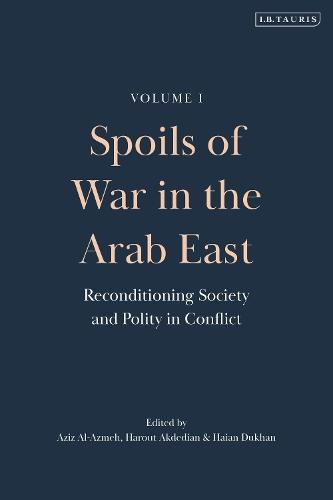
Post-conflict scenarios are often proposed for Arab countries that have witnessed significant changes and civil wars. Yet the plans for reconciliation, transitional justice, and the return of the displaced often overlook the real conditions that make these recommendations impossible. This book provides a critical analysis of current post-conflict frameworks for Syria and Iraq. Drawing on empirical research, the book shows that reconciliation and reconstruction scenarios need to be considered alongside the realities on the ground. It argues that Iraq and Syria exist in a condition of ‘conflict transformation’ rather than of ‘conflict termination’, because the extreme changes that accompanied these countries into war continue long after the conflicts end. Furthermore, the chapters highlight why experts should not seek solutions in culturalist terms and ancestral enmities, or rely on the wartime status quo. Rather, they should look to the specific military, political, economic and socio-cultural conditions that require different solutions. A critical analysis of existing post-conflict frameworks, their applicability and their potential outcomes in Iraq and Syria, the book is a vital contribution to post-conflict studies. It highlights the need for new approaches to reconstruction and peacebuilding in Arab countries and points to how they should be found.
Full Product Details
Author: Aziz Al-Azmeh ,
Harout Akdedian (Central European University) ,
Haian Dukhan
Publisher: Bloomsbury Publishing PLC
Imprint: I.B. Tauris
Dimensions:
Width: 15.40cm
, Height: 2.00cm
, Length: 23.20cm
Weight: 0.440kg
ISBN: 9780755649129
ISBN 10: 0755649125
Pages: 286
Publication Date: 21 August 2025
Audience:
Professional and scholarly
,
College/higher education
,
Professional & Vocational
,
Tertiary & Higher Education
Format: Paperback
Publisher's Status: Active
Availability: Manufactured on demand

We will order this item for you from a manufactured on demand supplier.
Reviews
""Postwar conditions are sometimes no more than a continuation of war by other warlike means. Iraq and Syria plainly illustrate this fact. Empirically and theoretically rich, this book is an important contribution to the analysis of these two countries as well as to the general field of post-conflict studies."" --Gilbert Achcar, Professor, SOAS, UK ""Providing important analysis of Syria, Iraq and beyond, this book very usefully challenges the idea of a 'transition' to peace and good governance, suggesting instead that a variety of wartime fighters, fiefdoms and proto-states - linked to external backers and sometimes with government support - have formed the basis for extraction and corruption underpinned by continuing violence. A sobering corrective to magical thinking about peace."" --David Keen, Professor of Conflict Studies, LSE, UK
"""Postwar conditions are sometimes no more than a continuation of war by other warlike means. Iraq and Syria plainly illustrate this fact. Empirically and theoretically rich, this book is an important contribution to the analysis of these two countries as well as to the general field of post-conflict studies."" --Gilbert Achcar, Professor, SOAS, UK ""Providing important analysis of Syria, Iraq and beyond, this book very usefully challenges the idea of a 'transition' to peace and good governance, suggesting instead that a variety of wartime fighters, fiefdoms and proto-states - linked to external backers and sometimes with government support - have formed the basis for extraction and corruption underpinned by continuing violence. A sobering corrective to magical thinking about peace."" --David Keen, Professor of Conflict Studies, LSE, UK"
Author Information
Aziz Al-Azmeh is Professor at the Central European University, Vienna, Austria. He has held visiting professorships at Columbia University, Yale University and University of California, Berkeley in the US and at the Institut d’Etudes Politique in France. He has been a long-term fellow of the Institute for Advanced Study in Berlin, Germany, among others, and twice Directeur de Recherches Associé at the Maison des Sciences de l’Homme in France. He has served on the Advisory Council of the UNDP Arab Human Development Reports. Harout Akdedian is Carnegie SFM Senior Post-Doctoral Fellow at the Central European University, Vienna, Austria, and a visiting scholar at the Middle East Studies Centre of Portland State University, US. He holds a PhD in Islamic Studies from the University of New England, Australia. Haian Dukhan is Postdoctoral Fellow of the Central European University, Vienna and a fellow of the Centre for Syrian Studies at the University of St Andrews, UK. He has taught politics and international relations at the University of St Andrews, UK, the University of Leicester, UK and the University of Edinburgh, UK.