Overview
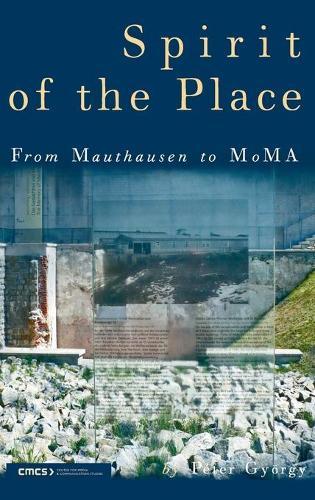
These essays are case-studies, the cases unraveling our cultural roots, memory itself. If a museum is the subject, then for instance the way the museum changes face, function, its manner of speech; how, a repository of collections and the cultural memory of humankind itself turns into one of the objects, memories, a custodian and exponent of its own history, or the opposite: how it connects with its modernized environs and changing audience: us. How has, or might the sanctum be transformed into a public venue, go from an inward looking, reverential enclosure to a space full of life. In other studies included here the author speaks of spatial and incarnate remembrance: the radical difference between a monument and a memorial. The duality of “always remembering” and “never forgetting”: a past depersonalized and dehistoricized as it was seized and processed. Of the layers of meaning attached to concentration camps, transmuting essence of artworks, and the difficult, the contradictory but inescapable processing of history and the past, of self-identical existence in history. So that we know we are alive. And how that is so.
Full Product Details
Author: Péter György
Publisher: Central European University Press
Imprint: Central European University Press
Dimensions:
Width: 15.90cm
, Height: 2.50cm
, Length: 23.40cm
Weight: 0.660kg
ISBN: 9789639776333
ISBN 10: 9639776335
Pages: 286
Publication Date: 01 October 2008
Audience:
Professional and scholarly
,
Professional & Vocational
Format: Hardback
Publisher's Status: Out of Print
Availability: Awaiting stock

Reviews
Peter Gyoergy's excellent book is a rare example of fresh, wide-ranging prose about the complex relationship between history and the media, memory and art, politics and culture. Gyoergy has a Wunderkammerlike imagination. And with a storyteller's eye for detail, he reconsiders, among much else, the Holocaust in terms of the architecture of mass murder, reminding us how our perceptions depend not on picturing drama through films or television but on an absense of visual spectacles and a close reconsideration of the true relics of megalomania. He visits Freud museums in St. Petersburg, London and Vienna, which leads him to an exhibition of Robert Longo drawings and then to a meditation on Austrian self-reflection and, in the manner of an archeologist, to further layers of meaning, inscribed in the institutions and symbols of the past. Likewise, with the Hungarian uprising in 1956, which Hungary has largely erased from its past, and in the process lost touch with itself, ominously. All in all, a book full of insight and implication. -- Michael Kimmelman * New York Times *
Péter György’s excellent book is a rare example of fresh, wide-ranging prose about the complex relationship between history and the media, memory and art, politics and culture. György has a Wunderkammerlike imagination. And with a storyteller’s eye for detail, he reconsiders, among much else, the Holocaust in terms of the architecture of mass murder, reminding us how our perceptions depend not on picturing drama through films or television but on an absense of visual spectacles and a close reconsideration of the true relics of megalomania. He visits Freud museums in St. Petersburg, London and Vienna, which leads him to an exhibition of Robert Longo drawings and then to a meditation on Austrian self-reflection and, in the manner of an archeologist, to further layers of meaning, inscribed in the institutions and symbols of the past. Likewise, with the Hungarian uprising in 1956, which Hungary has largely erased from its past, and in the process lost touch with itself, ominously. All in all, a book full of insight and implication. -- Michael Kimmelman * New York Times *
Author Information
Péter György is professor at ELTE University Budapest, Institute for Fine Art and Media Theory, Head of Doctoral Program in Film, Media and Contemporary Culture.