|
|
|||
|
||||
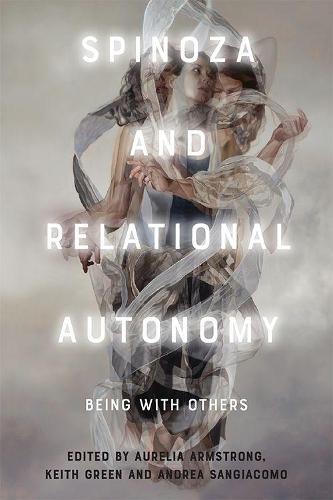
OverviewThis collection of 13 new essays shows what Baruch Spinoza can add to our understanding of the relational nature of autonomy. By offering a relational understanding of the nature of individuals centred on the role played by emotions, Spinoza offers not only historical roots for contemporary debates but also broadens the current discussion. At the same time, reading Spinoza as a theorist of relational autonomy underscores the consistency of his overall metaphysical, ethical and political project, which has been clouded by the standard rationalist interpretation of his works. Full Product DetailsAuthor: Aurelia Armstrong (Lecturer in Philosophy, University of Queensland) , Keith Green (Professor of Philosophy, East Tennessee State University) , Andrea Sangiacomo (Assistant Professor of Philosophy, University of Groningen)Publisher: Edinburgh University Press Imprint: Edinburgh University Press Weight: 0.484kg ISBN: 9781474419697ISBN 10: 1474419690 Pages: 232 Publication Date: 28 May 2019 Audience: College/higher education , Postgraduate, Research & Scholarly Format: Hardback Publisher's Status: Active Availability: Manufactured on demand We will order this item for you from a manufactured on demand supplier. Table of ContentsEditors’ IntroductionAurelia Armstrong , Keith Green and Andrea Sangiacomo 1. Relational Autonomy: State of the Art DebateCatriona Mackenzie 2. Epistemic Autonomy in Descartes, Spinoza and Kant: The Value of Thinking for OneselfUrsula Renz 3. Spinoza on the Interaction of Ideas: Biased BeliefsMartin Lenz 4. Spinoza on Natures: Aristotelian and Mechanistic Routes to Relational AutonomyMatthew Kisner 5. Spinoza’s Path from Imaginative Transindividuality to Intuitive Relational Autonomy: From Fusion, Confusion and Fragmentation to Moral IntegrityHeidi M. Ravven 6. Revisiting Spinoza’s concept of conatus: Degrees of AutonomyCaroline Williams 7. Bodies Politic and Civic AgreementJustin Steinberg 8. Power, Freedom and Relational AutonomyEricka Tucker 9. Spinoza on Affirmation, Anima and Autonomy: ‘Shattered Spirits’Keith Green 10. A Spinozistic Approach to Relational Autonomy: The Case of ProstitutionAndrea Sangiacomo ContributorsIndexReviews"Autonomy is an absolutely central element in Spinoza's metaphysics, ethics and political philosophy. This volume, with insightful essays by both seasoned and younger scholars, not only offers new perspectives on the nature of autonomy in Spinoza, but also shows once again his relevance for contemporary philosophical themes.-- ""Steven Nadler, University of Wisconsin-Madison, author of Spinoza: A Life.""" Author InformationAurelia Armstrong is Lecturer in Philosophy at the University of Queensland, Australia. She has published many essays on Spinoza, Nietzsche, Foucault, Deleuze and Feminism. Keith Green is Professor of Philosophy at East Tennessee State University. He has published widely on Spinoza and Aquinas in a number of journals. Andrea Sangiacomo is Assistant Professor of Philosophy at the University of Groningen. He is the author of Spinoza on Reason, Passions and the Supreme Good (Oxford University Press).s. He is the author of L’essenza del corpo. Spinoza e la scienza delle composizioni (Olms, 2013). Tab Content 6Author Website:Countries AvailableAll regions |
||||