Overview
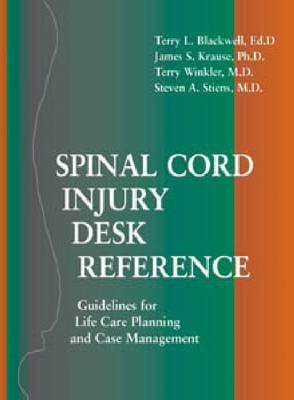
This text provides a quick, easy-to-understand, comprehensive, evidence-based reference for health care practitioners who formulate life care plans for persons with SCI. Features that will facilitate use by practitioners includes a variety of reference materials for health care professionals who provide life care planning/case management for SCI. Life care planning/case management practitioners would best be served by utilizing this text as a source of information and a guide from which to incorporate their professional knowledge, judgment, and ethical responsibilities when working with individuals with SCI to meet the challenge of addressing their unique long-term care needs. It is our hope this text will provide readers with tools and insights for competently addressing the long-term consequences of SCI. This text arose out of a perceived need to have a single reference that would both contain information and serve as a reminder of areas central to the life care planning process for persons with SCI. It offers practitioners a single, easy-to-use resource that summarizes - in a clear, understandable way with easily accessible references - a body of studies and research on SCI that
Full Product Details
Author: Terry Blackwell , James Krause , Terry Winkler , Steven Stiens
Publisher: Demos Medical Publishing
Imprint: Demos Medical Publishing
Dimensions:
Width: 21.60cm
, Height: 1.90cm
, Length: 27.30cm
Weight: 0.840kg
ISBN: 9781888799491
ISBN 10: 1888799498
Pages: 291
Publication Date: 01 February 2001
Audience:
General/trade
,
Professional and scholarly
,
College/higher education
,
General
,
Professional & Vocational
Format: Paperback
Publisher's Status: Out of Print
Availability: Awaiting stock 
Table of Contents
Life Care Planning and Spinal Cord Injury; Nature of Spinal Cord Injury; Neurologic Classification of Spinal Cord Injury; Functional Outcomes for Spinal Cord Injury; Management and Care of Spinal Cord Injury; Conclusion; Model for Life Care Planning with Spinal Cord Injury; Health; Education; Mobility; Housing; Transportation; Employment; Psychosocial Functioning; Recreation; Self Care;Resources and Legislation Related to Spinal Cord Injury; Identifying Resources; Model Spinal Cord Injury Program; Rehabilitation Research and Training Centers; Rehabilitation Engineering Research Centers; Rural Health Research Centers; Department of Veterans Affairs; Spinal Cord Injury Associations/Organizations; Major Funding Sources; Disability Rights Legislation; Implications for Life Care Planning/Case Management; Sample Life Care Plan for Spinal Cord Injury; Life Care PlanReport; Referral and Background Infomation; Education and Training; Military Service; Vocational History; Pre-Injury Medical History; Post-Injury Medical History Summary; Post-Injury Complications; Records Reviewed; Functional Abilities; Activities of Daily Living; Current Management and Care; Current Financial Status; Conclusions; Life Care Plan; Forms; Life Care Plan Interview & History Questionnaire; Questions for Primary Care Physician/Physiatrist; Questions for Nurse; Questions for Occupational Therapist; Questions for Physical Therapist; Questions for Psychologist/Neuropsychologist; Supplemental Questions for Individuals with Traumatic Brain Injury; Appendices; Demographic Characteristics of Spinal Cord Injury; Costs Associated with Spinal Cord Injury; FIM? Instrument; Functional Rehabilitation Outcomes of Spinal Cord Injury; Aging with Spinal Cord Injury; Sexuality and Spinal Cord Injury; Mortality and Spinal Cord Injury; Leading Complications and Concerns for Spinal Cord Injury; Costs Associated with Complications Secondary to Spinal Cord Injury; Health Issues for Women with Spinal Cord Injury; Employment after Spinal Cord Injury; Common Mobility Equipment Needs for Spinal Cord Injury; Personal Assistance Guidelines for Spinal Cord Injury; Wheelchair Sports and Recreation Associations; Guidelines for Follow-up Care of Spinal Cord Injury; Ethical Issues for Life Care Planning; b>References; Glossary; Index
Reviews
This well-organized and comprehensive text is both an easy to comprehend textbook and a layman's introduction to the dynamics of spinal cord injury and the concept of life-care planning...this text is complete and thorough in describing spinal cord injury; explaining its effects on the individual, family, and society... -- Rehabilitation Counseling Bulletin, Loretta A. DeSoto, RN, CRRN, CCM, Winter 2002 If your practice includes life care planning for spinal cord injuries, you need this book...The Appendices deserve special note. There are 16 topic areas packed full of life care planning related data. Subjects include demographics, costs associated with SCI, Functional Independence Measures (FIM) information, functional outcomes, aging, sexuality, leading complications, complications costs, health issues for women, mobility, employment, personal assistance guidelines, wheelchair sports and recreational resources, follow up care guidelines and ethical issues. Some are mini chapters and summarize the essence of information and data from a variety of well known SCI resources and research studies. --National Association of Rehabilitation Professionals in the Private Sector 2001 One of the continually growing practice areas for rehabilitation professionals of various backgrounds is that of life care planning. The move for training and certifying life care planners (CLCP) as a profession unto itself continues to expand. The Spinal Cord Injury Desk Reference is the only text to date, which solely addresses the case management aspects of spinal cord injury (SCI) and life care planning. It addresses a multitude of issues related to spinal cord injury care as well as provides a plethora of valuable statistics and facts regarding the long-term needs, secondary complications, costs of SCI related treatments and basically a how to set of guidelines for developing life care plans. --SCI Publications Broad in scope, this source gives practitioners the tools and insights for assessing, planning, and addressing long-term care and management needs. It covers all areas central to the life-care planning process for people with SCI, and offers a wide range of guidelines that can be used as a base for addressing individual requirements. Written primarily for life care planning and case management practitioners, this source book is equally useful to primary and specialty care physicians, nurses, rehabilitation counselors, therapists, insurers/HMOs, attorneys, governmental agencies, disability organizations, and educators as well as people with SCI and their families. --Paraplegia News October 2001
""""Worthwhile reading for anyone working with individuals with SCI. I would also recommend this book to individuals with SCI, especially if professionals are unavailable to answer questions... The multidisciplinary team experience and the varying professional backgrounds of the authors make this book a useful addition to the bookshelf of anyone interested in the clinical and psychosocial aspects of SCI."""" -- Journal of Spinal Cord Medicine """"This well-organized and comprehensive text is both an easy to comprehend textbook and a layman's introduction to the dynamics of spinal cord injury and the concept of life-care planning...this text is complete and thorough in describing spinal cord injury; explaining its effects on the individual, family, and society..."""" -- Rehabilitation Counseling Bulletin """"If your practice includes life care planning for spinal cord injuries, you need this book."""" --National Association of Rehabilitation Professionals in the Private Sector """"The Spinal Cord Injury Desk Reference is the only text to date, which solely addresses the case management aspects of spinal cord injury (SCI) and life care planning. It addresses a multitude of issues related to spinal cord injury care as well as provides a plethora of valuable statistics and facts regarding the long-term needs, secondary complications, costs of SCI related treatments and basically a 'how to' set of guidelines for developing life care plans."""" --SCI Publications """"Broad in scope, this source gives practitioners the tools and insights for assessing, planning, and addressing long-term care and management needs. Written primarily for life care planning and case management practitioners, this source book is equally useful to primary and specialty care physicians, nurses, rehabilitation counselors, therapists, insurers/HMOs, attorneys, governmental agencies, disability organizations, and educators as well as people with SCI and their families."""" --Paraplegia News """"
Author Information
Terry L. Blackwell, EdD - Dr. Blackwell is Associate Professor of Rehabilitation Counseling at the Louisiana State University Health Sciences Center, New Orleans, Louisiana. Prior to his appointment there, Dr. Blackwell was in private practice in Montana and worked throughout the United States specializing in catastrophic rehabilitation and life care planning, consultation, and trainging. Dr. Blackwell sits on the editorial boards of several rehabilitation journals and has authored or co-authored a number of general books and articles in the areas of job analysis, forensic rehabilitation, ethics, and life care planning.||Dr. Krause is a Behavioral Scientist at the Shepherd Center, Atlanta, Georgia. Dr. Krause has been involved in research in long-term outcomes after spinal cord injury for more than a decade. He has published multiple articles on aging, employment, quality of life, secondary conditions, and mortality after SCI. Prior to committing all his time to research, Dr. Krause spent four years working as a staff psychologist in a large SCI rehabilitation hospital. His clincal focus included adjustment counseling, alcohol and drug treatment, and prevention of secondary conditions. Dr. Krause uses his research and clinical background to assist in the development of life care plans and to provide expert testimony in SCI cases by predicting long-term complications, prospects for return to gainful employment, and life expectancy.|Dr. Winkler is a Board Certified Physical Medicine and Rehabilitation and Spinal Cord Injury Medicine Physician in private practice in Springfield, Missouri. In his practice, Dr. Winkler specializes in traumatic and acquired brain injury, spinal cord injury, amputations, and life care planning. He holds academic appointments as Clinical Associate Professor at the University of Florida, Gainesville, and Clinical Professor at Louisiana State University Health Sciences Center, New Orleans, Louisiana. In addition, Dr. Winkler serves on committees that review grants on spinal cord injury research for the Paralyzed Veterans of America and the National Institute on Disability and Rehabilitation Research. He has several publications in the area of life care planning.|Dr. Stiens is Associate Professor of Rehabilitation Medicine, University of Washington, Seattle, Washington, and Attending Spinal Cord Medicine Physician at VA Puget Sound Health Care System, Harborview Medical Center and University Hospital. Dr. Stiens providesperson-centered SCI rehabilitation and primary care as well as training and education for medical students, residents, and SCI fellows. He has published numerous scientific articles and chapters on a wide range of SCI-related topics including neurogenic bowel, psychosocial adaptation, cardiovascular disease, gastrointestinal dysfunction, and mechanisms of neurologic recovery. In addition, Dr. Stiens has developed a variety of training films and educational materials on SCI
Tab Content 6
Author Website:
Countries Available
All regions
|