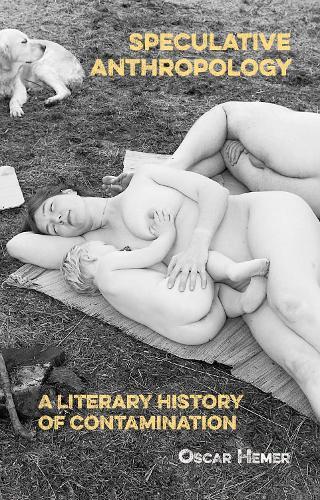
Overview
Anthropology’s keen interest in fiction can be traced to the discipline’s so-called ‘literary turn’ in the 1980s and 90s, instigated by James Clifford and George Marcus’ groundbreaking anthology Writing Culture (1986). But the close connection between anthropology and literature goes back to pioneer anthropologists like Bronislaw Malinowski and Claude Lévi-Strauss, who were also prominent writers. The discussion continues, and ‘literary anthropology’ is now a well-established sub-field that addresses literary studies as well as creative writing. Yet, anthropology’s courting of literature has largely remained unanswered. Some famous authors have a background in anthropology, such as Kurt Vonnegut, Ursula K. Le Guin and Amitav Ghosh, but few – one of the exceptions being Ghosh – have reflected on the relationship between the two practices, let alone consciously attempted to fuse them. Speculative Anthropology: A Literary History of Contamination explores the ‘intersection’ between anthropology and literature from the literary side, with the perspective of the writer, rather than the critic. The title is inspired by Argentinian author Juan José Saer’s tentative definition of ‘fiction’ as ‘speculative anthropology’ and Ghanaian British philosopher Kwame Anthony Appiah’s similarly tentative proposal for a literary tradition of ‘contamination’, going back to Roman playwright Terence’s fusion of comedy and tragedy. In this pioneer monograph, Oscar Hemer reinterprets Appiah’s ‘contamination’ as genre crossing and mixing, not between different literary genres but between fiction and discursive forms of writing – anthropological as well as philosophical and historical. His tentative ‘canon of contamination’ explored in this volume includes, among others, Montesquieu’s Persian Letters, the ‘self-ethnographies’ of Michel Leiris and Édouard Glissant, Jorge Luis Borges’s ‘fictional essays’, César Aira’s ‘freaked-out ethnography’, Chris Kraus’s ‘theoretical fiction’, Zoë Wicomb’s spectral South African history – and the exemplary philosophy-by-fiction of J.M. Coetzee.
Full Product Details
Author: Oscar Hemer
Publisher: Sean Kingston Publishing
Imprint: Sean Kingston Publishing
Dimensions:
Width: 15.60cm
, Height: 1.60cm
, Length: 23.40cm
Weight: 0.427kg
ISBN: 9781912385782
ISBN 10: 1912385783
Pages: 302
Publication Date: 15 April 2026
Audience:
College/higher education
,
Adult education
,
Postgraduate, Research & Scholarly
,
Further / Higher Education
Format: Paperback
Publisher's Status: Active
Availability: In Print

This item will be ordered in for you from one of our suppliers. Upon receipt, we will promptly dispatch it out to you. For in store availability, please contact us.
Reviews
What is knowledge? It’s somewhere in that mystery of Otherness that contaminates its seekers, Hemer argues. Prowling for weakness on the imaginary fence line between anthropology and literature, Speculative Anthropology sniffs out the haunted ruins of colonial obsessions, scents that still entice and ensnare, even as we disavow them. Anna Tsing, Professor of Anthropology, University of California, Santa Cruz The purpose, the author says, is not to look back to his European base, but to permit connections in the global South to challenge disciplinary categories of thought and imagination. A unique study, Hemer’s Speculative Anthropology stages contamination as transgressive and progressive modernity. Michael Chapman, Emeritus Professor of English, University of KwaZulu-Natal, Durban
Author Information
Oscar Hemer is Professor Emeritus of Journalistic and Literary Creation at Malmö University, Sweden. His diverse body of work includes novels, translations, academic essays and experimental literary anthropology.