|
|
|||
|
||||
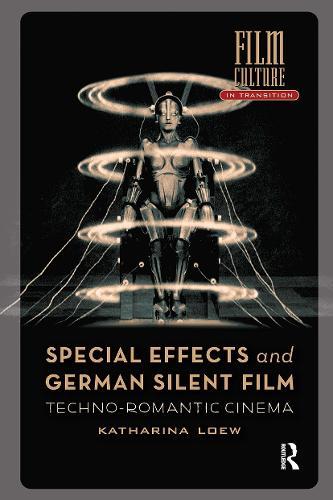
OverviewIn recent decades, special effects have become a major new area of research in cinema studies. For the most part, they have been examined as spectacles or practical tools. In contrast, Special Effects and German Silent Film, foregrounds their function as an expressive device and their pivotal role in cinema’s emergence as a full-fledged art. Special effects not only shaped the look of iconic films like Nosferatu (1922) or Metropolis (1927), but they are central to a comprehensive understanding of German silent film culture writ large. This book examines special effects as the embodiment of a “techno-romantic” paradigm that seeks to harness technology – the epitome of modern materialism – as a means for accessing a spiritual realm. Employed to visualize ideas and emotions in a medium-specific way, special effects thus paved the way for film art. Full Product DetailsAuthor: Katharina LoewPublisher: Taylor & Francis Ltd Imprint: Routledge Weight: 0.590kg ISBN: 9781041186526ISBN 10: 1041186525 Pages: 320 Publication Date: 01 December 2025 Audience: Professional and scholarly , Professional & Vocational Format: Paperback Publisher's Status: Active Availability: Manufactured on demand We will order this item for you from a manufactured on demand supplier. Table of ContentsAcknowledgements, Introduction: Special effects and the techno-romantic paradigm, Chapter 1. Imagining technological art: Early German film theory, Chapter 2. Modern magicians: Guido Seeber and Eugen Schüfftan, Chapter 3. The uncanny mirror: Der Student von Prag (1913), Chapter 4. Visualizing the occult: Nosferatu (1922), Chapter 5. The technological sublime: Metropolis (1927), Chapter 6. German technique and Hollywood, Conclusion: Techno-romantic cinema from the silent to the digital era, Bibliography, IndexReviewsAuthor InformationKatharina Loew is Associate Professor of German and Cinema Studies at the University of Massachusetts Boston. Tab Content 6Author Website:Countries AvailableAll regions |
||||