Overview
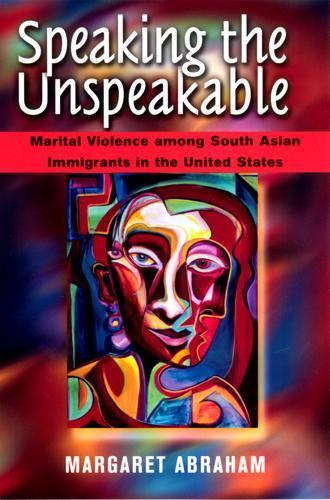
Over the past 20 years, much work has focused on domestic violence, yet little attention has been paid to the causes, manifestations, and resolutions to marital violence among ethnic minorities, especially recent immigrants. Margaret Abraham’s Speaking the Unspeakable is the first book to focus on South Asian women’s experiences of domestic violence, defined by the author as physical, sexual, verbal, mental, or economic coercion, power, or control perpetrated on a woman by her spouse or extended kin. Abraham explains how immigration issues, cultural assumptions, and unfamiliarity with American social, legal, economic, and other institutional systems, coupled with stereotyping, make these women especially vulnerable to domestic violence. Abraham lets readers hear the voices of abused South Asian women. Through their stories, we learn of their weaknesses and strengths, and of their experiences of domestic violence within the larger cultural, social, economic, and political context. We see both the individual strategies of resistance against their abusers as well as the pivotal role South Asian organizations play in helping these women escape abusive relationships. Abraham also describes the central role played by South Asian activism as it emerged in the 1980s in the United States, and addresses the ideas and practices both within and outside of the South Asian community that stereotype, discriminate, and oppress South Asians in their everyday lives.
Full Product Details
Author: Margaret Abraham
Publisher: Rutgers University Press
Imprint: Rutgers University Press
Dimensions:
Width: 15.60cm
, Height: 1.80cm
, Length: 23.50cm
Weight: 0.454kg
ISBN: 9780813527932
ISBN 10: 0813527937
Pages: 264
Publication Date: 01 April 2000
Audience:
College/higher education
,
Professional and scholarly
,
Undergraduate
,
Postgraduate, Research & Scholarly
Format: Paperback
Publisher's Status: Active
Availability: Manufactured on demand

We will order this item for you from a manufactured on demand supplier.
Reviews
Margaret Abraham breaks through the myth of the 'model minority' and speaks the unspeakable: violence against women in our families. She articulates the complexities of domestic violence in South Asian women's lives circumscribed by culture, tradition, law, and isolation in a new country. Through it all, we hear women's voices and experiences loud and clear. -- Shamita Das Dasgupta * editor of A Patchwork Shawl: Chronicles of South Asian Women in America * This groundbreaking book combines an insightful scholarly analysis with the powerful voices of women. Also important are its presentation of sexual abuse and its emphasis on individual and community resistance and on cultural and legal oppression. -- Jacquelyn Campbell * coeditor of To Have and to Hit: Cultural Perspectives in Wife Battering *
Margaret Abraham breaks through the myth of the 'model minority' and speaks the unspeakable: violence against women in our families. She articulates the complexities of domestic violence in South Asian women's lives circumscribed by culture, tradition, law, and isolation in a new country. Through it all, we hear women's voices and experiences loud and clear. - Shamita Das Dasgupta (editor of A Patchwork Shawl: Chronicles of South Asian Women in America) This groundbreaking book combines an insightful scholarly analysis with the powerful voices of women. Also important are its presentation of sexual abuse and its emphasis on individual and community resistance and on cultural and legal oppression. - Jacquelyn Campbell (coeditor of To Have and to Hit: Cultural Perspectives in Wife Battering)
"Margaret Abraham breaks through the myth of the 'model minority' and speaks the unspeakable: violence against women in our families. She articulates the complexities of domestic violence in South Asian women's lives circumscribed by culture, tradition, law, and isolation in a new country. Through it all, we hear women's voices and experiences loud and clear. --Shamita Das Dasgupta ""editor of A Patchwork Shawl: Chronicles of South Asian Women in America"" This groundbreaking book combines an insightful scholarly analysis with the powerful voices of women. Also important are its presentation of sexual abuse and its emphasis on individual and community resistance and on cultural and legal oppression. --Jacquelyn Campbell ""coeditor of To Have and to Hit: Cultural Perspectives in Wife Battering"""
Author Information
Margaret Abraham is an associate professor of sociology at Hofstra University.