Overview
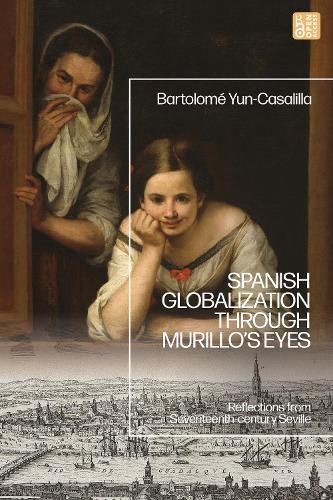
This open access book examines the work of the 17th-century Baroque painter, Bartolomé Esteban Murillo (1618-1682) – a figure who barely left the city of Seville – as a way of understanding globalization, its consequences, and its limits. Full of saints, friars, virgins, and Christs, or poor people and cheerful pícaros oblivious to social injustice, Murillo's painting has been considered representative of the Counter-Reformation and the exponent of an immobile, even introverted, society that regressed with the ‘crisis of the 17th century’. Early Globalization, Spain, and Seventeenth-Century Seville introduces a global perspective by considering the Atlantic art market and developing comparisons with Protestant paintings and an analysis of Murillo’s iconography alongside the social and political theory of his time. Such comparisons and analyses illuminate a different image, emphasizing the idea of a common European path towards modernity, individualism, emotional self-control and social change. The book also examines how Murillo’s contemporaries interpreted his iconography. The study of different ‘layers of globalization’, going back to the analysis of the Christian tradition, reveals the existence of political utopias, positive forms of valuing work and an image of the community that, opposed to the development of the speculative economy associated with globalization, would characterize the European history, with all its contradictions. The result is a new and sharper understanding of the tensions created by globalization in the field of art, in the construction of imagined communities, and in social relations in the early modern era. The ebook editions of this book are available open access under a CC BY-NC-ND 4.0 licence on bloomsburycollections.com. Open access was funded by Pablo de Olavide University, Spain.
Full Product Details
Author: Bartolomé Yun-Casalilla (Pablo de Olavide University, Spain)
Publisher: Bloomsbury Publishing PLC
Imprint: Bloomsbury Academic
Dimensions:
Width: 16.00cm
, Height: 2.20cm
, Length: 23.60cm
Weight: 0.680kg
ISBN: 9781350528772
ISBN 10: 1350528773
Pages: 328
Publication Date: 19 February 2026
Audience:
Professional and scholarly
,
Professional & Vocational
Format: Hardback
Publisher's Status: Forthcoming
Availability: Manufactured on demand

Reviews
Through Murillo’s Eyes is a vibrant tribute to a city and an artist that straddled a world of contrasts. While often too easy to think of seventeenth-century Spain as in decline and beginning to isolate, this book makes the invaluable contribution of showing how Spanish art was very much in conversation with the global world. * Amanda L. Scott, Associate Professor of Early Modern Spanish History, Penn State University, USA * Murillo painted for the faithful, but Yun-Casalilla sees the world in his work. Using Seville and one of its most beloved painters as guides, this book reframes early modern globalization—not through familiar stories of ships and silver, but in the intimate negotiations among merchant families, parish priests, and painters over money, faith, and what belongs on a canvas. * Dana Leibsohn, Smith College, and General Editor, Colonial Latin American Review, USA * Bartolomé Yun Casalilla presents a fresh perspective on early modern Spanish globalisation. Starting in seventeenth-century Seville, the great painter Murillo guides us through intimate but also expansive stories of traders, enslaved people, prodigal sons, and religious men and women. By bridging history and art history, this book presents an innovative and creative evaluation of what globalization meant and how people in the modern world experienced it. * Giorgio Riello, Professor of Early Modern Global History, European University Institute, Fiesole, Italy *
Through Murillo’s Eyes is a vibrant tribute to a city and an artist that straddled a world of contrasts. While often too easy to think of seventeenth-century Spain as in decline and beginning to isolate, this book makes the invaluable contribution of showing how Spanish art was very much in conversation with the global world. * Amanda L. Scott, Associate Professor of Early Modern Spanish History, Penn State University, USA * Murillo painted for the faithful, but Yun-Casalilla sees the world in his work. Using Seville and one of its most beloved painters as guides, this book reframes early modern globalization—not through familiar stories of ships and silver, but in the intimate negotiations among merchant families, parish priests, and painters over money, faith, and what belongs on a canvas. * Dana Leibsohn, Smith College, and General Editor, Colonial Latin American Review, USA *
Through Murillo’s Eyes is a vibrant tribute to a city and an artist that straddled a world of contrasts. While often too easy to think of seventeenth-century Spain as in decline and beginning to isolate, this book makes the invaluable contribution of showing how Spanish art was very much in conversation with the global world. * Amanda L. Scott, Associate Professor of Early Modern Spanish History, Penn State University, USA *
Author Information
Bartolomé Yun-Casalilla is Professor of Early Modern History at Pablo de Olavide University, Spain. He is the author of several books, including Iberian Empires and the Globalization of Europe 1415-1668 (2019). He is also the co-editor of American Globalization, 1492–1850: Trans-Cultural Consumption in Spanish Latin America (2021) and The Rise of Fiscal States: A Global History, 1500–1914 (2012).