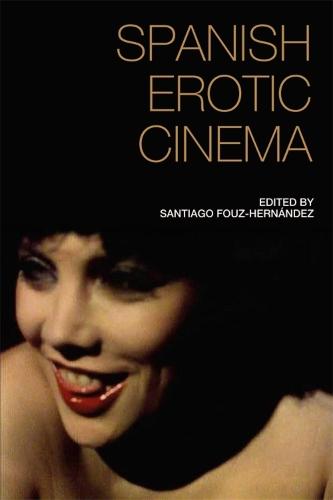
Overview
The first comprehensive scholarly study of Spanish erotic cinema, this book covers a significant part of the history of Spanish film, from the 1920s until the present day. Starting with a study of the kiss in silent films, the volume explores homoerotic narratives in the crusade films of the 1940s, the commodification of bodies in the late Franco period, and the so-called destape (literally 'undressing') period that followed the abolition of censorship during the democratic transition. Reclaiming the importance of Spanish erotic cinema as a genre in itself, a range of international scholars demonstrate how the explicit depiction of sex can be a useful tool to illuminate current and historic social issues including ageism, colonialism, domestic violence, immigration, nationalisms, or women and LGBT rights. Covering a wide range of cinematic genres, including comedy, horror and melodrama, this book provides an innovative and provocative overview of Spanish cinema history and society in the twentieth and twenty-first centuries.
Full Product Details
Author: Santiago Fouz-Hernandez (Professor in Hispanic Studies, University of Durham)
Publisher: Edinburgh University Press
Imprint: Edinburgh University Press
Weight: 0.407kg
ISBN: 9781474440967
ISBN 10: 1474440967
Pages: 264
Publication Date: 14 November 2018
Audience:
Professional and scholarly
,
Professional & Vocational
Format: Paperback
Publisher's Status: Active
Availability: Manufactured on demand

We will order this item for you from a manufactured on demand supplier.
Reviews
This collection of essays will clearly constitute a necessary reference for anyone studying Spanish erotic cinema. It should also be of great interest to all Spanish film scholars as it encourages us to look at familiar films, directors and actors in a new light. Moreover, it prompts readers to explore the wide range of what on-screen eroticism can express (discursively, symbolically, visually, aurally) and do (affectively, didactically), in addition to highlighting its crucial importance in the history of Spanish cinema and society. -- Jesse Barker, Studies in Spanish & Latin American Cinemas With an ambitious scope and a roughly chronological coverage of a wide range of periods and mostly mainstream film genres (from 1920s Spanish film culture to the feminist cinema and queer male auteurs of the twenty-first century), Spanish Erotic Cinema is a distinctive landmark at the intersection of studies of sexuality and the body in Spanish Film Studies. -- Bel n Vidal, Studies in European Cinema
This collection of essays will clearly constitute a necessary reference for anyone studying Spanish erotic cinema. It should also be of great interest to all Spanish film scholars as it encourages us to look at familiar films, directors and actors in a new light. Moreover, it prompts readers to explore the wide range of what on-screen eroticism can express (discursively, symbolically, visually, aurally) and do (affectively, didactically), in addition to highlighting its crucial importance in the history of Spanish cinema and society. -- Jesse Barker, Studies in Spanish & Latin American Cinemas With an ambitious scope and a roughly chronological coverage of a wide range of periods and mostly mainstream film genres (from 1920s Spanish film culture to the feminist cinema and queer male auteurs of the twenty-first century), Spanish Erotic Cinema is a distinctive landmark at the intersection of studies of sexuality and the body in Spanish Film Studies. -- Belen Vidal, Studies in European Cinema
Author Information
Santiago Fouz-Hernández is Professor in Hispanic Studies at Durham University. He is the author of Cuerpos de cine (2013) and, with Alfredo Martínez-Expósito, Live Flesh. The Male Body in Contemporary Spanish Cinema (2007). He is also editor of Mysterious Skin. Male Bodies in Contemporary Cinema (2009), co-editor of two other volumes and editorial board member of Studies in Spanish and Latin American Cinemas. Currently he is preparing a monograph on Spanish filmmaker Bigas Luna.