Overview
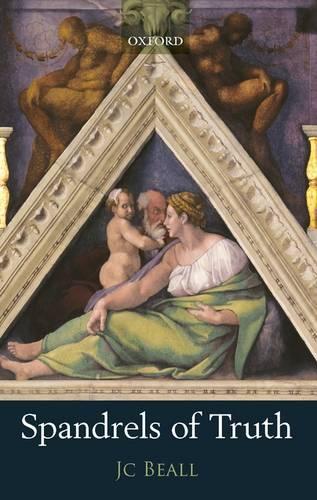
Among the various conceptions of truth is one according to which 'is true' is a transparent, entirely see-through device introduced for only practical (expressive) reasons. This device, when introduced into the language, brings about truth-theoretic paradoxes (particularly, the notorious Liar and Curry paradoxes). The options for dealing with the paradoxes while preserving the full transparency of 'true' are limited. In Spandrels of Truth, Beall concisely presents and defends a modest, so-called dialetheic theory of transparent truth.
Full Product Details
Author: Jc Beall (University of Connecticut)
Publisher: Oxford University Press
Imprint: Oxford University Press
Dimensions:
Width: 14.40cm
, Height: 1.80cm
, Length: 22.20cm
Weight: 0.347kg
ISBN: 9780199268733
ISBN 10: 0199268738
Pages: 170
Publication Date: 09 April 2009
Audience:
Adult education
,
Further / Higher Education
Format: Hardback
Publisher's Status: Active
Availability: To order

Stock availability from the supplier is unknown. We will order it for you and ship this item to you once it is received by us.
Reviews
The account offered is unique among recent treatments of the paradoxes for saving a perfectly transparent truth predicate, whereby x and x is true are fully intersubstitutable. This feature, and its stabilisation within a bivalent framework, give the book considerable specialist interest. but the informality of the treatment, achieved without significant compromise of rigour, provides in addition for a remarkably effective and readable introduction to the contemporary debate about the paradoxes. * Crispin Wright, New York University * ...although paradoxes such as the Liar have provided the main motivation for dialetheism, it is remarkable that previous dialetheic theories do not preserve the minimalist view of truth. Spandrels of Truth is the first dialetheic attempt to do so, and it addresses the main problems (e.g. the conditional) that a dialetheic minimalist must face. It is a very welcome addition to the literature. * Hartry Field, New York University * In this excellent book, Beall defends this combination of dialethism and transparency, drawing out its consequences with clarity and verve. The book also serves as an introduction to transparent theories of truth more generally, by including a valuable discussion of the leading rival: Field's transparent but non-dialethic account. It adds up to an attractive package: if I were a dialethist, I'd be Beall's kind of dialethist! * Robert Williams, University of Leeds * JC Beall concisely presents and defends a simple, modest, dialetheic approach to truth and semantic paradoxes... it does a great job in presenting and defending its ideas... an excellent and readable introduction to the contemporary technical discussions about truth and semantic paradoxes. * Wen-fang Wang, Notre Dame Philosophical Reviews *
The account offered is unique among recent treatments of the paradoxes for saving a perfectly transparent truth predicate, whereby x and x is true are fully intersubstitutable. This feature, and its stabilisation within a bivalent framework, give the book considerable specialist interest. but the informality of the treatment, achieved without significant compromise of rigour, provides in addition for a remarkably effective and readable introduction to the contemporary debate about the paradoxes. * Crispin Wright, New York University * ...although paradoxes such as the Liar have provided the main motivation for dialetheism, it is remarkable that previous dialetheic theories do not preserve the minimalist view of truth. Spandrels of Truth is the first dialetheic attempt to do so, and it addresses the main problems (e.g. the conditional) that a dialetheic minimalist must face. It is a very welcome addition to the literature. * Hartry Field, New York University * In this excellent book, Beall defends this combination of dialethism and transparency, drawing out its consequences with clarity and verve. The book also serves as an introduction to transparent theories of truth more generally, by including a valuable discussion of the leading rival: Field's transparent but non-dialethic account. It adds up to an attractive package: if I were a dialethist, I'd be Beall's kind of dialethist! * Robert Williams, University of Leeds * JC Beall concisely presents and defends a simple, modest, dialetheic approach to truth and semantic paradoxes... it does a great job in presenting and defending its ideas... an excellent and readable introduction to the contemporary technical discussions about truth and semantic paradoxes. * Wen-fang Wang, Notre Dame Philosophical Reviews *
The account offered is unique among recent treatments of the paradoxes for saving a perfectly transparent truth predicate, whereby x and x is true are fully intersubstitutable. This feature, and its stabilisation within a bivalent framework, give the book considerable specialist interest. but the informality of the treatment, achieved without significant compromise of rigour, provides in addition for a remarkably effective and readable introduction to the contemporary debate about the paradoxes. Crispin Wright, New York University ...although paradoxes such as the Liar have provided the main motivation for dialetheism, it is remarkable that previous dialetheic theories do not preserve the minimalist view of truth. Spandrels of Truth is the first dialetheic attempt to do so, and it addresses the main problems (e.g. the conditional) that a dialetheic minimalist must face. It is a very welcome addition to the literature. Hartry Field, New York University In this excellent book, Beall defends this combination of dialethism and transparency, drawing out its consequences with clarity and verve. The book also serves as an introduction to transparent theories of truth more generally, by including a valuable discussion of the leading rival: Field's transparent but non-dialethic account. It adds up to an attractive package: if I were a dialethist, I'd be Beall's kind of dialethist! Robert Williams, University of Leeds JC Beall concisely presents and defends a simple, modest, dialetheic approach to truth and semantic paradoxes... it does a great job in presenting and defending its ideas... an excellent and readable introduction to the contemporary technical discussions about truth and semantic paradoxes. Wen-fang Wang, Notre Dame Philosophical Reviews
The account offered is unique among recent treatments of the paradoxes for saving a perfectly transparent truth predicate, whereby x and x is true are fully intersubstitutable. This feature, and its stabilisation within a bivalent framework, give the book considerable specialist interest. but the informality of the treatment, achieved without significant compromise of rigour, provides in addition for a remarkably effective and readable introduction to the contemporary debate about the paradoxes. Crispin Wright, New York University ...although paradoxes such as the Liar have provided the main motivation for dialetheism, it is remarkable that previous dialetheic theories do not preserve the minimalist view of truth. Spandrels of Truth is the first dialetheic attempt to do so, and it addresses the main problems (e.g. the conditional) that a dialetheic minimalist must face. It is a very welcome addition to the literature. Hartry Field, New York University In this excellent book, Beall defends this combination of dialethism and transparency, drawing out its consequences with clarity and verve. The book also serves as an introduction to transparent theories of truth more generally, by including a valuable discussion of the leading rival: Field's transparent but non-dialethic account. It adds up to an attractive package: if I were a dialethist, I'd be Beall's kind of dialethist! Robert Williams, University of Leeds JC Beall concisely presents and defends a simple, modest, dialetheic approach to truth and semantic paradoxes... it does a great job in presenting and defending its ideas... an excellent and readable introduction to the contemporary technical discussions about truth and semantic paradoxes. Wen-fang Wang, Notre Dame Philosophical Reviews
Author Information
Jc Beall is a Professor of Philosophy at the University of Connecticut, a member of the UConn Group in Logic, and an Associate Fellow of Arché, the AHRC Research Centre for the Philosophy of Logic, Language, Mathematics, and Epistemology. Though having wide philosophical interests, Beall has published mainly in philosophical logic and the philosophy of logic.