|
|
|||
|
||||
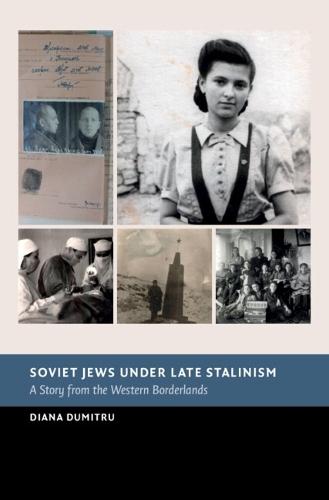
OverviewHow did Soviet Jews rebuild their lives after the Holocaust? How did they navigate Stalinist rule, reclaim their place in society, and seek retribution against those responsible for wartime atrocities? This study uncovers the resilience and adaptability of Soviet Jews in postwar Moldavia, a borderland where identities were fluid, loyalties were tested, and survival demanded ingenuity. Using newly accessed archives and oral histories, Diana Dumitru reveals how Jews pursued professional success, resisted discrimination, and sought vengeance on their wrongdoers. Far from passive subjects of repression, they carved out spaces for agency in an era of contradictions – between social mobility and state-imposed limitations, between the Soviet promise of equality and the rising anti-Jewish drive of the early 1950s, and between ideological control and personal ambition. In doing so, this study offers a fresh perspective on a complex, understudied chapter of 20th-century history. Full Product DetailsAuthor: Diana Dumitru (Georgetown University, Washington DC)Publisher: Cambridge University Press Imprint: Cambridge University Press Dimensions: Width: 15.20cm , Height: 1.80cm , Length: 22.90cm Weight: 0.589kg ISBN: 9781009671507ISBN 10: 1009671502 Pages: 294 Publication Date: 19 February 2026 Audience: General/trade , General Format: Hardback Publisher's Status: Active Availability: Manufactured on demand We will order this item for you from a manufactured on demand supplier. Table of ContentsReviewsAuthor InformationDiana Dumitru is Ion Ratiu Professor in Romanian Studies at Georgetown University. Her research explores the entangled histories of violence, ideology, and identity in Eastern Europe. Dumitru is the author of The State, Antisemitism, and Collaboration in the Holocaust: The Borderlands of Romania and the Soviet Union (2016) and serves as an Editor of the Journal of Genocide Research. Tab Content 6Author Website:Countries AvailableAll regions |
||||