Overview
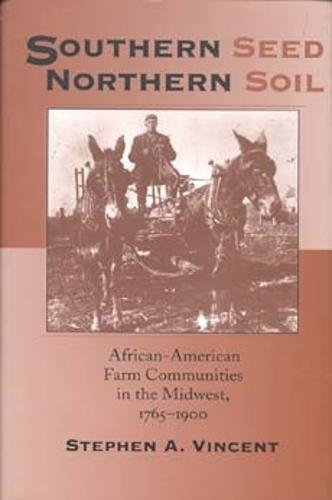
Southern Seed, Northern Soil captures the exceptional history of the Beech and Roberts settlements, two African-American and mixed-race farming communities on the Indiana frontier in the 1830s. Stephen Vincent analyzes the founders' backgrounds as a distinctive free people of color from the Old South. He traces the migration that culminated in the founding of the two communities. He follows the settlements' transformations through the pioneer and Civil War eras, and their gradual transition to commercial farming in the late 19th century. The Beech and Roberts story is at once part of and distinct from mainstream African-American history. Like other black Americans, the residents of these two communities had to struggle constantly to achieve freedom, autonomy, and economic well-being, yet they were able to defy the odds and thrive over several generations. Building on their advantages as late-18th-century landowners, they took root on the frontier and ultimately paved the way for their descendants' climb into the urban middle class.
Full Product Details
Author: Stephen A. Vincent
Publisher: Indiana University Press
Imprint: Indiana University Press
Dimensions:
Width: 15.60cm
, Height: 1.80cm
, Length: 23.50cm
Weight: 0.458kg
ISBN: 9780253213310
ISBN 10: 0253213312
Pages: 272
Publication Date: 09 August 2002
Audience:
Professional and scholarly
,
Professional & Vocational
Format: Paperback
Publisher's Status: Active
Availability: In Print

This item will be ordered in for you from one of our suppliers. Upon receipt, we will promptly dispatch it out to you. For in store availability, please contact us.
Reviews
Vincent's book reflects a trend in US studies-plowing new interpretive ground-to ensure more inclusive ethnic and gender histories, with traditional interpretations revised. Vincent (Univ. of Wisconsin-Whitewater) reveals how African American families moved from Virginia and North Carolina to create mixed race communities (Beech and Roberts) and homesteads in frontier Indiana in the 1830s. In the South before migrating, these settlers were freed people and had been for successive generations. Land in Indiana provided them greater freedom, which few other 19th-century African Americans experienced. As they built community, they made deliberate efforts to marry others, with common heritages... Many avoided darker-skinned African Americans with slave heritages [for] they often perceived themselves as a distinct if not unique African-descended people. Although now in decline, these communities and farms share a heritage that passed from one generation to another, and that heritage remains vibrant through family gatherings and annual reunions. For contrast, readers might peruse Joe William Trotter Jr.'s River Jordan: African American Urban Life in the Ohio Valley (CH, Jul'98). Southern Seed is for those with interests in ethnic, sociocultural, family, or economic history. Maps; photographs; appendix; notes. All levels.P. D. Travis, Texas Woman's University, Choice, September 2000 Vincent's book reflects a trend in US studies-'plowing' new interpretive ground-to ensure more inclusive ethnic and gender histories, with traditional interpretations revised. -Choice, September 2000
<p> Vincent's book reflects a trend in US studies -- 'plowing' newinterpretive ground -- to ensure more inclusive ethnic and gender histories, withtraditional interpretations revised. -- Choice, September 2000
<p>Vincent's book reflects a trend in US studies--plowing new interpretive ground--to ensure more inclusive ethnic and gender histories, with traditional interpretations revised. Vincent (Univ. of Wisconsin--Whitewater) reveals how African American families moved from Virginia and North Carolina to create mixed race communities (Beech and Roberts) and homesteads in frontier Indiana in the 1830s. In the South before migrating, these settlers were freed people and had been for successive generations. Land in Indiana provided them greater freedom, which few other 19th-century African Americans experienced. As they built community, they made deliberate efforts to marry others, with common heritages... Many avoided darker-skinned African Americans with slave heritages [for] they often perceived themselves as a distinct if not unique African-descended people. Although now in decline, these communities and farms share a heritage that passed from one generation to another, and that heritage remains vibrant through family gatherings and annual reunions. For contrast, readers might peruse Joe William Trotter Jr.'s River Jordan: African American Urban Life in the Ohio Valley (CH, Jul'98). Southern Seed is for those with interests in ethnic, sociocultural, family, or economic history. Maps; photographs; appendix; notes. All levels.P. D. Travis, Texas Woman's University, Choice, September 2000--P. D. Travis, Texas Woman's University Choice (01/01/2000)
Vincent's book reflects a trend in US studies plowing new interpretive ground to ensure more inclusive ethnic and gender histories, with traditional interpretations revised. Vincent (Univ. of Wisconsin Whitewater) reveals how African American families moved from Virginia and North Carolina to create mixed race communities (Beech and Roberts) and homesteads in frontier Indiana in the 1830s. In the South before migrating, these settlers were freed people and had been for successive generations. Land in Indiana provided them greater freedom, which few other 19th-century African Americans experienced. As they built community, they made deliberate efforts to marry others, with common heritages... Many avoided darker-skinned African Americans with slave heritages [for] they often perceived themselves as a distinct if not unique African-descended people. Although now in decline, these communities and farms share a heritage that passed from one generation to another, and that heritage remains vibrant through family gatherings and annual reunions. For contrast, readers might peruse Joe William Trotter Jr.'s River Jordan: African American Urban Life in the Ohio Valley (CH, Jul'98). Southern Seed is for those with interests in ethnic, sociocultural, family, or economic history. Maps; photographs; appendix; notes. All levels.P. D. Travis, Texas Woman's University, Choice, September 2000--P. D. Travis, Texas Woman's University Choice
Author Information
Stephen A. Vincent is Associate Professor of History at the University of Wisconsin-Whitewater.