Overview
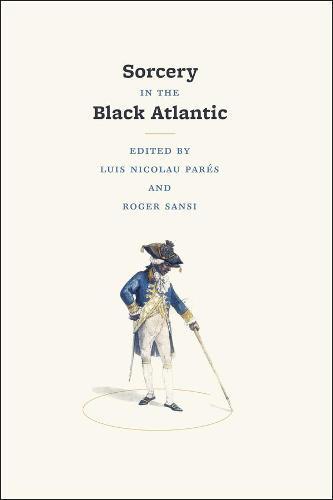
Most scholarship on sorcery and witchcraft has narrowly focused on specific times and places, particularly early modern Europe and twentieth-century Africa. And much of that research interprets sorcery as merely a remnant of premodern traditions. Boldly challenging these views, Sorcery in the Black Atlantic takes a longer historical and broader geographical perspective, contending that sorcery is best understood as an Atlantic phenomenon that has significant connections to modernity and globalization. A distinguished group of contributors here examine sorcery in Brazil, Cuba, South Africa, Cameroon, and Angola. Their insightful essays reveal the way practices and accusations of witchcraft spread throughout the Atlantic world from the age of discovery up to the present, creating an indelible link between sorcery and the rise of global capitalism. Shedding new light on a topic of perennial interest, Sorcery in the Black Atlantic will be provocative, compelling reading for historians and anthropologists working in this growing field.
Full Product Details
Author: Luis Nicolau Parés ,
Roger Sansi ,
Roger Sansi ,
Katherine Fidler
Publisher: The University of Chicago Press
Imprint: University of Chicago Press
Dimensions:
Width: 1.60cm
, Height: 0.20cm
, Length: 2.30cm
Weight: 0.539kg
ISBN: 9780226645773
ISBN 10: 0226645770
Pages: 312
Publication Date: 15 February 2011
Audience:
College/higher education
,
Professional and scholarly
,
Undergraduate
,
Postgraduate, Research & Scholarly
Format: Hardback
Publisher's Status: Active
Availability: Out of stock

The supplier is temporarily out of stock of this item. It will be ordered for you on backorder and shipped when it becomes available.
Reviews
This is a rich and complex collection of essays that address a set of compelling questions about the relation between sorcery and modernity. Sorcery in the Black Atlantic brings together a set of first-rate scholars to demonstrate how the category of sorcery emerges from the overlapping claims of multiple interlocutors--scholars, elites, subalterns, Pentecostals, and others--as these speakers together weave a dense discursive field crossing between analytical and practical applications. The book brings into view for the first time the transatlantic and lusophone networks that help to produce sorcery and complicates in productive ways a by now overly familiar resistance/hegemony polarization. --Paul Christopher Johnson, University of Michigan<br><br>--Paul Christopher Johnson
“This is a rich and complex collection of essays that address a set of compelling questions about the relation between sorcery and modernity. Sorcery in the Black Atlantic brings together a set of first-rate scholars to demonstrate how the category of sorcery emerges from the overlapping claims of multiple interlocutors—scholars, elites, subalterns, Pentecostals, and others—as these speakers together weave a dense discursive field crossing between analytical and practical applications. The book brings into view for the first time the transatlantic and lusophone networks that help to produce sorcery and complicates in productive ways a by now overly familiar resistance/hegemony polarization.”—Paul Christopher Johnson, University of Michigan <br>--Paul Christopher Johnson
This is a rich and complex collection of essays that address a set of compelling questions about the relation between sorcery and modernity. Sorcery in the Black Atlantic brings together a set of first-rate scholars to demonstrate how the category of sorcery emerges from the overlapping claims of multiple interlocutors--scholars, elites, subalterns, Pentecostals, and others--as these speakers together weave a dense discursive field crossing between analytical and practical applications. The book brings into view for the first time the transatlantic and lusophone networks that help to produce sorcery and complicates in productive ways a by now overly familiar resistance/hegemony polarization. --Paul Christopher Johnson, University of Michigan
Author Information
Luis Nicolau Pares is professor of anthropology at the Federal University of Bahia, Brazil. Roger Sansi is lecturer in anthropology at Goldsmiths, University of London.