Overview
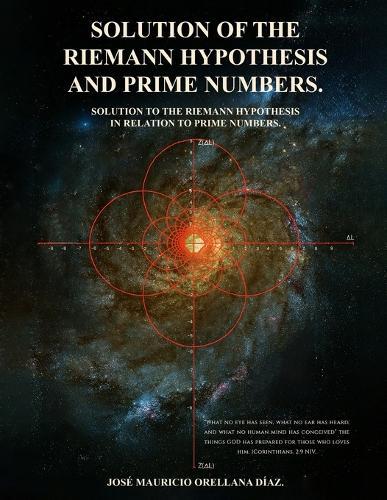
The equations of the Theory of Spiral Angles, Spirals, and Trigonometric Partitions make it possible to analyze the Prime Numbers and the Riemann Hypothesis in a different way. By applying these equations, we can define, in the plane of real and imaginary numbers, new formulas that help us analyze the behavior of the functions of the Prime Numbers and the Riemann Zeta Function. In this study developed for both topics, a strong relationship will be observed between the Prime Numbers and the Riemann Hypothesis. The Theory of Spiral Angles, Spirals, and Trigonometric Partitions are seven mathematical equations that have different applications depending on the case study. In this study, two of the seven equations with which we analyze the Prime Numbers and the Riemann Z Function are used. These equations are capable of studying equations that are periodic and non-periodic without limits of periods, frequency, angular velocity, and time. The first is the Radius Growth Partitions equation which is applied to define an equation for Prime Numbers. This radius growth partitions equation counts its initial radius, final radius, spiral angle, and trigonometric partitions. This is an analysis of various flat circular waves; which are undergoing diametric cuts or partitions generating a co-secant line. With the spiral angles, various equations can be obtained that relates to the trigonometric partitions, or the posterior prime number minus the previous prime number, and the exponent of the prime numbers. The second is The Chord Partitions which is applied to define an equation for the Riemann Zeta Function. With both equations of the trigonometric partitions, we can analyze the behavior of the Prime Numbers and the Riemann Zeta Function, both in the plane of real numbers and in the plane of complex numbers. The equation of the Trigonometric Partitions of the Chord, has the final radius, initial radius, spiral angle, and trigonometric partitions. This is an analysis of various plane circular waves; which are undergoing diametric cuts or partitions generating a co-secant line. Therefore, with this new methodology and these new mathematical theories; trivial zeros can be studied, as well as non-trivial ones of the equations both in the plane of real numbers and in the plane of complex numbers. The Theory of Spiral Angles, Spirals, and Trigonometric Partitions provides a framework to address the Millennium Problem of the Riemann Hypothesis in relation to the Riemann Z-function and Prime Numbers. It also introduces new tools, such as the equation of trigonometric partitions of the Prime Numbers Ratio in a general form within the plane of real and complex numbers, offering further avenues toward generating a solution to the Riemann Hypothesis. These equations can also be applied to the study of the Riemann sphere, Möbius map and their transformations, and Goldbach's Conjecture.
Full Product Details
Author: José Mauricio Orellana Díaz
Publisher: Jose Mauricio Orellana Diaz
Imprint: Jose Mauricio Orellana Diaz
Dimensions:
Width: 21.60cm
, Height: 1.10cm
, Length: 27.90cm
Weight: 0.472kg
ISBN: 9798349567032
Pages: 198
Publication Date: 23 September 2025
Audience:
General/trade
,
General
Format: Paperback
Publisher's Status: Active
Availability: Available To Order

We have confirmation that this item is in stock with the supplier. It will be ordered in for you and dispatched immediately.