|
|
|||
|
||||
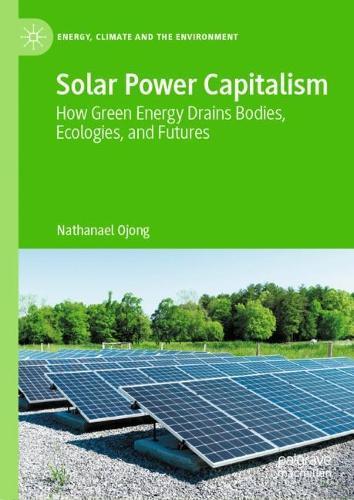
OverviewThis book demonstrates how Africa’s celebrated green-energy transition rests on hidden structures of exploitation and inequality. Drawing on over 300 interviews across Ghana, Kenya, Tanzania, Malawi, and Cameroon, the book illustrates how solar power expands through what the author terms insertion: the patterned incorporation of people, ecologies, and institutions into infrastructures of accumulation, and depletion, the bodily, ecological, and temporal exhaustion through which those infrastructures are sustained. Beginning with colonial electrification schemes that privileged mines and settlers, the book follows the engineering of global solar energy markets, the rise of pay-as-you-go household finance, and the toxic afterlives of solar waste. Later chapters reveal how women’s labor, time, and credit become the unacknowledged infrastructure of solar power capitalism, and how communities navigate enclosure, debt, and ecological harm. The book redefines what a just energy transition means in the twenty-first century. Full Product DetailsAuthor: Nathanael OjongPublisher: Springer Nature Switzerland AG Imprint: Palgrave Macmillan ISBN: 9783032137067ISBN 10: 3032137063 Pages: 226 Publication Date: 30 March 2026 Audience: College/higher education , Postgraduate, Research & Scholarly Format: Hardback Publisher's Status: Active Availability: In Print This item will be ordered in for you from one of our suppliers. Upon receipt, we will promptly dispatch it out to you. For in store availability, please contact us. Table of ContentsReviewsAuthor InformationNathanael Ojong is Associate Professor of International Development Studies at York University, Canada. His research examines energy, finance, and inequality in Africa. Tab Content 6Author Website:Countries AvailableAll regions |
||||