Overview
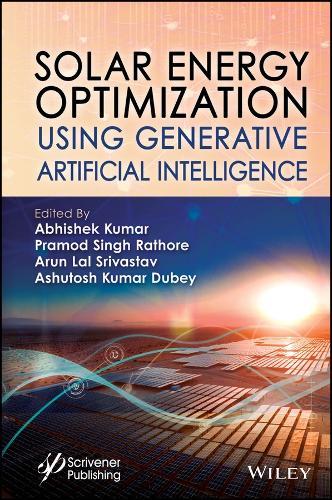
Lead the sustainable energy revolution with this guide to mastering the AI-driven algorithms and smart material innovations that are revolutionizing solar energy. The integration of artificial intelligence into solar energy systems represents the next frontier in sustainable development, promising to improve efficiency, reduce costs, and increase the viability of solar energy as a mainstream energy source. This book will delve into the transformative role of artificial intelligence in enhancing various aspects of solar energy systems. It will begin by exploring how AI can significantly boost the energy efficiency of solar panels, showcasing innovative algorithms and techniques designed to optimize energy capture and conversion. The development of smart materials for enhanced energy storage will also be covered, emphasizing the latest advancements in material science driven by AI to improve the storage capabilities and longevity of solar panels. Further, it will address integrated waste management options for exhausted solar panels, providing insights into sustainable practices and AI-driven solutions for recycling and repurposing solar panel components. It will discuss the significance of AI in solar energy conservation and climate change management, illustrating how AI technologies are being harnessed to predict, monitor, and mitigate environmental impacts. Additionally, the book will explore the future scope of photovoltaic-based solar energy in a changing environment, highlighting AI’s role in achieving sustainability and adapting to evolving climatic conditions. Using case studies and real-world applications, this book will demonstrate successful implementations of AI in the solar energy sector. Topics such as predictive maintenance, solar irradiance forecasting, optimal placement of solar panels, and AI-enhanced solar tracking systems will be featured to provide a comprehensive understanding of how AI is revolutionizing the solar energy landscape.
Full Product Details
Author: Abhishek Kumar (University of Madras) , Pramod Singh Rathore (Manipal University Jaipur, Rajasthan, India) , Arun Lal Srivastav (Chitkara University, India) , Ashutosh Kumar Dubey (Indian Institute of Technology (BHU), India)
Publisher: John Wiley & Sons Inc
Imprint: Wiley-Scrivener
ISBN: 9781394419463
ISBN 10: 1394419465
Pages: 416
Publication Date: 07 April 2026
Audience:
Professional and scholarly
,
Professional & Vocational
Format: Hardback
Publisher's Status: Active
Availability: Awaiting stock 
The supplier is currently out of stock of this item. It will be ordered for you and placed on backorder. Once it does come back in stock, we will ship it out for you.
Table of Contents
Preface xvii 1 Machine Learning Advancements in Solar Energy Forecasting: A Comprehensive Review 1 Inam Ul Haq, Priya Kumari, Aniket Tiwari, Bibhanshu Bhatt, Ayush Panwar, Prakriti Singh and Vishnu Vishvas Sharma 1.1 Introduction 2 1.2 Literature Review 5 1.3 Proposed Model 11 1.4 Conclusion and Future Work 12 2 Development of Smart Materials for Enhanced Energy Storage in Solar Panels 15 Avnish Chauhan, Gaurav Pandey, Muneesh Sethi, Jonti Deuri and Vishal Rajput 2.1 Introduction 16 2.2 Literature Review 17 2.3 Smart Solar Photovoltaic (PV) Materials 18 2.4 Efficacy, Constancy, and Scalability of Sol-Gel Processed PV Materials 20 2.5 Environmental Influences of Solar PV 23 2.6 Future Directions 24 2.7 Conclusion 24 3 Role of AI to Increase the Energy Efficiency of Solar Panels for Energy Conservation 33 Avnish Chauhan, Gaurav Pandey, Muneesh Sethi, Shivam Attri and Jonti Deuri 3.1 The Immediate Nature of Energy Demand 34 3.2 Bibliography Study 36 3.3 Solar Energy: The Solution to the Current Energy Crisis 38 3.4 Artificial Intelligence (AI) – A Brief Account 41 3.5 The AI-Facilitated Future of Solar Cells 45 3.6 Artificial Intelligence Solutions in the Use of Solar Energy 50 3.7 Enabling Installs: Maximizing Value and Minimizing Cost with Machine Learning Techniques for Solar Panel Placement 52 3.8 Further Applications of AI-Powered Solar Cells 54 3.9 Conclusion 55 4 Artificial Intelligence in Wind Energy Systems: Enhancing Efficiency and Optimizing Operations 63 Inam Ul Haq and Abhishek Kumar 4.1 Introduction 64 4.2 Comparison of Power Capacity Percentage of Various Renewable Energy Sources 71 4.3 Limitations of Traditional Wind Energy Prediction Methods (e.g., Statistical and Physical Models) 72 4.4 The Need for More Advanced Approaches to Handle the Complexity and Variability of Wind Patterns 73 4.5 Traditional Wind Energy Prediction Methods 74 4.6 Machine Learning Approaches 76 4.7 Wind Energy Prediction Methods vs. Machine Learning Approaches for Wind Farm Site Selection 84 4.8 Case Studies and Real-World Applications 90 4.9 AI-Driven Maintenance at General Electric (GE) 91 4.10 Future Trends in AI for Wind Energy 92 4.11 Conclusion 94 5 Role of AI Generative in Renewable Energy and Conservation of the Environment 99 Lata Rani, Hurmat, Neha Kanojia, Arun Lal Srivastav and Jyotsna Kaushal 6 Ethical Consideration in the Use of AI for Solar Energy Optimization 123 Kumud Sachdeva and Rajan Sachdeva 6.1 Introduction 124 6.2 Literature Survey 132 6.3 An Efficient Machine Learning Based Optimization Framework 135 6.4 Conclusion 139 7 Generative AI and Solar Energy: Shaping the Future of Sustainable Power 145 Priyanka P. Shinde, Lanson D. Bardeskar, Kanif M. Kumbhar, Omkar R. Bidave, Piyush P. Patil and Bhushan S. Yelure 7.1 Current State of Generative AI in Solar Energy 148 7.2 Emerging Trends in Generative AI in Solar Energy 154 7.3 Challenges and Limitations 159 7.4 Future Research Directions in Context of Generative AI and Solar Energy 160 8 Leveraging AI for Sustainable Solar Energy Efficiency and Climate Change Mitigation 165 Priyanka P. Shinde, Padmanabh Malwade, Shreyash Patil, Vaishnavi Deshmukh and Varsha P. Desai 8.1 Introduction 166 8.2 Literature Review 171 8.3 Role of AI 173 8.4 Benefits 178 8.5 Challenges 179 8.6 Future Work 180 8.7 Conclusion 181 9 Market Analysis of Solar Energy through Generative AI Insights 185 Priyanka P. Shinde, Anurag Wazarkar, Pratik Gunjalkar, Tanmay Sawant and Pratibha V. Jadhav 9.1 Introduction 186 9.2 Overview of the Solar Energy Market 188 9.3 Role of the Solar Energy Market 190 9.4 AI-Driven Market Forecasting and Investment Analysis 194 9.5 Challenges and Limitations of GenAI in Solar Energy 197 9.6 Future Works and Recommendations 200 10 Significance of AI in Solar Energy Conservation and Climate Change Management 207 Akash, Sanjay Kumar, Raju Rajak, Amit Kumar, Vaishnavi Srivastava, Deepak Sahni and Richa Saxena 10.1 Introduction 208 10.2 AI in Solar Energy Optimization 213 10.3 Predictive Maintenance with AI in Solar Infrastructure 218 10.4 Artificial Intelligence in Grid Integration and Energy Storage 223 10.5 AI-Driven Solar Project Mapping and Land Use Management 226 10.6 The Role of AI in Climate Change Mitigation 230 10.7 Conclusion 233 11 Navigating the Impacts of Photovoltaic Solar Energy: Socio-Economic and Environmental Perspectives with AI Solutions 243 R. Rajalakshmi, R. Sundar, Dustakar Surendra Rao, Hari Ganesan S., Arunapriya R. and R. Srivel 11.1 Introduction 244 11.2 Literature Review 249 11.3 Methodology 251 11.4 Results 257 11.5 Conclusion 264 12 Smart Materials for Enhanced Energy Storage in Solar Energy Systems: A Generative AI Approach 269 Mamta and Shravya Reddy Karri 12.1 Introduction 270 12.2 Literature Review 273 12.3 Generative AI Frameworks for Material Design 277 12.4 AI-Enabled Smart Electrode Materials 281 12.5 Advanced Phase-Change Materials 285 12.6 Self-Healing Materials for Extended Lifespan 288 12.7 System Integration and Performance 291 12.8 Future Directions and Challenges 295 12.9 Conclusion 299 13 Optimizing Wind Turbine Site Selection Using Machine Learning: Techniques, Applications, and Case Studies 305 Inam Ul Haq and Abhishek Kumar 13.1 Introduction 305 13.2 Key AI Techniques in Wind Turbine Site Selection 313 13.3 Data Sources and Processing for AI-Driven Site Selection 317 13.4 Applications and Case Studies 319 13.5 Challenges and Limitations in AI-Driven Site Selection 322 13.6 Future Directions and Innovations in AI for Wind Site Selection 323 14 AI-Driven Innovations in Solar Energy Systems and Climate Change Mitigation 329 Gandla Shivakanth, Ramakrishna Akella, V. Biksham, Alampally Sreedevi and Shiva Kumar Agraharam 14.1 Introduction 330 14.2 Solar Energy: Current Scenario and Challenges 331 14.3 Artificial Intelligence: A Transformational Technology 332 14.4 Role of AI in Solar Energy Conservation 333 14.5 Role of AI in Climate Change Management 335 14.6 Integration of AI and IoT for Solar & Climate Efficiency 336 14.7 Case Studies and Real-World Applications 337 14.8 Benefits of AI in Solar and Climate Domains 342 14.9 Challenges and Limitations of AI Integration 343 14.10 Future Directions 343 14.11 Conclusion 344 15 Smart Solar Energy Management through IoT and AI Integration: Architectures, Applications, and Future Trends 347 Mamta, Shravya Reddy Karri and Srinivasa Rao Burri 15.1 Introduction 348 15.2 Literature Review 349 15.3 IoT Architecture for Solar Energy Monitoring 353\ 15.4 Solar Energy Optimization AI Technologies 356 15.5 Solar Management IoT-AI Systems 360 15.6 Applications and Case Studies 363 15.7 Problems and Future Projections 368 15.8 Conclusion 372 Bibliography 374 Index 377
Reviews
Author Information
Abhishek Kumar, PhD is the Research and Design Coordinator and an Associate Professor in the Department of Computer Science at Chandigarh University. He has more than 100 publications in reputed, peer-reviewed national and international journals, books, and conferences. His research areas include artificial intelligence, image processing, computer vision, data mining, and machine learning. Pramod Singh Rathore, PhD is an Assistant Professor in the Department of Computer and Communication Engineering at Manipal University. With more than 11 years of academic teaching experience, he has published more than 55 papers in reputable, peer-reviewed national and international journals, books, and conferences, and co-authored and edited numerous books. His research interests include NS2, computer networks, mining, and database management systems. Arun Lal Srivastav, PhD is an Associate Professor at Chitkara University. He has published more than 90 research publications in prestigious journals, books, and conferences, edited 23 books, and filed 25 patents. His research interests include energy management, water quality surveillance, climate change, and water treatment. Ashutosh Kumar Dubey, PhD is a Postdoctoral Fellow at the Ingenium Research Group Lab at the Universidad de Castilla-La Mancha with more than 14 years of teaching experience. He has authored one book and serves as an editor and editorial board member of many peer-reviewed journals. His research areas are machine learning, renewable energy, cloud computing, data mining, health informatics, optimization, and object-oriented programming.
Tab Content 6
Author Website:
Countries Available
All regions
|