Full Product Details
Author: Sal Restivo (Rensselaer Polytechnic Institute, USA)
Publisher: Taylor & Francis Ltd
Imprint: Routledge
Weight: 0.453kg
ISBN: 9780367637675
ISBN 10: 0367637677
Pages: 196
Publication Date: 09 June 2021
Audience:
College/higher education
,
Tertiary & Higher Education
,
Undergraduate
Format: Hardback
Publisher's Status: Active
Availability: In Print

This item will be ordered in for you from one of our suppliers. Upon receipt, we will promptly dispatch it out to you. For in store availability, please contact us.
Reviews
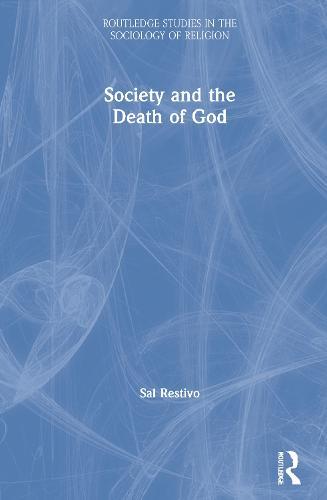
Humans are social, sensible to conformism, and struggling with the pasts of fathering god figures. Restivo calls for a courageous position: endorse the strong sociological-anthropological view on humans as authors of their own ideas and creations. God(s), religious institutions and undoubtable truths are part of this stock of self-created illusions. As an atheist European I was always struck by the American expression 'I belong to ...' when speaking about religious beliefs. Of course, one 'belongs': we are no hermits. The big task Restivo outlines is how to choose freely, conscientiously and with decent scientific foundation what and how to belong to. The book offers very insightful ideas and shows the necessary intellectual courage to move on this path of liberation, coupled with responsibility. Because in the end we are social, i.e. moral, beings. Against the background of many 'learned' predecessors the author shows us what a deeply sociologically and anthropologically informed thinker can add to modern philosophy. Rik Pinxten, Ghent University, Belgium There have been many books deconstructing religion from a philosophical perspective, but here we have a book that does so from a decidedly sociological perspective, and it is most welcome. Hard-hitting, personal, and provocative, Restivo's work is timely and engaging. Phil Zuckerman, Pitzer College, USA In this closely argued critique of beliefs about God, Restivo ranges across theology, science, robotics, and the sociology of global history. His writing breathes with energy. If you want a contact high from a book that is intellectually alive, this is it. Randall Collins, Emeritus, University of Pennsylvania, USA; author of The Sociology of Philosophies
Humans are social, sensible to conformism, and struggling with the pasts of fathering god figures. Restivo calls for a courageous position: endorse the strong sociological-anthropological view on humans as authors of their own ideas and creations. God(s), religious institutions and undoubtable truths are part of this stock of self-created illusions. As an atheist European I was always struck by the American expression 'I belong to ...' when speaking about religious beliefs. Of course, one 'belongs': we are no hermits. The big task Restivo outlines is how to choose freely, conscientiously and with decent scientific foundation what and how to belong to. The book offers very insightful ideas and shows the necessary intellectual courage to move on this path of liberation, coupled with responsibility. Because in the end we are social, i.e. moral, beings. Against the background of many 'learned' predecessors the author shows us what a deeply sociologically and anthropologically informed thinker can add to modern philosophy. Rik Pinxten, Ghent University, Belgium There have been many books deconstructing religion from a philosophical perspective, but here we have a book that does so from a decidedly sociological perspective, and it is most welcome. Hard-hitting, personal, and provocative, Restivo's work is timely and engaging. Phil Zuckerman, Pitzer College, USA In this closely argued critique of beliefs about God, Restivo ranges across theology, science, robotics, and the sociology of global history. His writing breathes with energy. If you want a contact high from a book that is intellectually alive, this is it. Randall Collins, Emeritus, University of Pennsylvania, USA; author of The Sociology of Philosophies
Humans are social, sensible to conformism, and struggling with the pasts of fathering god figures. Restivo calls for a courageous position: endorse the strong sociological-anthropological view on humans as authors of their own ideas and creations. God(s), religious institutions and undoubtable truths are part of this stock of self-created illusions. As an atheist European I was always struck by the American expression 'I belong to ...' when speaking about religious beliefs. Of course, one 'belongs': we are no hermits. The big task Restivo outlines is how to choose freely, conscientiously and with decent scientific foundation what and how to belong to. The book offers very insightful ideas and shows the necessary intellectual courage to move on this path of liberation, coupled with responsibility. Because in the end we are social, i.e. moral, beings. Against the background of many 'learned' predecessors the author shows us what a deeply sociologically and anthropologically informed thinker can add to modern philosophy. Rik Pinxten, Ghent University, Belgium There have been many books deconstructing religion from a philosophical perspective, but here we have a book that does so from a decidedly sociological perspective, and it is most welcome. Hard-hitting, personal, and provocative, Restivo's work is timely and engaging. Phil Zuckerman, Pitzer College, USA
""Humans are social, sensible to conformism, and struggling with the pasts of fathering god figures. Restivo calls for a courageous position: endorse the strong sociological-anthropological view on humans as authors of their own ideas and creations. God(s), religious institutions and undoubtable truths are part of this stock of self-created illusions. As an atheist European I was always struck by the American expression 'I belong to ...' when speaking about religious beliefs. Of course, one 'belongs': we are no hermits. The big task Restivo outlines is how to choose freely, conscientiously and with decent scientific foundation what and how to belong to. The book offers very insightful ideas and shows the necessary intellectual courage to move on this path of liberation, coupled with responsibility. Because in the end we are social, i.e. moral, beings. Against the background of many 'learned' predecessors the author shows us what a deeply sociologically and anthropologically informed thinker can add to modern philosophy."" Rik Pinxten, Ghent University, Belgium ""There have been many books deconstructing religion from a philosophical perspective, but here we have a book that does so from a decidedly sociological perspective, and it is most welcome. Hard-hitting, personal, and provocative, Restivo’s work is timely and engaging."" Phil Zuckerman, Pitzer College, USA ""In this closely argued critique of beliefs about God, Restivo ranges across theology, science, robotics, and the sociology of global history. His writing breathes with energy. If you want a contact high from a book that is intellectually alive, this is it."" Randall Collins, Emeritus, University of Pennsylvania, USA; author of The Sociology of Philosophies
Author Information
Sal Restivo is former Professor of Sociology, Science Studies, and Information Technology at Rensselaer Polytechnic Institute, USA; former Senior Fellow at the Center for Intercultural Communication and Interaction, University of Ghent, Belgium; and former Adjunct Professor of Technology, Culture, and Society, New York University, USA. A founding member and former president of the Society for Social Studies of Science, he is the Editor of Science, Technology and Society: An Encyclopedia, the author of Red, Black, and Objective: Science, Sociology, and Anarchism; Science, Society and Values; and The Sociological Worldview, and co-author of Asphalt Children and City Streets and Worlds of ScienceCraft: New Horizons in Sociology, Philosophy, and Science Studies.