Full Product Details
Author: Leo D'Anjou
Publisher: Taylor & Francis Inc
Imprint: AldineTransaction
Dimensions:
Width: 15.90cm
, Height: 2.10cm
, Length: 23.50cm
Weight: 0.431kg
ISBN: 9780202305226
ISBN 10: 0202305228
Pages: 292
Publication Date: 22 July 1996
Audience:
College/higher education
,
Professional and scholarly
,
General/trade
,
Undergraduate
,
Postgraduate, Research & Scholarly
Format: Paperback
Publisher's Status: Unknown
Availability: Out of stock

Reviews
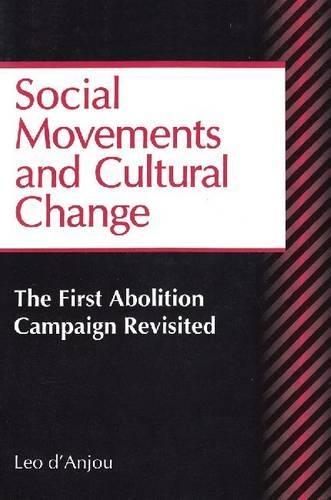
D'Anjou's largely conceptual work focuses on social movements as vehicles of cultural change. His well-written book provides a new perspective on the connection between movement activities and changes in public opinion. Drawing from the literature on collective action, social movements, and sociocultural change, d'Anjou develops a model of social movements and the production of meaning. He then tests the model empirically through the secondary analysis of historical studies on the abolition of the slave trade, examining the abolition movement's role in the diametrical change in public opinion about slavery that occurred in Britain, 1787-1792. The author moves from an assessment of the long-term developments in philosophy, religion, literature, politics, and economics prior to the abolition movement, which created the conditions for change, to an analysis of the historical events that transformed conducive conditions to actual opportunity for the movement to emerge. He then focuses on the abolition movement's campaign, which stimulated changes in the way that slavery was collectively defined. Finally, the author adjusts his conceptual model to reflect the findings of the case study and speculates on the future of social movements and cultural change. Extensive references. --S. Cable, Choice
D'Anjou's largely conceptual work focuses on social movements as vehicles of cultural change. His well-written book provides a new perspective on the connection between movement activities and changes in public opinion. Drawing from the literature on collective action, social movements, and sociocultural change, d'Anjou develops a model of social movements and the production of meaning. He then tests the model empirically through the secondary analysis of historical studies on the abolition of the slave trade, examining the abolition movement's role in the diametrical change in public opinion about slavery that occurred in Britain, 1787-1792. The author moves from an assessment of the long-term developments in philosophy, religion, literature, politics, and economics prior to the abolition movement, which created the conditions for change, to an analysis of the historical events that transformed conducive conditions to actual opportunity for the movement to emerge. He then focuses on the abolition movement's campaign, which stimulated changes in the way that slavery was collectively defined. Finally, the author adjusts his conceptual model to reflect the findings of the case study and speculates on the future of social movements and cultural change. Extensive references. </p> --S. Cable, <em>Choice</em></p>
<p> D'Anjou's largely conceptual work focuses on social movements as vehicles of cultural change. His well-written book provides a new perspective on the connection between movement activities and changes in public opinion. Drawing from the literature on collective action, social movements, and sociocultural change, d'Anjou develops a model of social movements and the production of meaning. He then tests the model empirically through the secondary analysis of historical studies on the abolition of the slave trade, examining the abolition movement's role in the diametrical change in public opinion about slavery that occurred in Britain, 1787-1792. The author moves from an assessment of the long-term developments in philosophy, religion, literature, politics, and economics prior to the abolition movement, which created the conditions for change, to an analysis of the historical events that transformed conducive conditions to actual opportunity for the movement to emerge. He then focuses on the abolition movement's campaign, which stimulated changes in the way that slavery was collectively defined. Finally, the author adjusts his conceptual model to reflect the findings of the case study and speculates on the future of social movements and cultural change. Extensive references. <p> --S. Cable, Choice
-D'Anjou's largely conceptual work focuses on social movements as vehicles of cultural change. His well-written book provides a new perspective on the connection between movement activities and changes in public opinion. Drawing from the literature on collective action, social movements, and sociocultural change, d'Anjou develops a model of social movements and the production of meaning. He then tests the model empirically through the secondary analysis of historical studies on the abolition of the slave trade, examining the abolition movement's role in the diametrical change in public opinion about slavery that occurred in Britain, 1787-1792. The author moves from an assessment of the long-term developments in philosophy, religion, literature, politics, and economics prior to the abolition movement, which created the conditions for change, to an analysis of the historical events that transformed conducive conditions to actual opportunity for the movement to emerge. He then focuses on the abolition movement's campaign, which stimulated changes in the way that slavery was collectively defined. Finally, the author adjusts his conceptual model to reflect the findings of the case study and speculates on the future of social movements and cultural change. Extensive references.- --S. Cable, Choice
-D'Anjou's largely conceptual work focuses on social movements as vehicles of cultural change. His well-written book provides a new perspective on the connection between movement activities and changes in public opinion. Drawing from the literature on collective action, social movements, and sociocultural change, d'Anjou develops a model of social movements and the production of meaning. He then tests the model empirically through the secondary analysis of historical studies on the abolition of the slave trade, examining the abolition movement's role in the diametrical change in public opinion about slavery that occurred in Britain, 1787-1792. The author moves from an assessment of the long-term developments in philosophy, religion, literature, politics, and economics prior to the abolition movement, which created the conditions for change, to an analysis of the historical events that transformed conducive conditions to actual opportunity for the movement to emerge. He then focuses on the abolition movement's campaign, which stimulated changes in the way that slavery was collectively defined. Finally, the author adjusts his conceptual model to reflect the findings of the case study and speculates on the future of social movements and cultural change. Extensive references.- --S. Cable, Choice